
Career Growth
.avif)
Natural language processing jobs: titles, pay, skills
Introduction
If you search for natural language processing jobs and filter by that exact title, you will see a fraction of what is actually open. Most of the work moved under other names.
AI engineer. Applied scientist. Machine learning engineer. Search relevance engineer. Conversational AI developer.
The roles did not disappear. The label did.
That matters for anyone job hunting right now, because it changes what you search for, how you read a posting, and what you put on your resume. Here is what the market looks like underneath the titles.
TL;DR
- Most NLP work is now posted under AI, ML, or applied science titles rather than "NLP engineer."
- The field has split into applied NLP and applied LLM work, and the two screen for different skills despite similar job titles.
- Salary estimates range from roughly $107,000 to $165,000 average depending on the source, and the reason they disagree is worth understanding.
- BLS puts the median wage for computer and information research scientists at $140,300 as of May 2025, with 22% projected growth through 2035.
- The fastest path in for most people is adjacent: data engineering, backend, or search, then move sideways.
The job title problem
Start with why this is confusing.
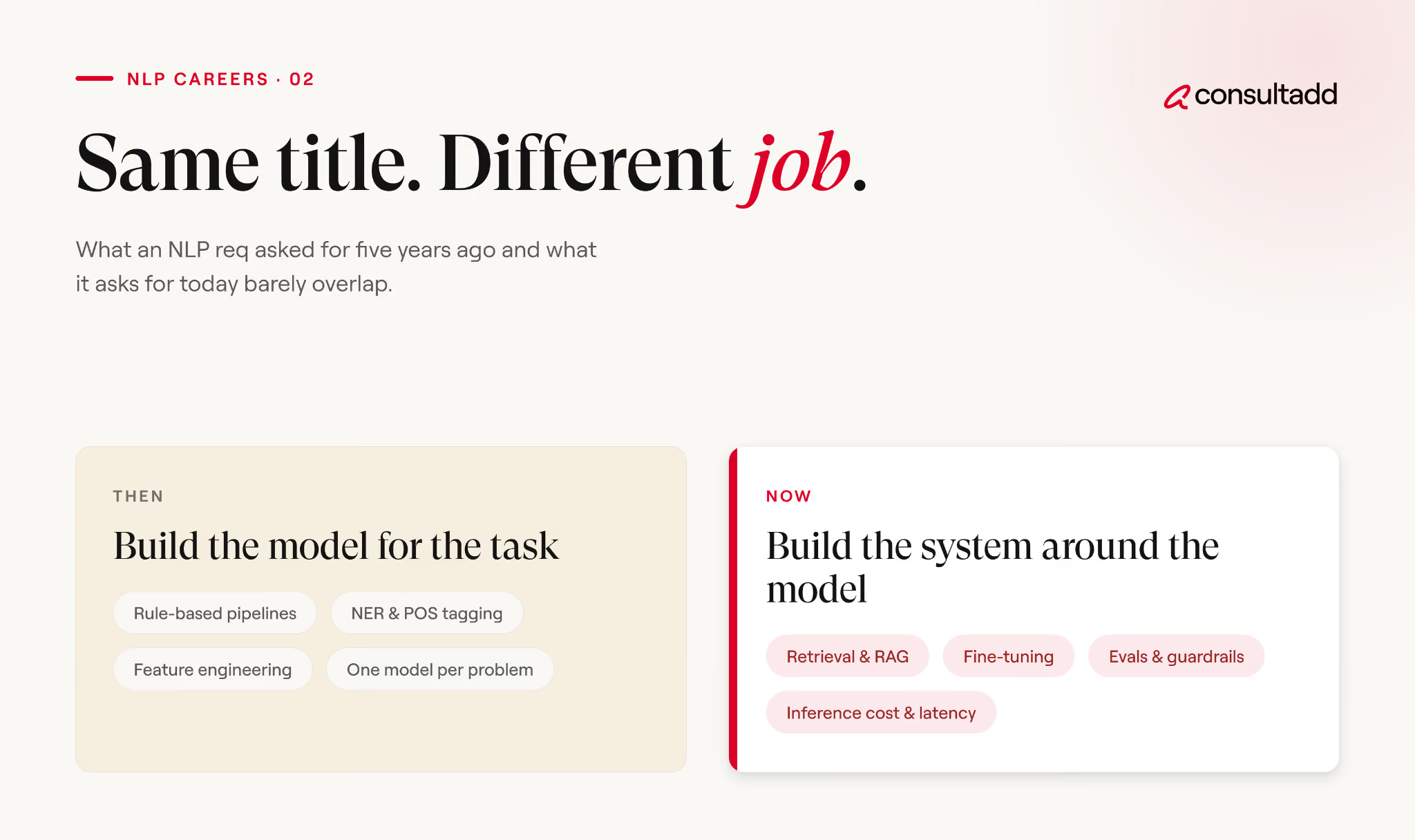
Five years ago, NLP was a distinct specialty with its own toolkit: tokenization, part-of-speech tagging, named entity recognition, custom classifiers trained on labeled data. You hired an NLP engineer because nobody else could do it.
Then foundation models made a large share of that work accessible through an API call. A backend engineer can now do sentiment analysis in an afternoon.
So the postings that used to say "NLP engineer" started saying other things, and the remaining NLP-titled roles skew toward either legacy pipeline maintenance or deep research.
The practical consequence: if you filter job boards on "NLP," you will miss most of the market.
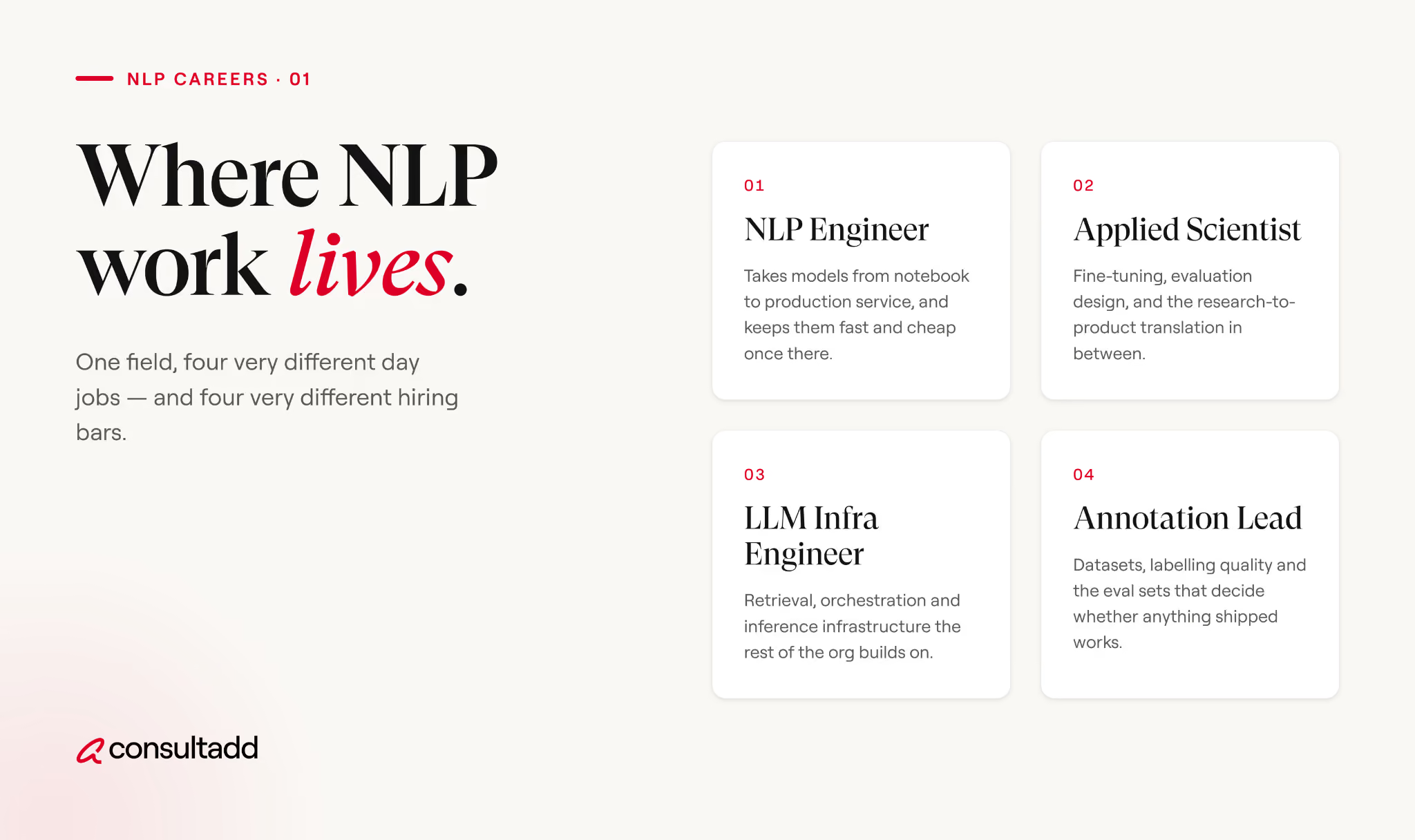
A posting that says "AI engineer" without naming a specialization usually means the company has not finished scoping the role. That is not automatically a red flag, but it is a question to ask in the first call, because it determines whether you will be fine-tuning models or writing glue code.
The applied NLP and applied LLM split
This is the distinction that trips up both candidates and hiring managers, and it costs people interviews.
Recruiters who place these roles report that swapping one for the other is the most expensive scoping mistake they see.
A company that thinks it needs a GenAI engineer sometimes actually needs someone who can rebuild a drifting classification taxonomy. A team that hires a classical NLP specialist to own a retrieval pipeline often finds nobody owns the evaluations.
For you, the takeaway is diagnostic. Read the responsibilities, not the title, and figure out which half of the split the role sits in before you tailor anything.
What natural language processing jobs actually pay
Here is where most career guides pick one number and state it confidently. The honest version is that the numbers disagree a lot.
The Bureau of Labor Statistics puts the median annual wage for computer and information research scientists at $140,300 as of May 2025, with employment projected to grow 22 percent from 2025 to 2035. The average growth rate across all occupations is 3 percent.
For broader context, the median wage across all computer and IT occupations was $109,470 in May 2025, against $50,980 for all occupations.
Why the numbers disagree
Four reasons, and understanding them helps you read any salary page.
1. Base versus total.
Glassdoor figures often fold in bonus and equity. BLS reports wages. In this field the gap can be 30% or more at senior levels.
2. Title matching versus skill matching.
Sites that scrape the "NLP engineer" title are sampling a pool that now skews toward legacy and mid-market roles, because the highest-paying language work is posted as AI or ML engineering. That alone explains much of the spread between the $107K and $165K figures.
3. Geography.
Bay Area and New York compensation pulls averages up. A remote role benchmarked to a national band will not match either.
4. Self-reporting bias.
People tend to submit salary data when the number is good.
Use these as a range, not a target. The number that matters is what comparable companies in your market pay for your specific skill set, which you find through recruiters and levels data rather than national averages.
The skills employers screen for
Sorted by how often they actually come up in interviews rather than how often they appear in job descriptions.
Foundational, assumed rather than tested:
- Python, comfortably. Not scripting level, engineering level.
- Git, testing, and the ability to ship code someone else maintains
- SQL and data manipulation at volume
Role-specific, where the interview happens:
- Transformers and how attention works, well enough to reason about tradeoffs
- PyTorch for anything involving training or fine-tuning
- Embeddings and vector search, including when similarity search fails
- Evaluation design, which is the skill most candidates underinvest in
- Retrieval, including the unglamorous parts like chunking and reranking
Differentiators that get people hired:
- You can explain how you measured whether your system worked. Most candidates cannot.
- Production experience, meaning something you built that real users hit
- Domain depth in a regulated field like healthcare, legal, or finance
- The judgment to say a problem does not need a model
That last one is underrated. Teams have spent a lot of money in the last two years on model-based solutions to problems a regex and a lookup table would have solved. An engineer who says so in an interview stands out.
If you want a sense of what technical screens look like from the other side of the table, our guide to technical recruitment covers how hiring teams structure their evaluation.
How to get in without an NLP title
The direct path, meaning a masters in computational linguistics into an NLP-titled role, is real but narrow. Most people get there sideways.
From data engineering. You already own the pipelines that feed these systems. Add embeddings and a vector store, take on the retrieval layer, and you are doing applied LLM work within a year. This is currently the shortest route.
From backend engineering. Applied LLM work is substantially systems work: latency, caching, orchestration, failure handling. Your existing skills transfer more than you think. The gap to close is evaluation methodology.
From data science. You have the statistical foundation and probably some modeling experience. The gap is production engineering, which means learning to ship and maintain rather than analyze.
From linguistics or a humanities PhD. Real but harder. Your advantage is judgment about language data quality, annotation design, and where models fail on edge cases. Pair it with demonstrable Python engineering or the interview will not go well.
Two things that help regardless of starting point.
- Build one thing end to end and write up how you evaluated it, because a project with a real eval harness signals more than five tutorial repos.
- Consider contract work as an entry route. Contract engagements often have lower credential bars than direct hire and put production experience on your resume faster.
Our breakdown of IT staffing models explains how contract and contract-to-hire arrangements typically work.
Where the demand sits
Demand is not evenly spread, and following it matters more than chasing the highest advertised salary.
Healthcare is the steadiest. Clinical documentation, coding, and record extraction are genuine unstructured-text problems with regulatory constraints that keep the work in-house. Domain knowledge compounds here.
Legal and compliance is similar. Contract analysis, discovery, and regulatory monitoring involve documents where errors are expensive, which means evaluation rigor is valued rather than tolerated.
Financial services runs both halves: classical NLP for document processing and risk, and newer LLM work for research and client-facing tools.
Enterprise search and internal knowledge tools have quietly become one of the largest employers of retrieval skills, and these roles are rarely titled NLP anything.
BLS analysis of employment projections notes that firms across industries are integrating AI-based systems into workflows, and that demand for data scientists, computer and information research scientists, and software developers is set to rise substantially. Data scientists alone are projected to grow 33.5 percent between 2024 and 2034.
What the hiring process looks like
Expect longer cycles than general software roles. Specialist searches in this space commonly run six to ten weeks for senior positions, against a much shorter average for IT roles generally. Plan your runway accordingly and keep multiple processes live.
Our breakdown of time-to-hire benchmarks covers what drives the variation.
A typical loop:
- Recruiter screen, where the specialization question gets settled
- Technical screen, usually Python plus one ML or retrieval concept
- A take-home or system design round on a realistic problem
- Depth interview on a project you led, focused on why you made specific choices
- Team and manager conversations
The depth interview is where offers are decided. Prepare one project you can discuss for forty minutes: what the problem was, what you tried first, what failed, how you measured improvement, and what you would do differently.
Vague answers about "improving accuracy" without a baseline are the most common reason strong candidates get passed over.
Start Strong With Consultadd
With 15 years in business and 5,000+ successful staffing engagements, we don't just fill roles, we build reliability into your process. We've supported 65 staffing companies in the past year alone and maintain MSAs with industry leaders like Robert Half and TEKsystems.
Here's what working with Consultadd looks like:
- Talent sourced in under 24 hours
- Ready-to-deploy candidates, vetted for experience and compliance
- Lower turnover risk: we match long-term goals, not just short-term needs
- Seamless compliance: visa, documentation, onboarding? Handled.
- Dedicated 1:1 account managers for responsive, personalized support
- Top 100 candidate matches delivered in the past year
- Strong partnerships with universities to tap into fresh, committed talent
- Post-placement support so your investment grows beyond day one
For candidates, your next opportunity is more than just a job title, it's a chance to build skills, gain experience, and move your career forward. At Consultadd, we connect technology professionals with projects and employers that align with their goals, whether they're looking for contract, contract-to-hire, or long-term opportunities.
The tech job market moves fast, but the right guidance can make all the difference. Ready to take the next step in your career journey? Explore Opportunities >>
Key takeaways
- Search beyond the NLP title. Most natural language processing jobs are posted as AI engineer, ML engineer, applied scientist, or search relevance engineer.
- Identify whether a role is applied NLP or applied LLM before you tailor your resume, because they screen for different things.
- Treat salary averages as ranges. The spread between sources reflects base versus total comp, title matching, and geography, not measurement error.
- Evaluation design is the most underweighted skill among candidates and the most discussed in interviews.
- Sideways entry from data engineering, backend, or data science is the realistic path for most people.
FAQs
What qualifications do you need for natural language processing jobs?
Most roles ask for a bachelor's in computer science or a related field plus strong Python and machine learning fundamentals. Research-oriented applied scientist positions often expect a masters or PhD. For applied LLM work, production engineering experience frequently matters more than the degree.
Is NLP still a good career in 2026?
The demand is real but the shape has changed. Work that foundation models commoditized has thinned out, while retrieval, evaluation, and domain-specific language systems are hiring steadily. BLS projects 22 percent growth for computer and information research scientists through 2035, well above the 3 percent average across occupations.
What is the difference between an NLP engineer and an LLM engineer?
An NLP engineer typically owns text processing, model training, and language-specific pipelines. An LLM engineer builds systems on top of foundation models, focused on retrieval, prompting, and evaluation. The stacks overlap, but the ownership and interview focus differ.
Can you get an NLP job without a PhD?
Yes, for most engineering roles. A PhD is commonly expected for applied scientist and research positions at large labs, but applied NLP and applied LLM engineering roles hire on demonstrated production work. A project with a real evaluation methodology carries more weight than credentials for these positions.
How much do entry level natural language processing jobs pay?
Entry-level estimates cluster around $120,000 to $125,000 in reported data, though the range is wide and geography-dependent. Contract roles sometimes offer a faster entry point at slightly lower rates. Compare against local market data rather than national averages.
Which industries hire the most for NLP skills?
Healthcare, legal and compliance, financial services, and enterprise search are the steadiest sources of demand. These fields have large volumes of unstructured text and accuracy requirements that keep the work internal. Domain knowledge in a regulated industry compounds your value over time.
.avif)
Technical Recruiter Jobs: Pay, Path, and the Reality
Introduction
Most people fall into recruiting. Very few plan it.
They take a job at an agency because it pays on performance and doesn't require a specific degree, and either they're gone in eight months or they're still there a decade later running a desk that pays more than the engineers they place.
Technical recruiter jobs sit in that unusual middle ground. Low barrier to entry, high variance in outcome. The listings all promise uncapped earnings and growth, and they're not lying exactly, but they leave out what the first year actually feels like. This covers the parts the job posts skip.
TL;DR
- Technical recruiter jobs vary enormously by setting. Agency, in-house, contract, and RPO are four different jobs sharing one title.
- Compensation is usually base plus commission, and the split matters more than the base number.
- BLS puts the median wage for human resources specialists, the category that includes recruiters, at $75,940 as of May 2025, with about 73,700 openings projected each year.
- You don't need a technical background, but you do need enough fluency to hold a credible conversation with an engineer.
- Attrition in the first year is high, and it's usually about the sales reality rather than the technical learning curve.
What the job actually involves day to day
Strip away the job description language and a technical recruiter does four things:
finds people, convinces them to talk, assesses whether they fit, and manages everyone's expectations until a decision gets made.
The proportions shift depending on where you work. At an agency, more of your day is outreach and business development. In-house, more of it is coordination and stakeholder management.
A typical agency day looks roughly like this:
- An hour or two of sourcing in the morning.
- Calls through the middle of the day, some with candidates and some with hiring managers. Submittals written in the afternoon.
- Then the part nobody mentions, which is chasing feedback on candidates you submitted last week from people who haven't replied.
The waiting is the part that surprises new recruiters. You do good work, you submit a strong candidate, and then nothing happens for six days because the hiring manager is on vacation. Your pipeline sits frozen and your commission sits with it.
If you want the mechanics of the process itself, Consultadd's guide to how the technical recruitment process runs end to end covers the sourcing, screening, and assessment stages in detail.
This piece stays on the career path.
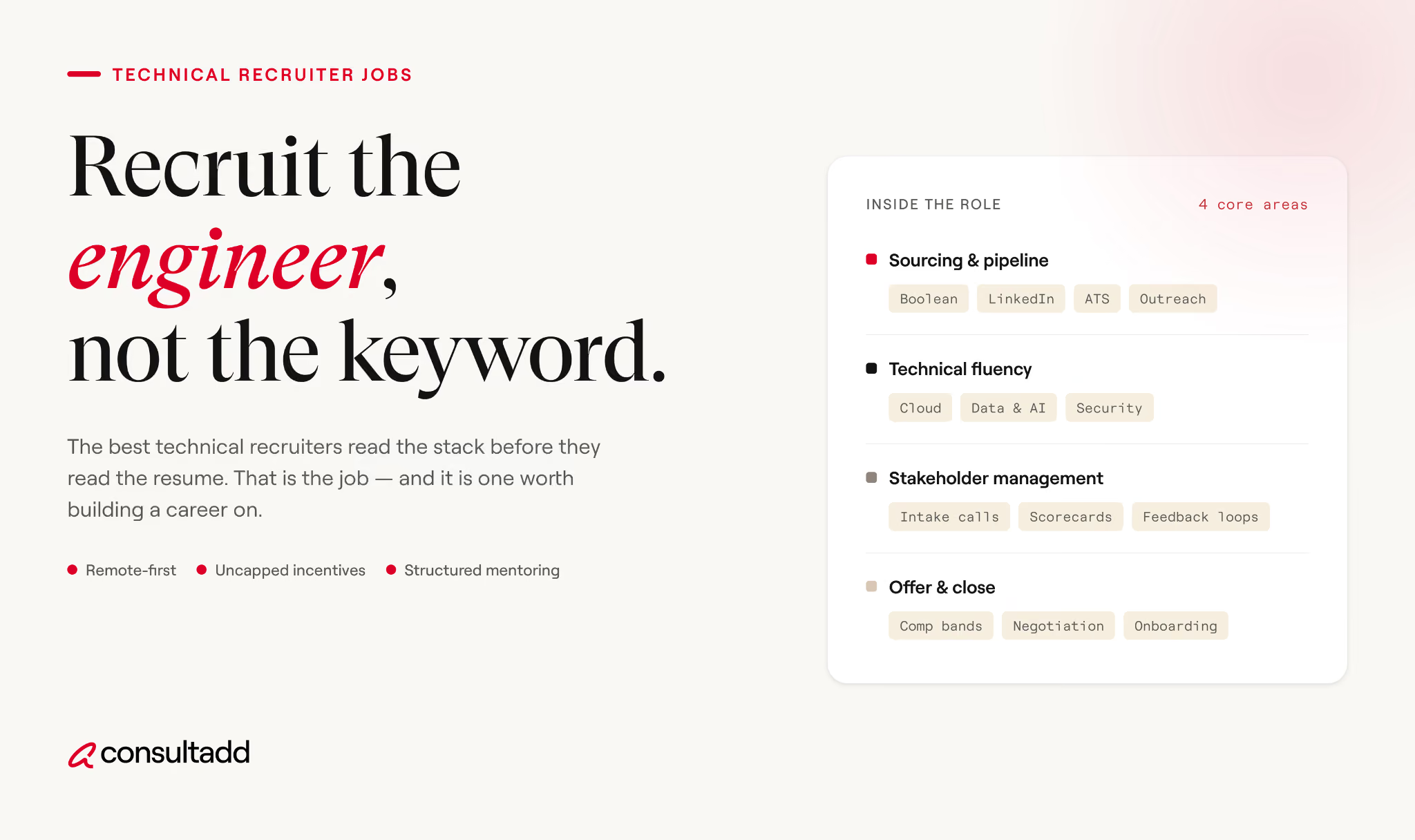
Where technical recruiter jobs sit
Four settings, four genuinely different jobs. Applying to all of them with the same resume is a mistake.
Two things worth knowing before you pick:
Agency recruiting teaches you faster. You'll work more reqs in six months than an in-house recruiter works in two years, and the feedback loop on whether you're any good is brutally short. That's why many in-house recruiters started at agencies.
In-house pays more predictably and less at the top. If your ceiling matters more than your floor, agency wins. If the reverse, in-house does.
What technical recruiter jobs pay
Start with the government baseline. BLS groups recruiters under human resources specialists, which reported a median annual wage of $75,940 in May 2025, with employment projected to grow 6% from 2025 to 2035 and about 73,700 openings a year.
That median understates technical recruiting specifically, since the category includes generalist HR roles. Technical recruiters typically earn above it, and agency recruiters with a working desk can earn well above it.
But the headline number matters less than the structure.
The recoverable draw question is the one that catches people. If your draw is recoverable and you underperform, you can finish a quarter owing your employer money. Ask directly, and get the answer in writing.
Also ask what the median recruiter on the team earned last year, not the top performer. Every agency has a story about someone who made $300,000. Fewer will tell you what the middle of the desk looks like.
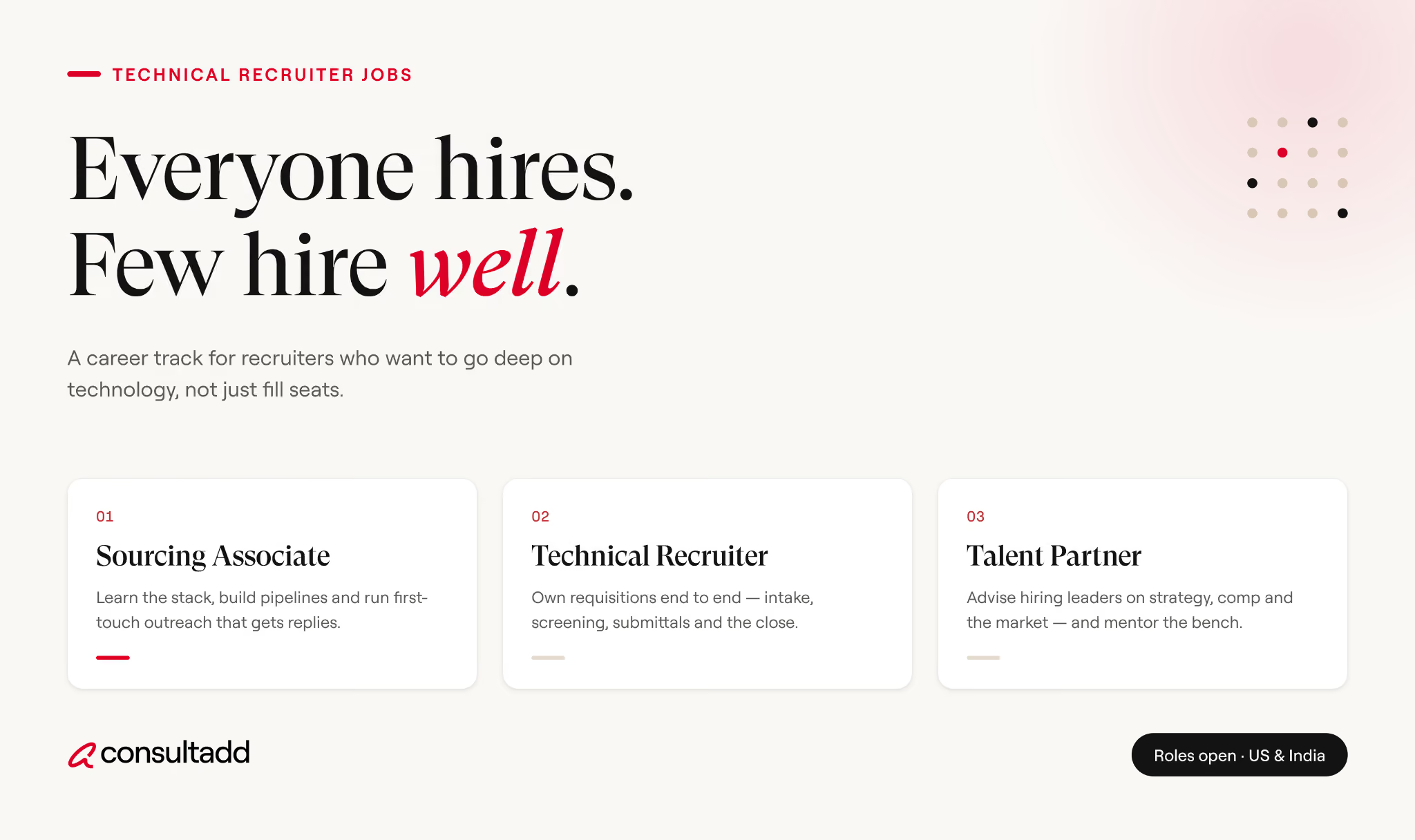
The skills that separate a recruiter from a resume forwarder
The technical fluency bar is lower than people assume and the communication bar is higher.
You don't need to write code. You do need to know enough that an engineer doesn't immediately clock you as someone reading a keyword list.
Knowing that React and React Native aren't interchangeable, that a Java developer isn't a JavaScript developer, and that "five years of Kubernetes" was barely possible a few years ago will put you ahead of a surprising number of working recruiters.
Beyond that, four things separate the good ones:
1. Asking a second question.
A candidate says they worked on a migration. A weak recruiter writes "migration experience" in the submittal. A strong one asks what moved, why, and what broke.
2. Reading a req critically.
Many job descriptions ask for things the hiring manager doesn't actually need. Recruiters who clarify that upfront fill roles faster than recruiters who source against the literal text.
3. Delivering bad news quickly.
The instinct is to delay a rejection. Every good recruiter I know does the opposite, because a fast no protects the relationship and a slow no destroys it.
4. Keeping up.
WEF's Future of Jobs Report 2025 found employers expect 39% of workers' core skills to change by 2030. For a technical recruiter that churn is your whole job. The stack you learned to screen for in your first year will be partly obsolete by your fourth.
How to break in without experience
This is genuinely one of the more accessible entry points in the tech industry, which is both the appeal and the catch.
The most common route is starting as a sourcer. Sourcing is the front half of recruiting: find candidates, make first contact, hand qualified ones to a recruiter.
Lower pay, narrower scope, and the best training available for the full role. Many agencies hire sourcers with no relevant background.
Other realistic paths in:
- Agency entry-level roles. They hire on attitude and volume tolerance more than credentials. Expect a phone-heavy first six months.
- Adjacent sales experience. SDR and BDR backgrounds transfer almost directly. The skill of getting a stranger to take a call is most of the job.
- Coordinator to recruiter. Recruiting coordinator roles sit in-house and convert to recruiter regularly. Slower, more stable.
- Technical background pivot. Former engineers, QA analysts, and support staff who move into recruiting have an obvious credibility advantage and often skip the junior tier entirely.
What actually helps in the interview: demonstrate you've done the homework on the market.
Understanding how the U.S. tech job market split and being able to discuss where demand concentrated will separate you from candidates who just say they're a people person.
And know the vocabulary.
Terms like bench candidates in IT staffing come up constantly in agency interviews, and not knowing them signals you haven't looked into the work.
Where the career goes
Two exits worth noting, since they're common and rarely mentioned:
- Experienced technical recruiters move into HR tech sales fairly easily, because they know the buyer and the pain.
- And a good number start their own agencies, which is the highest-ceiling and highest-risk option available.
The honest downsides
Balanced advice beats a recruitment pitch, so here's what the job postings leave out:
First-year attrition is high. Not because the work is intellectually hard, but because it's a sales job with a long feedback delay, and people who came for "working with people" discover the metrics underneath.
You don't control the outcome. Your candidate accepts a counteroffer. The req gets frozen. The hiring manager ghosts. You did everything right and earned nothing. That happens repeatedly, and it's the single biggest reason people leave.
The reputation problem is real. Engineers get a lot of bad outreach, and you'll inherit that skepticism from day one whether you deserve it or not.
And in a soft hiring market, agency recruiters feel it first and hardest. Recruiting headcount is among the earliest cuts when hiring slows.
None of that makes it a bad career. It makes it a career worth entering with clear eyes rather than because a job ad promised uncapped earnings.
Start Strong With Consultadd
With 15 years in business and 5,000+ successful staffing engagements, we don't just fill roles, we build reliability into your process. We've supported 65 staffing companies in the past year alone and maintain MSAs with industry leaders like Robert Half and TEKsystems.
Here's what working with Consultadd looks like:
- Talent sourced in under 24 hours
- Ready-to-deploy candidates, vetted for experience and compliance
- Lower turnover risk: we match long-term goals, not just short-term needs
- Seamless compliance: visa, documentation, onboarding? Handled.
- Dedicated 1:1 account managers for responsive, personalized support
- Top 100 candidate matches delivered in the past year
- Strong partnerships with universities to tap into fresh, committed talent
- Post-placement support so your investment grows beyond day one
For candidates, your next opportunity is more than just a job title, it's a chance to build skills, gain experience, and move your career forward. At Consultadd, we connect technology professionals with projects and employers that align with their goals, whether they're looking for contract, contract-to-hire, or long-term opportunities.
The tech job market moves fast, but the right guidance can make all the difference. Ready to take the next step in your career journey? Explore Opportunities >>
Key takeaways
- Agency, in-house, contract, and RPO recruiting share a title and little else. Decide which setting you want before you apply.
- Interrogate the pay structure, especially whether the draw is recoverable, rather than fixating on the base salary.
- BLS reports a $75,940 median for human resources specialists as of May 2025 with roughly 73,700 annual openings, and technical recruiting typically pays above that category median.
- Enough technical fluency to ask a credible follow-up question beats memorizing a list of frameworks.
- Sourcing is the most reliable way in with no experience, and the fastest way to learn the full role.
FAQs
What does a technical recruiter do?
A technical recruiter sources, screens, and manages candidates for technology roles like software engineering, DevOps, data, and security. The job involves outreach, qualifying conversations, coordinating interviews, and managing expectations on both sides until an offer is signed or declined.
Do you need a technical background for technical recruiter jobs?
No, and most technical recruiters don't have one. You need enough fluency to hold a credible conversation with an engineer and ask a sensible follow-up question. Former engineers who move into recruiting do have a real advantage and often start at a more senior level.
How much do technical recruiters make?
BLS reports a median annual wage of $75,940 for human resources specialists, the category that includes recruiters, as of May 2025. Technical recruiters generally earn above that, and agency compensation is typically a base plus commission on gross profit, which makes total earnings highly variable.
Is technical recruiting a good career?
It suits people who are comfortable with sales pressure and a delayed feedback loop. The entry barrier is low, the earning ceiling at agencies is high, and the career ladder is clear. First-year attrition is also high, so it's worth being honest with yourself about the sales component.
How do I get a technical recruiter job with no experience?
Sourcing roles are the most common entry point and many agencies hire with no relevant background. SDR or BDR sales experience transfers well, and in-house recruiting coordinator roles convert to recruiter regularly. Learning the market and the staffing vocabulary before you interview makes a visible difference.
What is the difference between agency and in-house technical recruiting?
Agency recruiters work multiple clients, carry revenue targets, and earn meaningful commission with a lower base. In-house recruiters support one company, work fewer reqs in greater depth, and earn a higher base with limited variable pay. Agency teaches faster; in-house is steadier.
.avif)
IT Skills That Get You Hired (And How to Prove Them)
Introduction
A recruiter opens a resume with 34 IT skills listed across four rows. Python, AWS, Kubernetes, Terraform, React, SQL, Kafka, and on it goes. She spends about eight seconds on it and moves to the next one.
Not because the skills are wrong. Because a list that long tells her nothing about what the candidate can actually do on Monday.
That gap is the real story with IT skills right now. The market has plenty of people who can name technologies and far fewer who can show evidence of using them under pressure.
Understanding which IT skills matter is the easy half. Proving you have them is where most candidates lose the screen.
TL;DR
- IT skills fall into five groups, and mixing them up on a resume is one of the fastest ways to get filtered out.
- The difference between tool skills and fundamentals decides how long your skill set stays valuable.
- BLS projects computer and IT occupations to grow much faster than average through 2034, with roughly 317,700 openings a year, so demand isn't the constraint.
- Employers expect 39% of workers' core skills to change by 2030, which means your current stack has a shelf life.
- Screens now test for evidence, not keywords. Every skill you claim should have a specific artifact behind it.
What counts as an IT skill
An IT skill is any capability that lets you build, run, secure, or improve computer systems. That covers writing code, configuring infrastructure, querying data, responding to incidents, and explaining a tradeoff to someone who doesn't write code.
The last one surprises people. It shouldn't.
Most engineers we've watched stall out didn't stall on technical ability. They stalled because they couldn't explain why they picked one approach over another, so nobody trusted them with the decision. That's an IT skill too, even though it doesn't look like one on a certification page.
The category is broader than "programming languages I know." Treating it that way is why so many resumes read as a tool inventory.
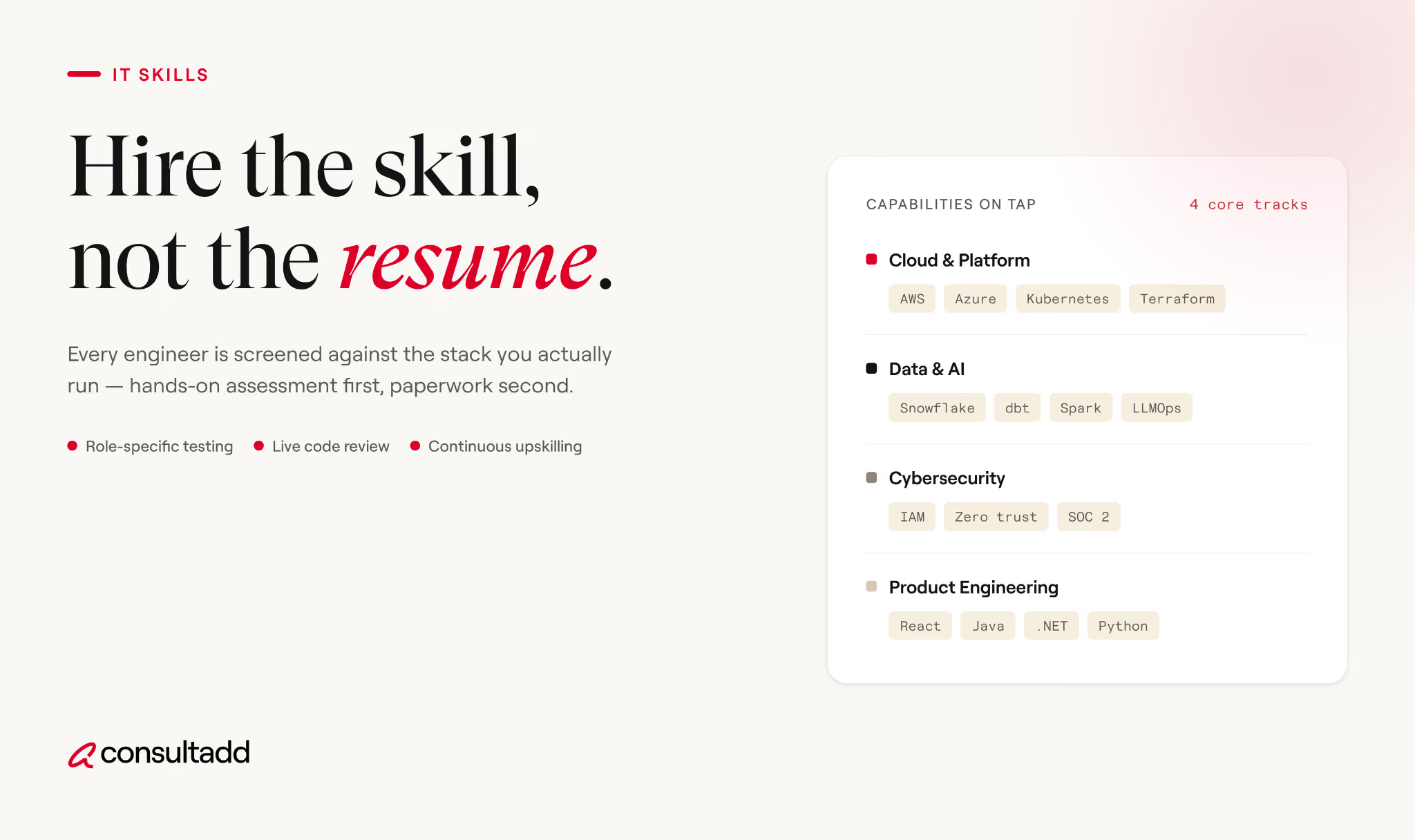
The five groups IT skills fall into
Grouping matters because employers screen by group, not by individual item. A cloud role and a data role might both want Python, but they want it doing completely different things.
Most job descriptions draw from three or four of these. The ones that draw from all five are usually either a small company where everyone does everything, or a poorly written req.
Tools versus fundamentals
This is the distinction that separates a five-year career from a fifteen-year one.
Tool skills are specific: Terraform, Snowflake, a particular CI system, whatever framework was popular the year you learned it. They get you hired quickly and they expire. Some expire fast.
Fundamentals are the layer underneath: how networks route, why a database picks one query plan over another, what actually happens when a container starts. These don't expire. They're also what makes picking up the next tool take two weeks instead of six months.
The World Economic Forum's Future of Jobs Report 2025 found employers expect 39% of workers' core skills to change by 2030, down from 44% in 2023.
Note what that number means in practice. It's not that 39% of your knowledge becomes useless. It's that the tool layer churns while the foundation holds.
Candidates who over-index on tools get hit hardest by that churn. Candidates who understand fundamentals switch stacks and keep their seniority.
Worth being honest about the tradeoff though. Fundamentals don't get you past a keyword filter. You need both, and early in a career the tools usually have to come first.
Which IT skills are actually in demand
Demand isn't the problem in this market. Distribution is.
The Bureau of Labor Statistics projects computer and information technology occupations to grow much faster than the average for all occupations from 2024 to 2034, with about 317,700 openings projected each year.
Median annual wage for the group was $105,990 in May 2024, against $49,500 for all occupations.
In the broader employment projections, computer and mathematical occupations are projected to grow the second fastest of any occupational group at 10.1%, more than three times the projected rate for the total economy at 3.1%.
But those openings aren't spread evenly across skill sets, which is the part the headline numbers hide.
Consultadd's breakdown of how the U.S. tech job market split in 2026 goes into where the demand concentrated and where it didn't.
Where hiring has been most consistent:
- Cloud and infrastructure
AWS, Azure, and GCP alongside Terraform and Kubernetes. Still the broadest base of open roles.
- Data engineering
SQL remains the most durable skill on this entire page. It's forty years old and still on nearly every req.
- Security
Growing across industries, not just in security teams. If you want the credential path here, Consultadd covers which cybersecurity certifications carry weight.
- AI and ML engineering
The fastest-moving category and the most crowded at entry level. The gap between "I've used an API" and "I've shipped a model to production" is enormous, and Consultadd's guide to AI and machine learning engineer roles covers what employers expect at each level.
WEF also found analytical thinking remains the most sought-after core skill, with seven out of ten companies calling it essential. That one never appears in a tech stack list, and it's on more requirement sheets than any framework.
Why listing IT skills stopped working
Here's the shift that most career advice hasn't caught up to.
When everyone can generate a polished skills section in thirty seconds, the skills section stops carrying information. Recruiters adjusted. Technical screens got heavier, take-homes came back, and reference checks got more specific.
So the question changed from "which skills do I list" to "what proof do I attach."
The pattern is consistent. Evidence has a number, a timeframe, or a specific thing that broke. Claims have adjectives.
Understanding the stages of an IT recruitment process helps here too, because different evidence matters at different stages.
Keywords get you past the first filter. Artifacts get you past the technical screen. Stories get you past the hiring manager.
Building IT skills that hold their value
Half the advice on upskilling assumes unlimited time. Most working engineers have four or five hours a week, so where those hours go matters.
Two things we'd push back on in the standard advice.
Certifications aren't worthless, but they work as a filter-clearing device and a study structure, not as proof of ability. A cert with no project behind it gets you an interview and then hurts you in it.
And breadth is overrated below senior level. Three skills you can discuss in depth beat twelve you can name. WEF found 50% of workers have now completed some training or reskilling, up from 41% in 2023, which means the credential itself no longer distinguishes you. What you built with it does.
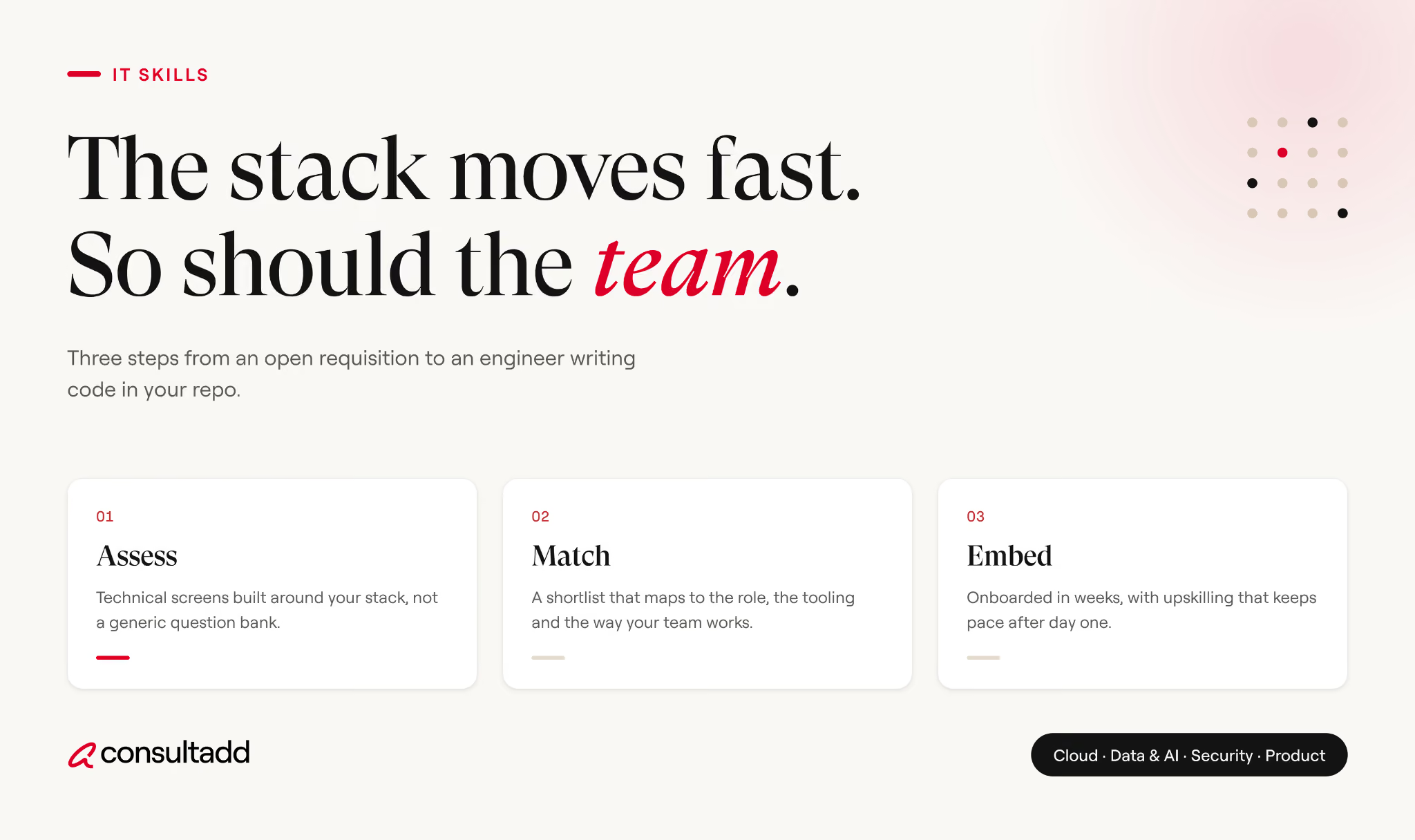
Putting IT skills on a resume
Short version: fewer skills, more specificity.
Cut anything you wouldn't want a 45-minute technical conversation about. If Kafka is on your resume, someone will ask about partition strategy, and "I've seen it in our stack" is a bad answer.
Group skills by category rather than dumping them in one block. Recruiters scan for the group that matches the req.
Put your strongest three to five where the eye lands first. Nobody reads to the end of a skills section.
And move your best evidence into the experience bullets instead of the skills list. "Migrated 40 services from EC2 to ECS over eight months" proves more about your AWS skills than the word AWS ever will.
Start Strong With Consultadd
With 15 years in business and 5,000+ successful staffing engagements, we don't just fill roles, we build reliability into your process. We've supported 65 staffing companies in the past year alone and maintain MSAs with industry leaders like Robert Half and TEKsystems.
Here's what working with Consultadd looks like:
- Talent sourced in under 24 hours
- Ready-to-deploy candidates, vetted for experience and compliance
- Lower turnover risk: we match long-term goals, not just short-term needs
- Seamless compliance: visa, documentation, onboarding? Handled.
- Dedicated 1:1 account managers for responsive, personalized support
- Top 100 candidate matches delivered in the past year
- Strong partnerships with universities to tap into fresh, committed talent
- Post-placement support so your investment grows beyond day one
For candidates, your next opportunity is more than just a job title, it's a chance to build skills, gain experience, and move your career forward. At Consultadd, we connect technology professionals with projects and employers that align with their goals, whether they're looking for contract, contract-to-hire, or long-term opportunities.
The tech job market moves fast, but the right guidance can make all the difference. Ready to take the next step in your career journey? Explore Opportunities >>
Key takeaways
- IT skills span five groups, and employers screen by group, so organize your resume the way they read it.
- Tool skills get you hired and expire. Fundamentals decide how fast you pick up the next tool.
- Demand is strong overall, with BLS projecting about 317,700 annual openings in computer and IT occupations, but it's concentrated in cloud, data, security, and AI engineering.
- Since 39% of core skills are expected to change by 2030, treat your current stack as temporary and your fundamentals as permanent.
- Attach evidence to every skill you claim. A number, a timeframe, or a specific failure you fixed beats any adjective.
FAQs
What are IT skills?
IT skills are the capabilities used to build, run, secure, and improve computer systems. They include programming languages, cloud platforms, databases, networking, and security, along with operational skills like incident response and technical communication. Most roles need a mix from several of those areas rather than depth in just one.
What is the difference between hard and soft IT skills?
Hard IT skills are measurable and specific, like writing SQL or configuring a Kubernetes cluster. Soft skills cover how you work: explaining a tradeoff, reviewing a colleague's code, or handling an outage without panic. WEF's research found analytical thinking is the most sought-after core skill among employers, so the split matters less than people assume.
Which IT skills are most in demand right now?
Cloud platforms, SQL and data engineering, security, and AI or machine learning engineering see the most consistent demand. BLS projects computer and mathematical occupations to grow 10.1% from 2024 to 2034, more than three times the rate for the economy overall. Demand within that growth is uneven, so the specific skill matters more than the category.
How many IT skills should I list on my resume?
Fewer than you think. Eight to twelve organized by category works better than thirty in a block. Only list skills you'd be comfortable discussing for 45 minutes, because a technical screen will find the ones you padded.
Do certifications prove IT skills?
They prove you studied a body of knowledge and passed a test, which helps clear automated filters and gives your learning a structure. They don't prove you can apply the material under real conditions. Pair any certification with a project you can describe in detail.
How long do IT skills stay relevant?
Tool-level skills often need refreshing within two to four years as versions and platforms shift. Foundational knowledge like networking, operating systems, and data modeling stays useful across an entire career. Employers expect 39% of core skills to change by 2030, and most of that churn hits the tool layer.
.avif)
AI Machine Learning Engineer Jobs: 2026 Career Guide
Introduction
Search for AI machine learning engineer jobs and you'll get two contradictory stories. One says this is the fastest-growing, highest-paying corner of tech. The other says new graduates are sending out hundreds of applications and hearing nothing.
Both are accurate. They're describing different parts of the same market.
Demand is real and pay is high, but the roles concentrate heavily at mid and senior levels. Entry-level postings are a small slice of what's out there. And the job title itself covers at least four different jobs that people keep confusing with each other.
Here's what the postings and the wage data actually show.
TL;DR
- "AI/ML engineer" covers four distinct roles, and applying to the wrong one is a common reason for silence.
- BLS has no occupation code for machine learning engineer, which is why published salary figures vary by $60,000 or more.
- Postings analyses put the experience sweet spot at 2 to 6 years, with entry-level roles a small minority.
- What employers ask for is production engineering, not research. Advanced research methods appear in under 2 percent of listings.
- Certifications show up in roughly 6 percent of postings. Shipped work counts for more.
The four jobs hiding under one title
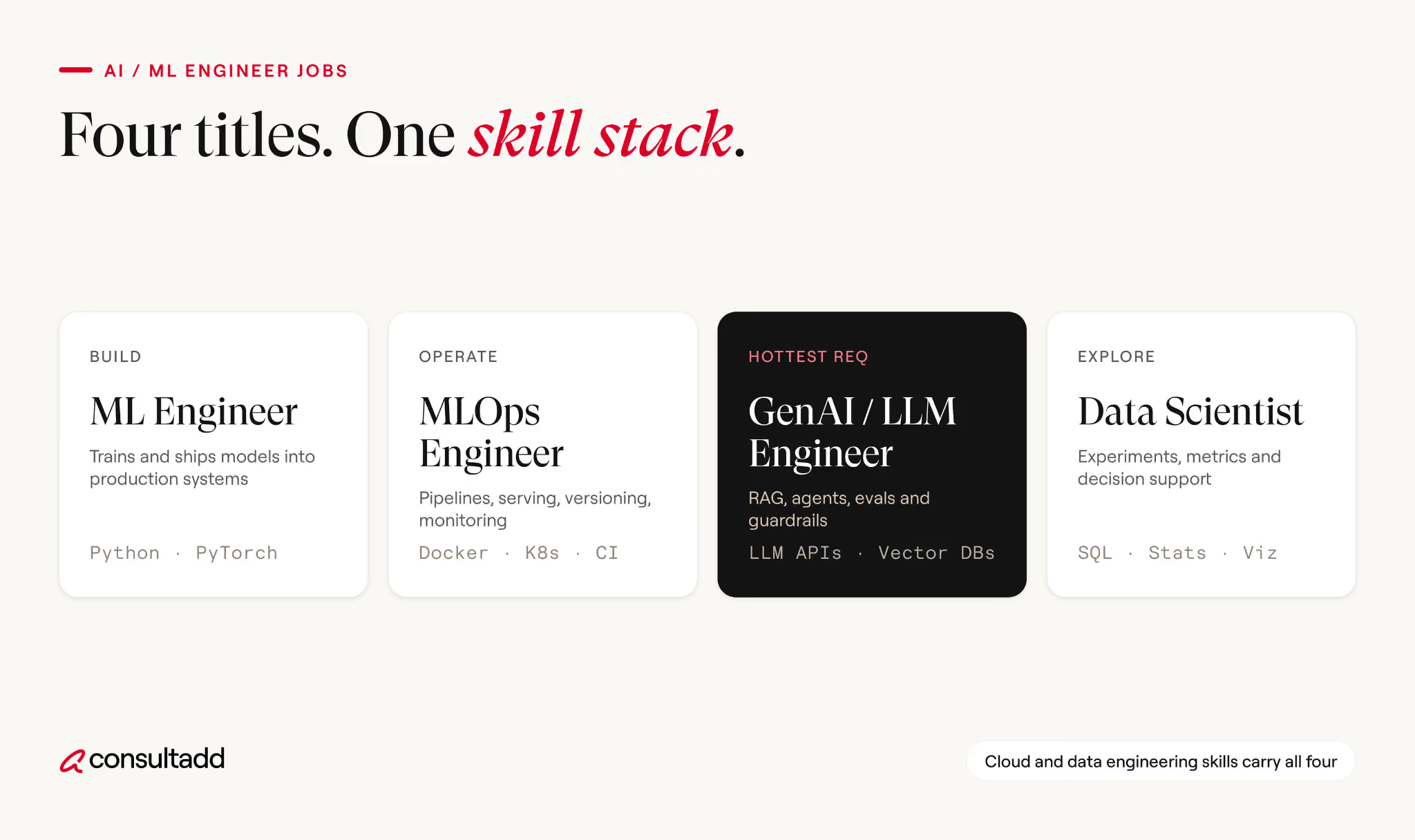
Job titles in this space are used inconsistently, and that inconsistency costs candidates interviews. Before applying to anything, work out which of these the posting actually describes.
The distinction that matters most is between ML engineer and data scientist. ML engineering leans heavily toward software engineering. If you can train a good model but can't write maintainable code, deploy it, or debug it in production at 2am, most ML engineer postings aren't describing your job.
The newest category is AI engineer. These roles often don't require training models at all. They involve building applications on top of existing models, which means retrieval architecture, prompt design, and evaluation matter more than gradient descent. That shift has opened a door for experienced software engineers who never did formal ML work.

What these jobs pay
Salary numbers for this role vary wildly across sources, and there's a structural reason for that.
The Bureau of Labor Statistics has no occupation code for machine learning engineers. These jobs get classified across three different categories depending on what the work actually involves, and the wage data reflects three different populations.
Two things stand out. Data scientists lead the BLS list of fastest-growing occupations at 35 percent, while software developers sit at 10 percent. AI isn't only adding jobs to tech, it's redistributing them within it.
And the openings figures matter more than the growth percentages. Research scientist roles grow at 22 percent but produce fewer than 3,000 openings a year nationally. That's a genuinely small field. Data science produces roughly eight times as many openings.
Private postings data runs higher than BLS medians because it skews toward large technology employers.
An analysis of over 10,000 AI/ML engineering postings by Axial Search found a median advertised salary of $187,500, with the middle 80 percent of roles between roughly $122,000 and $265,000. Glassdoor's 2026 average for ML engineers sits around $166,000.
Treat the high numbers as what senior roles at well-funded companies pay, not as a typical first offer.
What employers actually ask for
This is where a lot of preparation goes wrong. Candidates study the wrong things because the popular image of ML work doesn't match what companies hire for.
The Axial Search analysis found machine learning fundamentals appearing in 24 percent of listings, with communication at 21 percent and cross-functional collaboration at 19 percent.
Meanwhile a separate 2026 postings analysis found advanced research methods like GANs, graph neural networks, and Bayesian approaches appearing in under 2 percent of postings.
Read that again. The research techniques that dominate online ML curricula show up in roughly one job posting in fifty.
That last row deserves a note. Only about 6 percent of AI/ML postings request a certification of any kind. A cloud ML certification from a provider like AWS has some signaling value for candidates without production experience, but it won't substitute for a system you actually built and deployed.
The domain depth finding is worth taking seriously too. One 2026 postings analysis found that 57.7 percent of ML engineer listings preferred domain specialists over generalists.
Employers increasingly want someone who understands fraud detection, or clinical data, or recommendation systems specifically, rather than someone who has touched a bit of everything.
The entry-level problem
Here's the uncomfortable part, stated plainly.
Analyses of ML engineer postings consistently find entry-level roles making up a small single-digit percentage of listings. 365 Data Science's review of over 1,100 postings put roles requiring up to two years of experience at around 3 percent of the market, with the demand concentrated at 2 to 6 years.
Axial Search found 78 percent of AI/ML engineering positions targeting 5 or more years, and roughly 70 percent at mid or senior level.
So if you're applying to ML engineer roles straight out of a degree or bootcamp and hearing nothing, the market structure explains most of it. It isn't necessarily your resume.
What actually works:
1. Enter sideways.
- Data engineering, backend engineering, and analytics roles all sit adjacent to ML teams and hire at entry level far more often.
- Two years building data pipelines makes you a credible ML engineering candidate in a way that two years of coursework does not.
- Several people who've made this transition describe taking a hybrid data engineering role specifically to get proximity to ML work.
2. Build one deep thing, not five shallow ones.
- A deployed system with real users, monitoring, and a writeup of what broke beats a folder of notebooks.
- Interviewers ask follow-up questions, and depth is what survives them.
3. Target AI engineer roles if you come from software.
- Building LLM applications requires strong engineering and system design more than ML theory.
- For experienced backend engineers, this is currently the shortest path into AI work.
4. Consider contract routes.
- Hiring managers approve a six-month engagement with less scrutiny than a permanent headcount, which makes contract and contract-to-hire a realistic way to get first production ML experience on a resume.
Our guide to contract-to-hire opportunities covers how those arrangements work, and IT contract staffing as a strategy explains why companies increasingly staff specialized work this way.
Where the jobs are
Geography is concentrated. California accounted for roughly 32 percent of US AI/ML engineering postings in the Axial Search dataset, with technology firms at 46 percent of postings, financial services at 14 percent, and IT services at 11 percent.
Remote work is more available here than in most technical fields but less than the field's reputation suggests. Among postings that specified a work arrangement, roughly 45 percent were hybrid and 32 percent fully remote.
Worth knowing: financial services and healthcare hire steadily for ML roles and compete less directly with the big technology employers for the same candidates. If you have domain knowledge in either, that combination is more valuable than a broader but shallower technical profile.
On the employer side, these roles remain among the hardest to fill in technology.
Our breakdown of what's changing in tech hiring covers where the pressure is sharpest, and what's broken in IT recruitment looks at why these searches stall.
Start Strong With Consultadd
With 15 years in business and 5,000+ successful staffing engagements, we don't just fill roles, we build reliability into your process. We've supported 65 staffing companies in the past year alone and maintain MSAs with industry leaders like Robert Half and TEKsystems.
Here's what working with Consultadd looks like:
- Talent sourced in under 24 hours
- Ready-to-deploy candidates, vetted for experience and compliance
- Lower turnover risk: we match long-term goals, not just short-term needs
- Seamless compliance: visa, documentation, onboarding? Handled.
- Dedicated 1:1 account managers for responsive, personalized support
- Top 100 candidate matches delivered in the past year
- Strong partnerships with universities to tap into fresh, committed talent
- Post-placement support so your investment grows beyond day one
For candidates, your next opportunity is more than just a job title, it's a chance to build skills, gain experience, and move your career forward. At Consultadd, we connect technology professionals with projects and employers that align with their goals, whether they're looking for contract, contract-to-hire, or long-term opportunities.
The tech job market moves fast, but the right guidance can make all the difference. Ready to take the next step in your career journey? Explore Opportunities >>
Key takeaways
- AI machine learning engineer jobs split into four distinct roles, and targeting the right one matters more than volume of applications.
- BLS classifies this work across three occupations, which is why salary figures differ so widely between sources.
- The demand sits at 2 to 6 years of experience, so entry-level candidates usually enter through adjacent roles.
- Postings emphasize production engineering and domain depth, not research techniques or certifications.
- California and technology firms dominate the market, but finance and healthcare offer less crowded entry points.
FAQs
What does an AI machine learning engineer do?
They build and run machine learning systems in production: preparing data pipelines, training and evaluating models, deploying them, and monitoring performance once they're live. The work is closer to software engineering than to research at most companies, with the split between modeling and engineering varying by team.
How much do machine learning engineer jobs pay?
BLS median wages for the occupations this work falls under ranged from $120,230 to $140,300 in May 2025. Postings analyses focused on technology employers report higher figures, with a median around $187,500 and most roles between $122,000 and $265,000. Location, company size, and seniority drive most of the variation.
What qualifications do you need for ML engineer jobs?
Most postings expect strong Python, a framework like PyTorch or TensorFlow, cloud platform experience, and demonstrated production deployment work. A computer science degree is common but not universal, and certifications appear in only about 6 percent of listings. Evidence of shipped systems carries more weight than credentials.
Is it hard to get an entry-level machine learning engineer job?
Yes, currently. Postings analyses put entry-level roles at a small single-digit share of the ML engineer market, with demand concentrated at 2 to 6 years of experience. Most people entering the field now do so through data engineering, backend engineering, or analytics roles and move across once they have production experience.
What's the difference between an AI engineer and an ML engineer?
ML engineers typically train, deploy, and maintain models. AI engineers usually build applications on top of existing models, working with retrieval systems, prompts, agents, and evaluation. AI engineering demands strong software and system design skills but often less ML theory, which makes it a more accessible entry point for experienced developers.
Are machine learning engineer jobs remote?
More often than in most technical fields, though not universally. Among postings that state a work arrangement, roughly 45 percent are hybrid and 32 percent fully remote. Fully remote roles tend to be more competitive because the applicant pool is national rather than local.
.avif)
Best Cybersecurity Certifications 2026: A Career Guide
Introduction
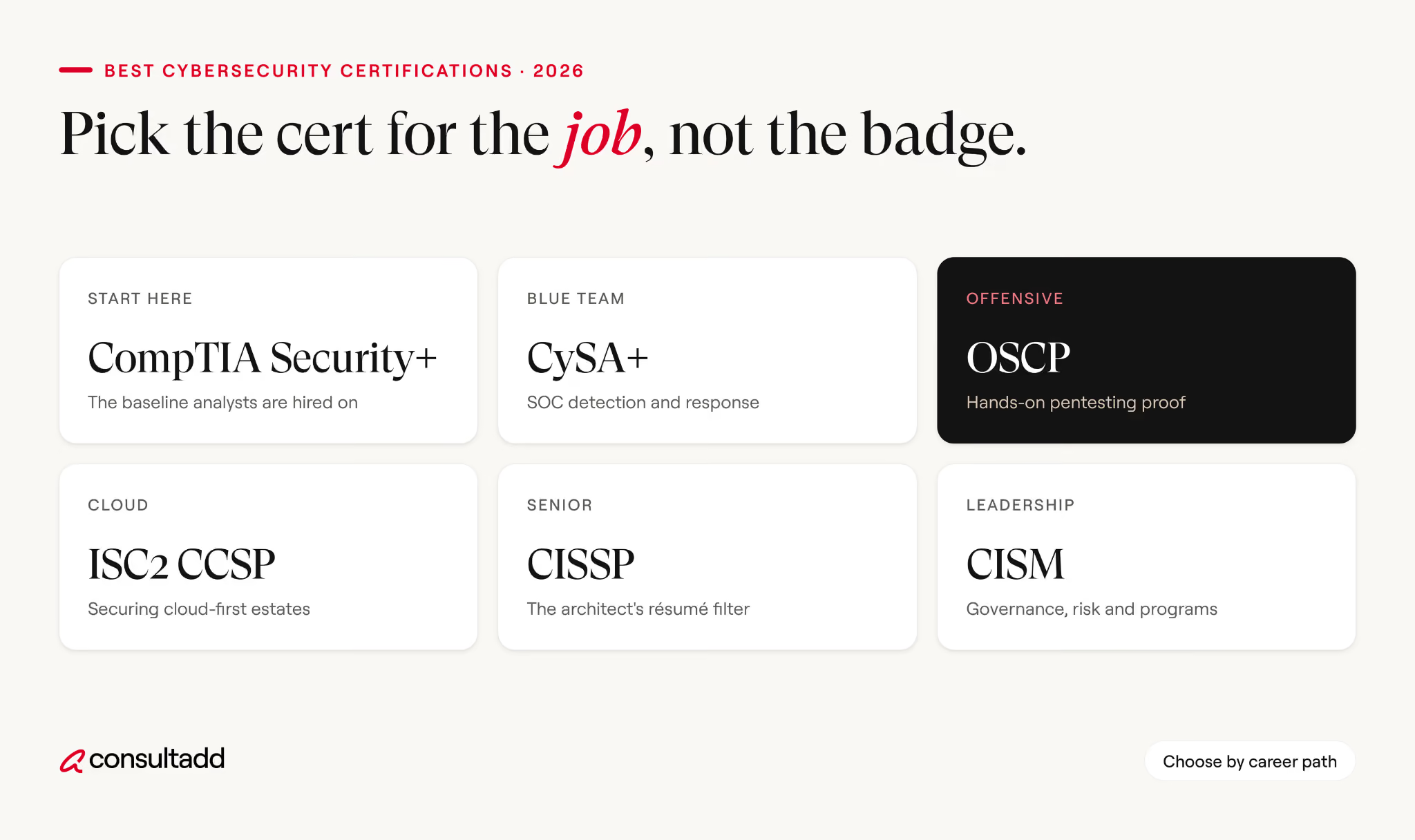
There's no single answer to which cybersecurity certification is best. There's only the best one for the job you're trying to get.
That's the honest framing for anyone researching the best cybersecurity certifications 2026 has on offer. A credential that gets a career changer past an HR filter is a waste of $1,700 for a working SOC analyst. A hands-on pentest cert impresses technical hiring managers and does almost nothing for a compliance role.
Two things make this year different. ISC2 cut its CISSP experience waiver list roughly in half in April, which broke a path a lot of people were already walking. And CompTIA raised prices across its lineup in June. Both changes affect what your plan should look like.
Here's the breakdown by career path, with real costs attached.
TL;DR
- Security+ is still the baseline credential for general security roles and DoD-adjacent work, now $439 after CompTIA's June 2026 price increase.
- ISC2 removed CEH, CISA, CRISC, OSCP and most GIAC certs from the CISSP one-year experience waiver on April 1, 2026.
- For offensive roles, OSCP remains the credential technical hiring managers actually respect, at $1,749 for the course and exam bundle.
- CISSP ($749 plus a $135 annual fee) and CISM ($575 for ISACA members) are management credentials, not technical ones.
- Pick the certification that matches the job posting you want, not the one with the best reputation in the abstract.
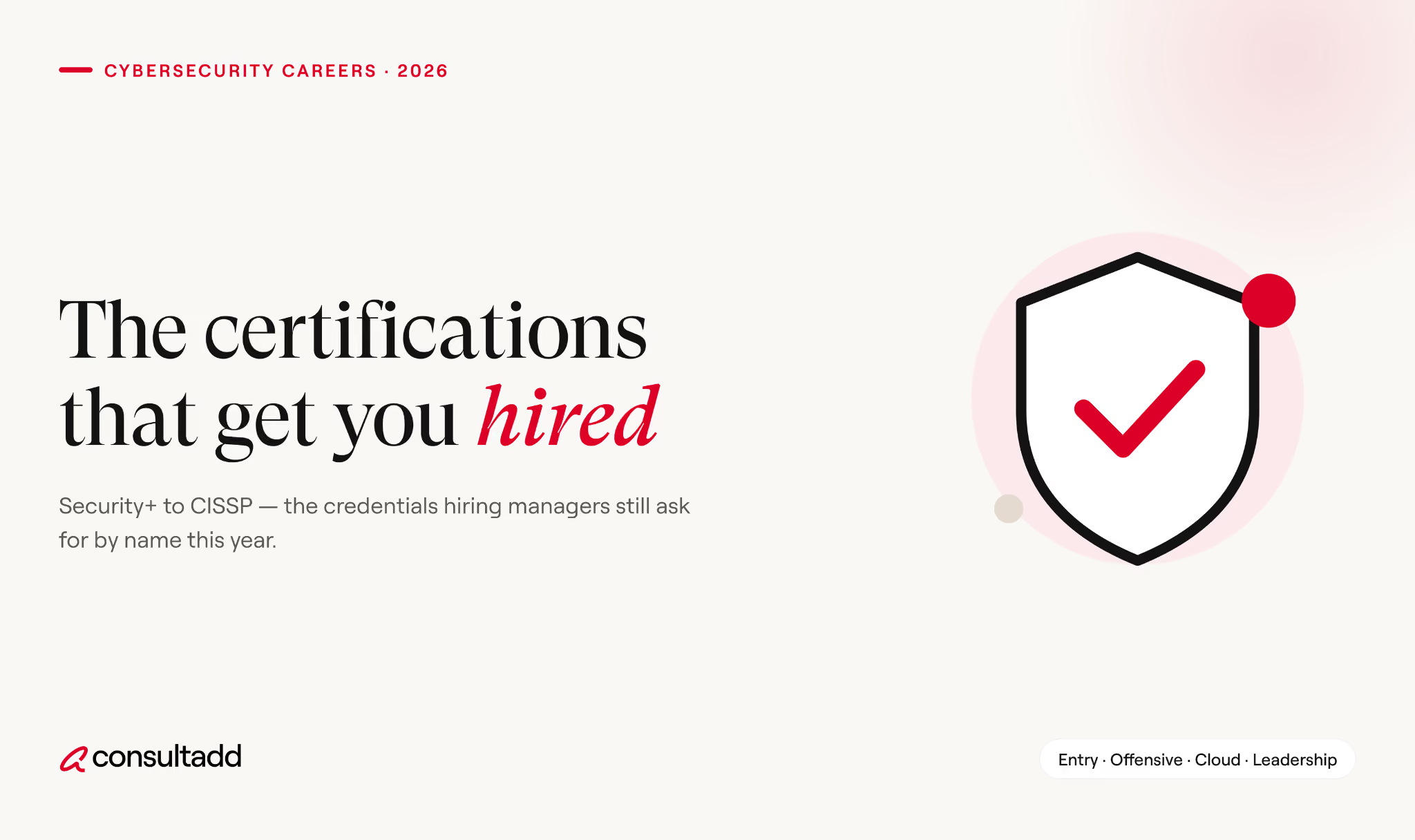
What changed in cybersecurity certifications in 2026
Two policy changes are worth knowing before you spend anything.
1. The CISSP experience waiver got cut.
ISC2 reduced its list of credentials that shave a year off CISSP's five-year experience requirement, going from roughly 50 approved certifications down to about 25.
The change took effect April 1, 2026, and applications submitted on or after that date fall under the new list.
The removals are the surprising part. CEH, CISA, CRISC, OSCP, and most of the GIAC catalog no longer count. Security+, CySA+, CASP+/SecurityX, CISM, the Cisco security track, and the full ISC2 family survived.
If you were taking CEH specifically to speed up your CISSP timeline, that plan doesn't work anymore. Verify the current list on ISC2's site before you build a roadmap around any credential.
2. CompTIA raised prices.
On June 1, 2026, CompTIA increased exam fees across its lineup.
Security+ went from $425 to $439, with similar increases on the certs people usually pair with it.
3. DoD deadlines moved forward.
Under the DoD 8140 implementation timeline, personnel in cyber IT, cyber effects, cyber intelligence, and cyber enabler work roles had to meet foundational qualification requirements by February 15, 2026.
If you're targeting federal contract work, the qualification matrices on the DoD Cyber Exchange tell you what actually counts for a given role.
Best entry-level cybersecurity certifications
If you're breaking in, the goal is getting past resume screening. Nothing more complicated than that.
1. CompTIA Security+
Still the default. It's the certification most "cybersecurity analyst" job postings name directly, it's vendor-neutral, and it satisfies DoD baseline requirements for IAT Level II. The current version is SY0-701 and the voucher is $439 at CompTIA's US list price.
A few things worth knowing before you buy:
- There's no free retake, so a second attempt is another full voucher.
- The certification expires after three years and renews through continuing education.
- Authorized resellers and the academic store routinely sell the same voucher for less, so the list price is a ceiling rather than a floor.
2. ISC2 Certified in Cybersecurity (CC)
A genuine entry-level credential from the organization behind CISSP. ISC2 has periodically offered the exam and training free under its certification pledge, which makes the value proposition hard to beat when that offer is running. Check whether it's still live before paying.
The signal is weaker than Security+ with most employers, but it costs a fraction as much and it puts an ISC2 credential on your resume.
3. Google Cybersecurity Certificate
Not a certification in the exam-and-proctor sense, but it works as an on-ramp for people with zero background. Treat it as preparation for Security+ rather than a replacement for it.
Certifications by specialization
Once you're in, the question changes from "how do I get noticed" to "how do I get deeper."
1. Defensive and SOC roles
CySA+ is the natural step up from Security+ for analysts working detection and response. It covers threat detection, log analysis, and incident response in a way that maps to what tier-one and tier-two analysts actually do.
GIAC certifications from SANS are the practitioner favorites here, particularly GCIH for incident handling and GCFA for forensics. They're well respected and they're also the most expensive tier in the industry once you factor in SANS training. Worth it if your employer pays. Hard to justify out of pocket.
2. Offensive security and pen testing
OSCP is the one hiring managers name in interviews. The exam is a roughly 24-hour hands-on assessment where you compromise live machines and write a professional report, and passing requires 70 out of 100 points. Nothing about it is multiple choice.
Pricing: the PEN-200 course and cert bundle runs $1,749 and includes 90 days of lab access plus one exam attempt. Retake vouchers are $249.
The Learn One subscription is $2,749 annually with a year of access and two attempts. Most candidates need three to six months of preparation, and failing once is common enough that budgeting for a retake is realistic rather than pessimistic.
CEH sits in a different lane. Voucher pricing generally runs somewhere between $950 and $1,199, and the exam is knowledge-based rather than practical. Take it when a job posting or a government contract names it specifically. Take OSCP when you want to prove you can actually do the work.
3. Cloud security
This is where demand has moved. ISC2's CCSP is the vendor-neutral option at around $599, and it carries experience prerequisites similar to CISSP.
Platform-specific credentials often matter more in practice. AWS Certified Security Specialty and Microsoft's SC-100 Cybersecurity Architect Expert both survived the CISSP waiver cull, which is a reasonable proxy for how seriously ISC2 takes them.
If your shop runs on one cloud, certify on that cloud.
Certifications for security leadership
These are management credentials. They test breadth and governance, not technical depth, and that's deliberate.
CISSP is the most frequently listed certification in security leadership job postings.
The exam is $749, there's a $135 annual maintenance fee, and you need 120 CPE credits per three-year cycle. The five-year experience requirement is real, though you can pass the exam first and hold Associate of ISC2 status while you accumulate it.
CISM is ISACA's governance and management credential, covering security governance, risk management, program development, and incident management.
Exam pricing is $575 for ISACA members and $760 for non-members, plus a $50 one-time application fee and an annual maintenance fee of $45 or $85 depending on membership. Since membership dues run around $135 plus chapter fees, joining usually pays for itself on the exam fee alone.
Choose CISSP if you're heading toward architect, security director, or CISO. Choose CISM if your work is audit-adjacent, risk-focused, or sits close to the compliance function.
Cost comparison
Confirm current pricing with each vendor before purchasing. These figures move.
How to choose
Skip the rankings. Do this instead.
Pull ten job postings for the role you actually want, in the market you actually want to work in. Count which certifications appear by name. That count is your answer, and it beats every listicle including this one.
Then check three things against your own situation:
The economics support the investment. The US Bureau of Labor Statistics reports a median annual wage of $129,180 for information security analysts as of May 2025, with employment projected to grow 21 percent from 2025 to 2035 and about 14,100 openings per year over the decade. That's much faster than the 3 percent average across all occupations.
But certifications alone don't get hired. Pair whatever you choose with something you built: a home lab, a detection rule you wrote, a CTF placement, a vulnerability you reported. The CyberSeek career pathway tool is useful for seeing which skills cluster around which roles before you commit.
One more practical note. Contract and contract-to-hire roles are often the fastest route into security for people with adjacent IT backgrounds, since hiring managers take more chances on a six-month engagement than a permanent headcount.
Our breakdown of IT staffing trends and what's changing in tech hiring covers where that demand is concentrated right now.
C2C and contract-to-hire opportunities explain how those arrangements work if you haven't contracted before.
Start Strong With Consultadd
With 15 years in business and 5,000+ successful staffing engagements, we don't just fill roles, we build reliability into your process. We've supported 65 staffing companies in the past year alone and maintain MSAs with industry leaders like Robert Half and TEKsystems.
Here's what working with Consultadd looks like:
- Talent sourced in under 24 hours
- Ready-to-deploy candidates, vetted for experience and compliance
- Lower turnover risk: we match long-term goals, not just short-term needs
- Seamless compliance: visa, documentation, onboarding? Handled.
- Dedicated 1:1 account managers for responsive, personalized support
- Top 100 candidate matches delivered in the past year
- Strong partnerships with universities to tap into fresh, committed talent
- Post-placement support so your investment grows beyond day one
For candidates, your next opportunity is more than just a job title, it's a chance to build skills, gain experience, and move your career forward. At Consultadd, we connect technology professionals with projects and employers that align with their goals, whether they're looking for contract, contract-to-hire, or long-term opportunities.
The tech job market moves fast, but the right guidance can make all the difference. Ready to take the next step in your career journey? Explore Opportunities >>
Key takeaways
- The best cybersecurity certifications 2026 offers depend entirely on target role, not on general reputation.
- Verify the CISSP experience waiver list before planning around any credential, since 31 certifications were removed in April 2026.
- Security+ stays the entry-level default at $439, with reseller and academic pricing well below list.
- OSCP is the credential that proves practical offensive skill, and it doesn't expire.
- Job postings for your target role are a better selection tool than any ranking article.
FAQs
Which cybersecurity certification is best for beginners in 2026?
CompTIA Security+ remains the most widely recognized entry-level option and is named directly in a large share of analyst job postings. It costs $439 at list price and satisfies DoD baseline requirements. ISC2's Certified in Cybersecurity is a lower-cost alternative when the free exam offer is available.
How much do cybersecurity certifications cost?
Entry-level exams run roughly $400 to $600. Mid-level technical credentials like OSCP cost $1,749 for the course and exam bundle. Senior credentials such as CISSP cost $749 for the exam plus a $135 annual maintenance fee. Training and retakes typically add more than the exam fee itself.
Is CISSP still worth it after the 2026 waiver change?
Yes, but the path to eligibility got longer for some people. The change only affects which certifications shave one year off the five-year experience requirement, not the requirement itself or the value of the credential. CISSP is still the most requested certification in security leadership postings.
Do cybersecurity certifications actually get you hired?
They get you past screening, which is not the same thing. Hiring managers consistently weigh demonstrated ability alongside credentials, so a certification paired with a home lab, CTF results, or real project work is far stronger than a certification alone.
Which certification is better, OSCP or CEH?
For penetration testing roles, OSCP carries more weight because the exam requires compromising live systems rather than answering multiple-choice questions. CEH is the better choice when a specific job posting or government contract names it, which happens often in federal contracting.
How long does it take to earn a cybersecurity certification?
Security+ typically takes two to three months of part-time study for someone with IT background. CISSP usually takes three to six months. OSCP commonly requires three to six months of hands-on lab work, and many candidates need more than one exam attempt.
.avif)
What Should a Level 3 IT Technician Know? A Skills Map
Introduction
A level 1 technician resets the password. A level 2 technician figures out why the account keeps locking. A level 3 technician finds the replication issue between domain controllers that's been silently locking accounts for three weeks, fixes it, and writes the article that stops the ticket from ever reaching level 1 again.
So what should a level 3 IT technician know? Enough to be the last stop. When a ticket lands on your desk at this tier, nobody else inside the organization is going to solve it.
That means depth in a few systems rather than familiarity with many, the ability to work from logs and packet captures instead of symptom descriptions, and the discipline to document what you found.
The list below is the practical version: what employers actually test for, what shows up in real escalations, and where people usually have gaps.
TL;DR
- A level 3 IT technician is the final internal escalation point, handling issues that tier 1 and tier 2 cannot resolve, and often owning the fix at a system level rather than a ticket level.
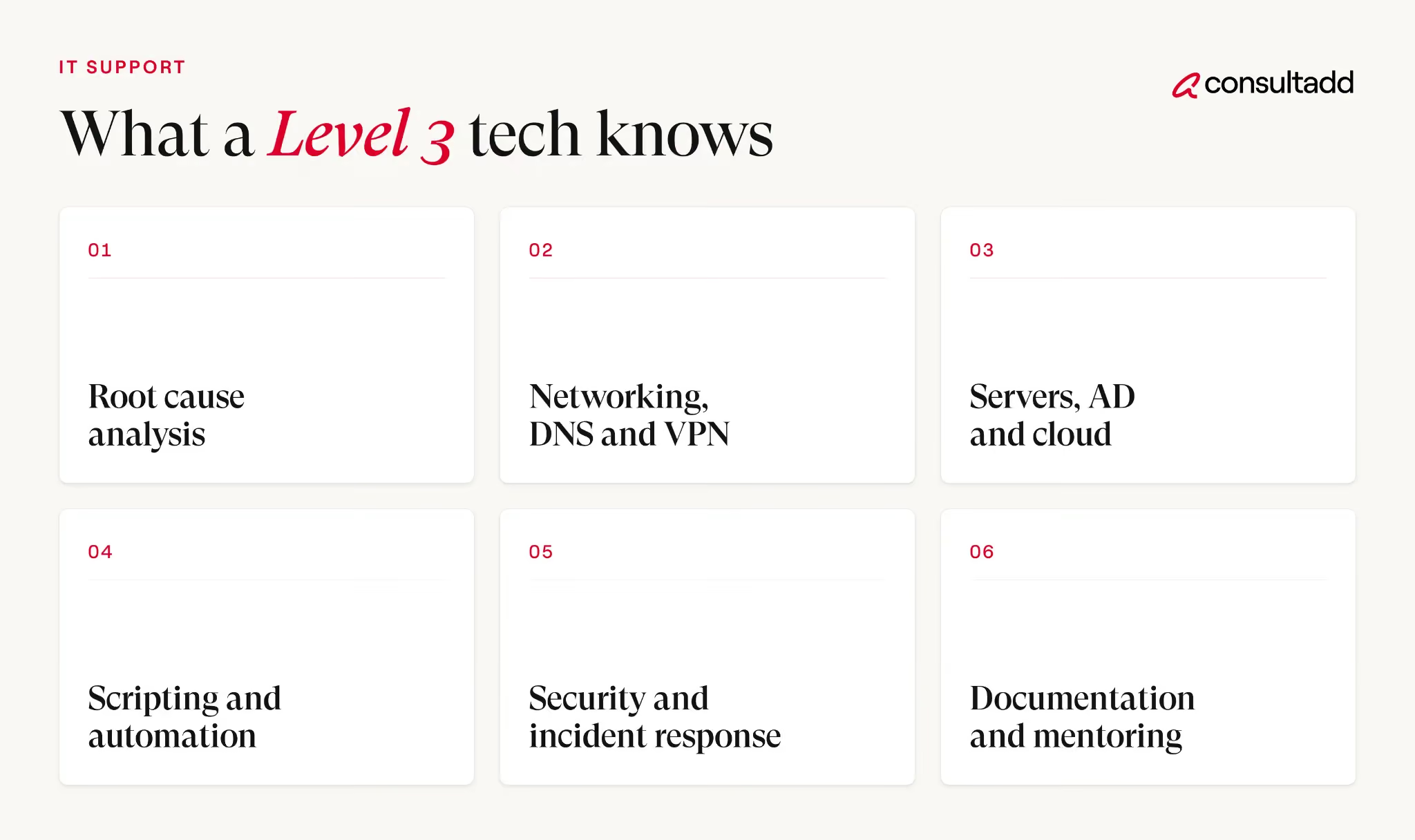
- Core technical ground: operating systems, networking, directory services and identity, virtualization, cloud administration, security, and scripting.
- The differentiator isn't tool knowledge. It's root cause analysis, reading logs properly, and documenting fixes so lower tiers can handle the repeat.
- Certifications help you get interviews. Demonstrated troubleshooting gets you hired. Most job postings ask for roughly five years of experience.
- Traditional support roles are shrinking, while adjacent administration, cloud, and security roles pay considerably more. Level 3 is the branch point.
What "level 3" actually means
IT support tiers are a triage structure, not a job-title hierarchy. The point is to keep expensive expertise free for problems that need it.
Every organization draws these lines slightly differently. In a small company, the level 3 technician is also the sysadmin, the network admin, and the person who owns the backup strategy. In a large enterprise or an MSP, level 3 might be a narrow specialty.
What stays constant: level 3 owns the problem, not the ticket. If the same issue comes back next month, that's a level 3 failure regardless of how fast the original ticket closed.
The core technical knowledge
1. Operating systems, past the GUI
You should be comfortable working in Windows and Linux without a graphical interface. Windows Server roles, Group Policy, the registry, event log analysis, PowerShell.
On Linux: the filesystem hierarchy, systemd, permissions, package management, and reading logs in journalctl or /var/log without hunting for a tutorial.
The practical test is boot and performance problems. Can you diagnose a machine that won't boot, a service that fails silently, or a server that's slow for reasons the monitoring dashboard doesn't explain?
2. Networking that goes past layer 1
Level 1 checks whether it's plugged in. Level 3 should be able to work through the OSI model methodically and know where to stop looking.
Concretely: subnetting without a calculator, DNS resolution order and what breaks when it's wrong, DHCP scope and lease problems, VLANs and trunking, routing basics, NAT, firewall rule evaluation, VPN troubleshooting, and TLS handshake failures.
You should be able to read a packet capture well enough to tell whether a problem is the application, the network, or the client.
DNS deserves its own mention. A large share of "the network is down" tickets are DNS, and the ones that reach level 3 are usually the subtle ones.
3. Directory services and identity
Active Directory is still the backbone of most corporate environments, and increasingly it's hybrid with a cloud identity provider alongside it.
You need to understand domain controllers, replication, FSMO roles, sites and services, Group Policy processing order, Kerberos and NTLM authentication, and where synchronization between on-premises and cloud identity breaks.
Identity problems produce some of the most confusing symptoms in IT. Users report an application failure; the actual cause is a token lifetime or a broken trust relationship.
4. Virtualization and servers
VMware, Hyper-V, or both. Resource allocation, snapshots and why they're not backups, storage performance, host and guest troubleshooting.
Storage generally: RAID levels, SAN and NAS basics, IOPS, and what a failing disk looks like before it fails completely.
Backup and recovery belongs here too, and it's the area where technicians most often have theoretical knowledge and no practical experience. Knowing the backup schedule is not the same as having restored from it.
5. Cloud administration
Most environments are hybrid now. Level 3 work increasingly means administering Microsoft 365 or Google Workspace, managing cloud identity and conditional access, understanding SaaS integrations, and doing at least basic work in Azure, AWS, or GCP: virtual machines, storage, networking, and IAM.
You don't need to be a cloud architect. You do need to stop treating the cloud as someone else's problem.
6. Security
Not a separate specialty at this tier, just part of the job.
Endpoint protection and EDR, patch management, least privilege, MFA, certificate management and expiry, phishing investigation, and enough incident response to contain something and escalate it correctly.
Certificate expiry is worth singling out. It causes outages that look like everything except what they are, and it's entirely preventable.
7. Scripting and automation
PowerShell for Windows environments, Bash for Linux, Python as a general-purpose tool. You don't need to write production software.
You need to automate the repetitive work, bulk-process changes safely, and read someone else's script well enough to know what it will do before you run it.
This is often what separates a technician who stays at level 3 from one who moves into engineering.
The habits that actually separate level 3
Technical range gets you the interview. These get you kept.
1. Find the cause, not the symptom
Restarting the service clears the ticket. It doesn't answer why the service died. A level 3 technician is expected to reach an actual cause, and to be honest when they haven't.
Practically: form a hypothesis, test one variable at a time, check what changed before the problem started, and read the logs in chronological order rather than searching for the word "error."
2. Write it down
Documentation is a real deliverable at this tier, not an afterthought.
Knowledge base articles, runbooks, network diagrams, and post-incident notes are how one fix at level 3 turns into a hundred faster resolutions at levels 1 and 2.
A level 3 technician who solves everything and documents nothing becomes a bottleneck. That's a career ceiling, not a job security strategy.
3. Communicate under pressure
During an outage you'll be explaining status to people who don't want technical detail, while also coordinating with vendors who want nothing but technical detail.
Both audiences at once, while the thing is still broken.
The specific skill is giving an honest status update without either minimizing the problem or catastrophizing it.
4. Know when to escalate outward
Level 3 is the last internal stop, not the last stop.
Recognizing that an issue is a vendor bug rather than a configuration error, and escalating it with a clean reproduction case, is a skill. Spending three days proving it yourself is not dedication, it's an expensive mistake.

Certifications worth having
Certifications won't make you a level 3 technician. They will get your resume past filters and give structure to gaps in your knowledge.
Pick based on the environment you work in or want to work in. Three certifications in unrelated stacks read worse than two that match a coherent career direction.
Most level 3 job postings ask for roughly five years of IT experience alongside these, and experience usually wins when the two compete.
A self-assessment
A quick way to find your gaps. If you can't do the right-hand column unsupervised, that's your study list.
That last row is the honest summary of the whole role.
Pay and where the path leads
Worth understanding the market you're moving through:
The Bureau of Labor Statistics reports a median annual wage of $61,860 for computer user support specialists as of May 2025, with overall employment of computer support specialists projected to decline 3 percent from 2025 to 2035.
Even so, about 48,700 openings are projected each year, nearly all from people leaving the occupation.
The adjacent roles pay better. Network and computer systems administrators had a median wage of $99,130 in May 2025. Across computer and information technology occupations as a group, the median was $109,470 in May 2025, against $50,980 for all occupations.
Read those numbers together and the picture is clear enough. Generalist support work is contracting. The skills that define level 3, infrastructure, identity, cloud, security, and automation, are the ones that carry into roles that aren't contracting.
Level 3 is a branch point rather than a destination. Common next steps are systems administrator, network engineer, cloud engineer, security analyst, DevOps or platform engineer, or IT manager. The technical direction depends on which part of the escalation queue you find yourself enjoying.
For hiring managers reading this: the same competency map works as an interview rubric.
Consultadd's guide to closing skill gaps on your team covers how to assess capability rather than resume keywords.
If you're staffing these roles on contract, the IT staffing process walkthrough and our guide to hiring tech talent fast through staff augmentation go through sourcing and screening in more detail.
Start Strong With Consultadd
With 15 years in business and 5,000+ successful staffing engagements, we don't just fill roles, we build reliability into your process. We've supported 65 staffing companies in the past year alone and maintain MSAs with industry leaders like Robert Half and TEKsystems.
Here's what working with Consultadd looks like:
- Talent sourced in under 24 hours
- Ready-to-deploy candidates, vetted for experience and compliance
- Lower turnover risk: we match long-term goals, not just short-term needs
- Seamless compliance: visa, documentation, onboarding? Handled.
- Dedicated 1:1 account managers for responsive, personalized support
- Top 100 candidate matches delivered in the past year
- Strong partnerships with universities to tap into fresh, committed talent
- Post-placement support so your investment grows beyond day one
For candidates, your next opportunity is more than just a job title, it's a chance to build skills, gain experience, and move your career forward. At Consultadd, we connect technology professionals with projects and employers that align with their goals, whether they're looking for contract, contract-to-hire, or long-term opportunities.
The tech job market moves fast, but the right guidance can make all the difference. Ready to take the next step in your career journey? Explore Opportunities >>
Key takeaways
- A level 3 IT technician is the last internal escalation point and is expected to fix causes, not symptoms.
- The technical baseline covers operating systems, networking, directory services and identity, virtualization, cloud administration, security, and scripting.
- Documentation and knowledge transfer are part of the job. Solving everything while writing nothing makes you a bottleneck.
- Certifications open doors, but most postings still ask for around five years of hands-on experience.
- Support employment is projected to decline while infrastructure, cloud, and security roles pay substantially more, so treat level 3 as a branch point.
FAQs
What is a level 3 IT technician responsible for?
Resolving issues that levels 1 and 2 cannot, usually at the server, network, or infrastructure layer. That includes root cause analysis, permanent fixes, escalation to vendors when a product defect is involved, and documenting solutions so lower tiers can handle repeats.
How many years of experience do you need for level 3 support?
Most job postings ask for roughly five years of IT experience, though this varies by organization size. Small companies sometimes promote sooner out of necessity. What matters more than the year count is whether you've owned infrastructure rather than only worked tickets.
Do you need a degree to be a level 3 IT technician?
Many postings list a bachelor's degree as preferred rather than required. Demonstrated experience and relevant certifications are frequently accepted instead, particularly for contract and MSP roles where technical screening is hands-on.
Which certification is best for a level 3 technician?
There's no single answer, because it depends on your environment. Network+ or CCNA for networking depth, Microsoft Azure and 365 administrator credentials for hybrid Windows environments, Security+ for security baseline, and RHCSA for Linux-heavy shops. Match the stack you actually work in.
What's the difference between level 2 and level 3 support?
Level 2 resolves issues within an existing configuration. Level 3 changes the configuration, diagnoses systemic faults, and takes ownership of the underlying problem. Access rights usually differ too, with level 3 holding administrative access that level 2 doesn't.
What comes after level 3 IT support?
Common paths are systems administrator, network engineer, cloud engineer, security analyst, DevOps or platform engineer, and IT management. Which one fits depends on whether you gravitate toward infrastructure, security, automation, or people leadership.