

Introduction
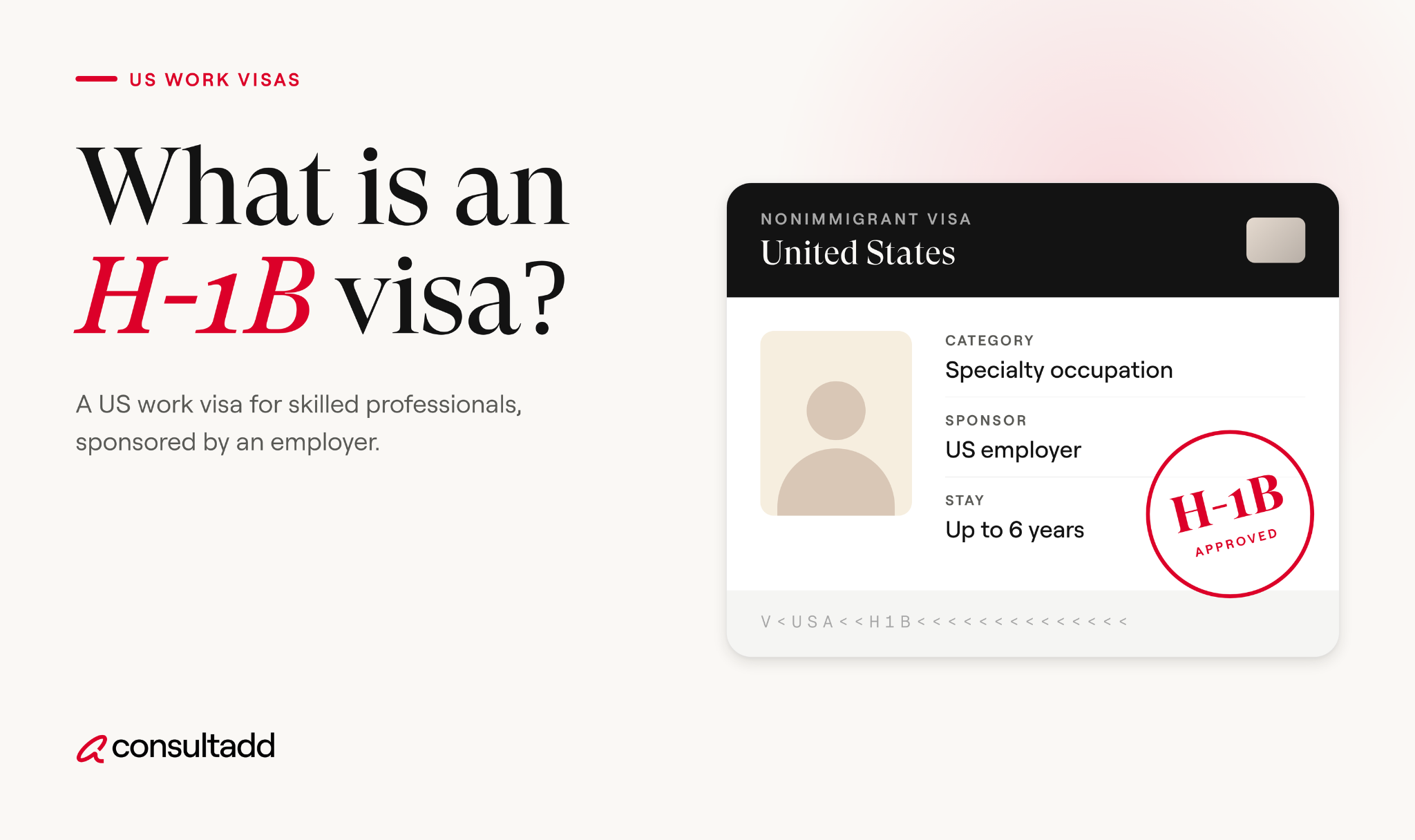
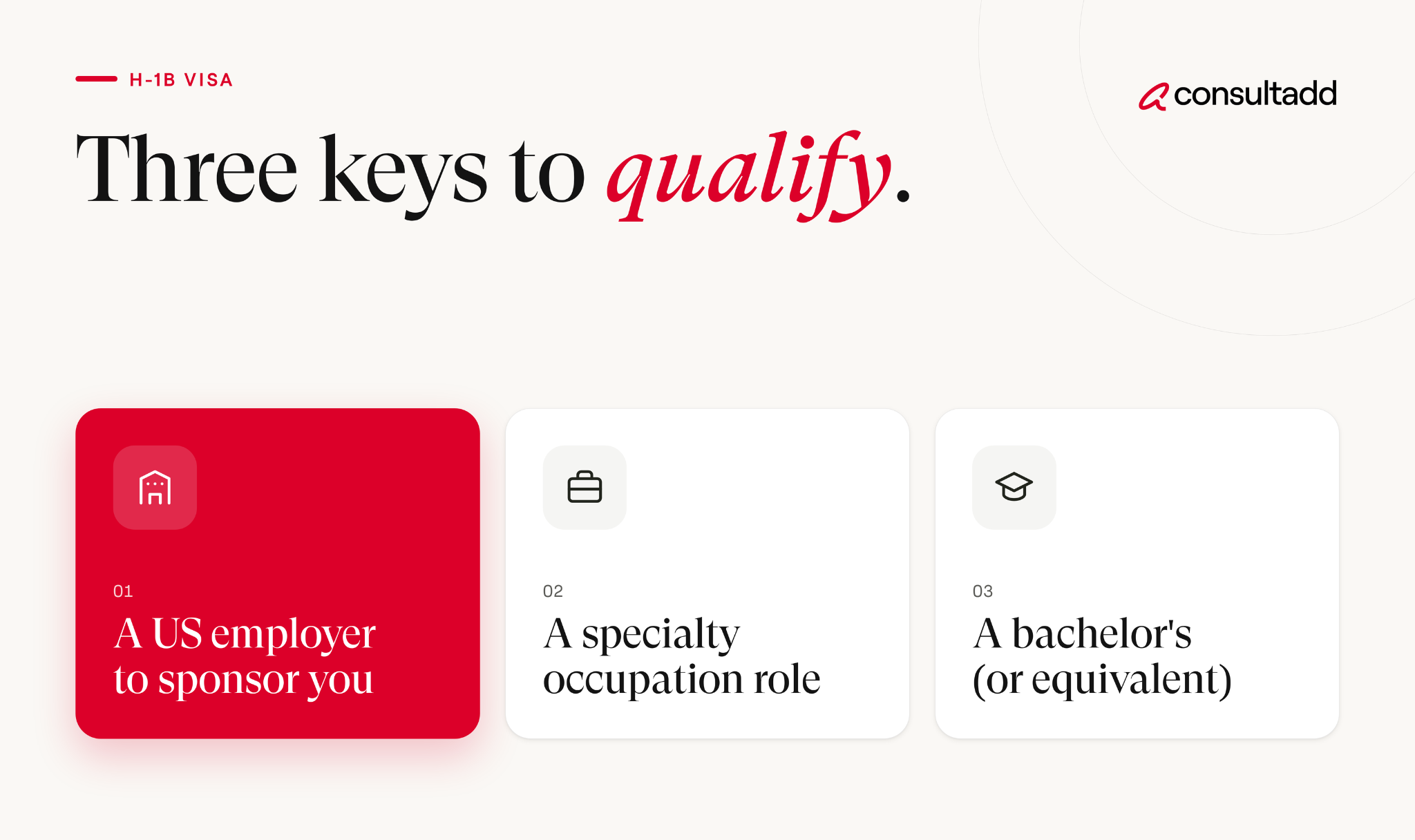
If you've searched "what is H1 visa," you're almost certainly asking about the H-1B. It's the U.S. work visa that lets American employers hire foreign professionals for jobs that need at least a bachelor's degree, like software engineering, data analysis, finance and healthcare roles.
You can't apply for it on your own. An employer has to sponsor you.
This guide explains what the H-1B is, what it lets you do once you have it, how it compares to other work visas and what's changing right now.
It's written for tech professionals and the people who hire them. It's general information, not legal advice, so talk to an immigration attorney about your specific case.
TL;DR
- "H1 visa" is common shorthand for the H-1B, a temporary U.S. work visa for specialty occupations that require a degree.
- An employer must sponsor you, and most new H-1Bs are limited by an annual cap of 85,000, filled through a yearly selection.
- H-1B status usually lasts three years at first and can be extended to six, with longer extensions possible during the green card process.
- You can work only for the employer or employers that sponsored you, but you can change jobs, bring family on H-4 status and pursue a green card.
- Several rules are in motion in 2026, including the $100,000 fee, a proposed cap-subject fee and a proposal to end the 60-day grace period.
What is H1 visa, exactly?
The H-1B is a nonimmigrant work visa. "Nonimmigrant" means it's temporary, though it can lead to permanent residency, which we'll get to.
U.S. law defines a specialty occupation as a job that requires applying a body of highly specialized knowledge and at least a bachelor's degree, or its equivalent, in a specific field.
Software developer, systems analyst, data engineer, accountant and physician are common examples. A general admin or support role usually doesn't qualify, even with an impressive title.
Why people say "H1" instead of "H-1B"
The H-1 label goes back to the Immigration and Nationality Act of 1952. The H-1B as we know it came from the Immigration Act of 1990. Over the years, the H-1 group has had a few subcategories:
Visa stamp vs H-1B status
These two terms trip people up.
The visa is the stamp in your passport that lets you travel to a U.S. port of entry. Status is your legal permission to be in the country and work. You can hold H-1B status while in the U.S. without having a physical H-1B visa stamp.
For example, an F-1 student who changes to H-1B inside the U.S. gets the status first and only needs the stamp before traveling abroad and returning.
How the H-1B visa works, start to finish
Here's the short version of the journey. Each step has its own detailed guide if you need more.
- An employer decides to sponsor you. This is the real starting point.
Our guide to sponsoring an H-1B visa as a tech professional covers what that looks like in practice.
- You, the job and the employer all have to qualify. You need the right degree or equivalent experience, the job must be a specialty occupation, and the employer must meet wage rules.
We break these down in H-1B visa prerequisites: who qualifies and how.
- The employer registers you for the annual selection, if the job is subject to the cap.
- If you're selected, the employer files the full petition with a certified Labor Condition Application from the U.S. Department of Labor.
- USCIS decides the petition. Timelines vary a lot depending on whether premium processing is used.
This we explain in our H-1B processing time guide.
The cap, and who skips it
Each fiscal year allows 65,000 new H-1Bs, plus 20,000 more for people with a master's degree or higher from a U.S. school, for 85,000 in total.
Demand is far higher than that, so there's a selection process each spring.
Not everyone goes through it. Universities, nonprofits connected to universities, and nonprofit or government research organizations are exempt from the cap.
Extensions and job changes for people already counted under the cap don't go back through the selection either.
How long you can stay
An H-1B usually starts with a three-year stay and allows up to six years in total. After certain green card milestones, you can extend beyond six years.
What you can and can't do on an H-1B
This is the part most first-time H-1B holders wish they'd understood sooner. The visa comes with real freedoms and some strict limits.
Changing jobs on an H-1B
People often call this an H-1B transfer. Technically, the new employer files a new petition.
Once it's properly filed, you can usually start working for the new employer while USCIS reviews it, as long as you're in valid H-1B status. You generally won't go through the cap selection again.
What happens if you lose your job
Right now, workers whose job ends can generally use a grace period of up to 60 days to find a new sponsor, change status or leave the U.S.
That grace period is under review, as explained in the 2026 changes section below.
Dual intent and green cards
Most temporary visas require you to prove you plan to go home. The H-1B is different.
Dual intent is allowed, so you can be on an H-1B while an employer sponsors you for permanent residency. It's the most common route to a green card for tech professionals in the U.S.
H-1B vs other U.S. work visas
The H-1B isn't the only option. Depending on your nationality, employer and career stage, another visa may fit better.
Many international graduates start on OPT and move to an H-1B later. Our comparison of H-1B vs OPT explains how the two fit together.
H-1B changes in 2026: what's final and what's pending
H-1B rules have changed more in the past year than in a long time. Here's where things stand as of September 23, 2026.
Some of these are still in court or open for public comment, so check USCIS before making decisions.
The $100,000 fee
A September 2025 presidential proclamation added a $100,000 payment for certain H-1B petitions, mainly for workers outside the U.S.
On June 8, 2026, a federal judge in Massachusetts struck the fee down as an unlawful tax. The First Circuit declined to pause that ruling on July 24, and USCIS hasn't collected the payment since.
On September 18, 2026, the President extended the proclamation through September 21, 2027. Legal analysts say the extension doesn't override the court order, so employers currently aren't required to pay the fee.
That could change if the government wins on appeal. We covered the case in depth in our breakdown of the H-1B $100K fee ruling.
Other changes to know about
You can read the proposed cap-subject fee in the Federal Register, and USCIS posts current alerts on its H-1B specialty occupations page.
For the grace period proposal, the current 60-day window still applies until DHS publishes a final rule. If it's finalized as written, workers would generally fall out of status the day after their job ends unless they have another lawful basis to stay.
How the H-1B works with staffing and consulting employers
A large share of H-1B tech professionals work through IT consulting and staffing firms. The sponsoring employer is the firm, and the day-to-day work often happens at a client's site or on a client's project.
That setup is allowed, but it gets extra attention. The sponsor has to show a genuine employer-employee relationship: it pays you, supervises your work and can control your assignment.
Clear client letters, contracts and itineraries make a big difference in how smoothly a petition goes.
From a recruiter's side, the questions H-1B candidates ask most often are practical ones. Who files my petition? What happens between projects? Who handles my extension? A good sponsor answers these before you sign, not after.
If you're weighing different employment setups, our guide to corp-to-corp visa sponsorship for H-1B jobs explains how the models differ.
Is the H1 visa the right path for you?
So, what is H1 visa in practical terms? It's the most common way for a degree-holding tech professional to work in the U.S. for a U.S. employer, with a realistic path to a green card.
The trade-off is less flexibility. Your status is tied to your sponsor, the cap makes timing unpredictable, and the rules are changing quickly in 2026.
The H-1B tends to work well if you have a relevant degree, a solid job offer and an employer with immigration experience. If you're a Canadian or Mexican citizen, an internal transferee or a student still on OPT, compare your other options first.
Whatever route you take, pick a sponsor that explains each step clearly, and keep an eye on the pending rules above.
Start Strong With Consultadd
With 15 years in business and 5,000+ successful staffing engagements, we don't just fill roles, we build reliability into your process. We've supported 65 staffing companies in the past year alone and maintain MSAs with industry leaders like Robert Half and TEKsystems.
Here's what working with Consultadd looks like:
- Talent sourced in under 24 hours
- Ready-to-deploy candidates, vetted for experience and compliance
- Lower turnover risk: we match long-term goals, not just short-term needs
- Seamless compliance: visa, documentation, onboarding? Handled.
- Dedicated 1:1 account managers for responsive, personalized support
- Top 100 candidate matches delivered in the past year
- Strong partnerships with universities to tap into fresh, committed talent
- Post-placement support so your investment grows beyond day one
For candidates, your next opportunity is more than just a job title, it's a chance to build skills, gain experience, and move your career forward. At Consultadd, we connect technology professionals with projects and employers that align with their goals, whether they're looking for contract, contract-to-hire, or long-term opportunities.
The tech job market moves fast, but the right guidance can make all the difference. Ready to take the next step in your career journey? Explore Opportunities >>
Key takeaways
- The "H1 visa" people talk about is the H-1B, a temporary U.S. work visa for degree-level specialty occupations that requires employer sponsorship.
- Most new H-1Bs fall under an 85,000 annual cap, while universities and certain research organizations are exempt.
- H-1B holders can change employers, bring family on H-4 status and pursue a green card, but can't work outside their approved petitions.
- The $100,000 fee is currently not being enforced because of a court order, even though the proclamation was extended to September 2027.
- Proposals to add a new cap-subject fee and end the 60-day grace period aren't final yet, so check USCIS before making plans.
FAQs
Is an H1 visa the same as an H-1B visa?
In everyday use, yes. "H1 visa" is shorthand for the H-1B, the main U.S. work visa for specialty occupations. There's also the H-1B1 for citizens of Chile and Singapore, and the older H-1A and H-1C nurse categories no longer exist.
What is the H1 visa used for?
It lets U.S. employers hire foreign professionals for jobs that normally require at least a bachelor's degree in a specific field. Common H-1B roles include software developers, data analysts, engineers, accountants and physicians. The employer must sponsor the worker and meet wage requirements.
Can I apply for an H1 visa without an employer?
No. A U.S. employer has to file the petition for you, and you can't sponsor yourself for a standard H-1B. Your first step is finding an employer willing to sponsor, whether that's a direct employer or an IT staffing and consulting firm.
How long can you stay in the U.S. on an H1 visa?
The first approval usually covers up to three years, and it can be extended to a maximum of six. You can extend beyond six years if you've reached certain milestones in the green card process.
Can my spouse work if I'm on an H-1B?
Your spouse and unmarried children under 21 can live in the U.S. on H-4 status. H-4 spouses can apply for a work permit only in certain situations, such as when the H-1B holder has an approved immigrant petition. Rules in this area have been changing, so check current USCIS guidance.
Do I have to pay the $100,000 H-1B fee?
Workers never pay it directly, because the fee falls on the sponsoring employer. As of September 2026, employers aren't required to pay it because a federal court vacated the policy and the appeals court declined to pause that ruling. The proclamation has been extended, so the fee could return if the government wins on appeal.



.webp)