
IT Staffing

Technical Team Augmentation: How It Works by Team Type
Introduction
Most advice on technical team augmentation assumes the gap is in software development. Add a few contract developers, give them tickets, and the backlog shrinks.
But a lot of the requests we see don't come from product engineering at all. They come from a security team that can't cover a SOC 2 audit, a data team migrating to a new warehouse, or an IT group rolling out a new ERP module with nobody who has done it before.
Each of those teams works differently, so augmenting them works differently too.
This guide goes team by team: what augments well, what should stay in-house, and how to write a request a staffing partner can actually fill.
TL;DR
- Technical team augmentation means adding contract specialists to an existing technical team, under your managers, while a staffing partner handles employment and compliance.
- Start by naming the gap. A capacity gap, a skill gap, and a coverage gap each call for a different kind of hire.
- Cloud, data, QA, and ERP project work usually augment well. Security ownership, platform architecture, and system-of-record decisions should stay with employees.
- Access, change windows, certifications, and on-call duty vary sharply by team type, so plan them before anyone starts.
- If the work is steady and easy to define, a managed service or fixed-scope project may fit better than hourly augmentation.
What technical team augmentation means
Technical team augmentation is the practice of adding outside specialists to a technical team you already run.
They work in your systems and follow your process, and your managers direct their work. A staffing partner is usually the employer of record, so payroll, taxes, and work authorization sit with the partner.
Public procurement guidance draws the same line. The Virginia Information Technologies Agency's guide on choosing staff augmentation or a statement of work describes augmentation as an arrangement where the customer's own manager supervises the contract resources and pays for hours worked.
You can read the full VITA guide on staff augmentation vs. statement of work.
"Technical" is the key word here. It covers more than developers: cloud and infrastructure engineers, security analysts, data engineers, QA, ERP and CRM consultants, and IT support staff.
If you're new to the model, our practical breakdown of what staff augmentation is covers the basics.
For product engineering teams specifically, see our engineering staff augmentation playbook.
Name the gap before you request people
The most common mistake we see isn't picking the wrong vendor. It's asking for people before deciding what problem they're meant to solve.
There are three kinds of gap, and they lead to different requests -
1. Capacity gap
Your team knows how to do the work but can't get to all of it. Tickets pile up, projects slip, and your best people spend their week on maintenance.
2. Skill gap
The work needs something nobody on the team has done before, like a first Kubernetes rollout or a move from on-premises SQL Server to Snowflake.
3. Coverage gap
The work is known and the skills exist, but not at the hours you need. Think overnight monitoring, a support desk across time zones, or someone on parental leave.
A skill gap is the one team most often mislabeled as a capacity gap.
If you ask for "two more cloud engineers" when you really need one person who has migrated a workload like yours, you'll get two resumes that match keywords and a migration that still stalls.
Technical team augmentation by team type
Here's how technical team augmentation plays out across the teams that request it most.
1. Cloud and infrastructure teams
Cloud migrations are one of the cleanest cases for augmentation. There's a start, an end, and a target state, and the skills (Terraform, AWS or Azure networking, container platforms) are specific enough to screen for.
What augments well: migration engineers, infrastructure-as-code buildout, CI/CD pipeline work, cost cleanup projects.
What stays in-house: landing zone and account architecture decisions, production admin rights, and long-term ownership of the platform.
A practical point from the staffing side: ask for the cloud provider and the workload type, not just "cloud engineer." Someone who moved a data platform onto AWS and someone who moved a Windows app estate to Azure aren't interchangeable.
2. Cybersecurity teams
Security work is in short supply everywhere. The BLS projects employment of information security analysts to grow 29 percent from 2024 to 2034, much faster than the average for all occupations.
You can see the full outlook on the BLS information security analysts page.
That shortage makes cybersecurity staff augmentation tempting, and for defined work it fits well.
What augments well: audit and compliance preparation, vulnerability management backlogs, tool deployments (SIEM, EDR, identity platforms), and penetration testing support.
What stays in-house: security ownership, risk acceptance decisions, incident command, and anything tied to regulatory accountability.
Security requests that list ten certifications and no scope take the longest to fill in our experience. "CISSP preferred, must have deployed Microsoft Sentinel in a Microsoft 365 environment" fills much faster than a wall of acronyms.
3. Data and analytics teams
Data teams often need help with a one-time build: a new warehouse, a set of pipelines, or a reporting layer for a new business unit.
What augments well: pipeline development, warehouse migrations, dbt modeling, dashboard builds, and data quality cleanup.
What stays in-house: the data model for your core business, definitions of key metrics, and data governance.
Every pipeline needs a permanent owner after it's built. If nobody on staff can maintain it, you'll be paying a contractor to keep it running indefinitely.
4. ERP and CRM platform teams
SAP, Oracle, Salesforce, Workday, and ServiceNow work is very specific. A Salesforce admin, a Salesforce developer, and a Salesforce architect are three different hires, and the same goes for SAP modules like FICO versus MM.
What augments well: module implementations, upgrades, integrations, data migration into the new system, and post-go-live stabilization.
What stays in-house: business process ownership, configuration decisions that affect finance or HR records, and the long-term admin role.
Name the module, version, and phase (implementation, upgrade, or support) in the request. That one line removes most of the mismatched resumes.
5. QA and test teams
QA automation is one of the quickest roles to ramp. The output is visible (tests that pass or fail), and the work is easy to review.
What augments well: building or expanding automated test suites, performance testing before a release, and regression coverage for a migration.
What stays in-house: test strategy, release sign-off, and decisions about acceptable risk.
6. IT support and service desk
Support teams usually need coverage rather than new skills: extra hands for a device refresh, an office move, or a migration to a new ticketing system.
What augments well: rollout projects, temporary tier 1 and tier 2 coverage, and documentation cleanup.
What stays in-house: escalation ownership, vendor relationships, and admin rights on identity systems.
If the work is steady and runs on service levels, read the section on when augmentation is the wrong tool before you sign anything.
Summary by team type
These durations are common patterns we see, not fixed rules. Your project's scope will set the real number.
What changes from one team to the next
The basic model stays the same across teams. What changes is the operational detail, and that's where engagements stall.
1. Access
A QA engineer may only need a test environment. A cloud engineer may need roles in production accounts. A security analyst may need read access to logs that contain customer data.
Start from NIST's definition of least privilege: give each person only the access their tasks need, and expand as the work requires.
2. Change windows and on-call
Infrastructure, ERP, and security work often happens during maintenance windows or after hours. Say so in the request.
A contractor who expects a 9-to-5 schedule and gets a Saturday cutover won't stay long.
3. Certifications and clearances
Some team types depend on credentials more than others. Public sector and regulated work may require background checks or specific certifications before day one, which adds lead time.
How to scope a request for each team
A specific request does more for fill quality than any vendor shortlist. The difference usually comes down to one or two lines.
Each strong version names the tool, the deliverable, and who reviews the work. That's enough for a staffing partner to screen for the right experience instead of the right keywords.
For the full engagement process (terms, vetting, onboarding, and extensions), our guide to running a staff augmentation engagement walks through each stage.
If you want to see how bill rates and contract terms usually work, read our breakdown of IT staff augmentation costs and trade-offs.
Plan the end at the start
Technical team augmentation tends to fail at the handoff, not the onboarding. A contractor who built your SIEM rules or your SAP integration can leave a gap nobody notices until something breaks.
Name a permanent owner for every system the contractor touches.
Our guide to planning a team augmentation exit before day one covers knowledge transfer, IP, and access cleanup.
When augmentation is the wrong tool
Augmentation works best when you want to direct work that's still changing. It's a poor fit in a few situations.
When the work is routine and runs on service levels, like 24/7 monitoring or ongoing service desk support, a managed service usually costs less and asks less of your managers.
Our comparison of managed services vs. staff augmentation explains when to switch.
When the outcome is fully defined and you don't want to manage the people, a fixed-scope statement of work moves delivery risk to the vendor.
When the role will exist for years, a permanent hire usually wins on total cost.
If you aren't sure yet, a contract-to-hire arrangement gives you a trial period before committing.
And if you're thinking about hiring individual freelancers directly to save on markup, know what you're taking on. The U.S. Department of Labor explains the risks of misclassifying workers, including wage and overtime exposure.
Bottom line
Technical team augmentation isn't one model applied the same way everywhere. A cloud migration, a SOC 2 audit, and an SAP upgrade each need different skills, access, schedules, and exit plans.
Start by naming the gap: capacity, skill, or coverage. Then write a request that names the tool, the deliverable, and the person who'll review the work, and keep ownership of architecture, security, and core data decisions with your own staff.
Teams that do this get specialists who are productive in their first week. Teams that skip it get resumes that match keywords.
Start Strong With Consultadd
With 15 years in business and 5,000+ successful staffing engagements, we don't just fill roles, we build reliability into your process. We've supported 65 staffing companies in the past year alone and maintain MSAs with industry leaders like Robert Half and TEKsystems.
Here's what working with Consultadd looks like:
- Talent sourced in under 24 hours
- Ready-to-deploy candidates, vetted for experience and compliance
- Lower turnover risk: we match long-term goals, not just short-term needs
- Seamless compliance: visa, documentation, onboarding? Handled.
- Dedicated 1:1 account managers for responsive, personalized support
- Top 100 candidate matches delivered in the past year
- Strong partnerships with universities to tap into fresh, committed talent
- Post-placement support so your investment grows beyond day one
For candidates, your next opportunity is more than just a job title, it's a chance to build skills, gain experience, and move your career forward. At Consultadd, we connect technology professionals with projects and employers that align with their goals, whether they're looking for contract, contract-to-hire, or long-term opportunities.
The tech job market moves fast, but the right guidance can make all the difference. Ready to take the next step in your career journey? Explore Opportunities >>
Key takeaways
- Technical team augmentation covers cloud, security, data, ERP, QA, and IT support teams, not just software developers.
- Identify whether you have a capacity, skill, or coverage gap before you request anyone, because each leads to a different hire.
- Augment defined project work and keep architecture, security ownership, core data models, and business process decisions in-house.
- Plan access, schedules, and credential checks per team type, since they vary far more than the contract model does.
- Use a managed service, fixed-scope project, or permanent hire when the work is routine, fully defined, or long-term.
FAQs
What is technical team augmentation?
It's a staffing model where contract specialists join an existing technical team for a set period and work under your managers. A staffing partner usually employs them and handles payroll and compliance. It covers roles like cloud engineers, security analysts, data engineers, ERP consultants, and QA engineers.
How is technical team augmentation different from outsourcing?
With augmentation, you direct the work and carry the delivery risk, and you pay for hours worked. With outsourcing, a vendor owns the outcome and usually gets paid against deliverables or service levels. Augmentation gives you more control, while outsourcing takes more management off your plate.
What technical roles are easiest to augment?
Roles with specific skills and clearly defined work tend to fill and ramp fastest. QA automation, cloud migration, data pipeline, and ERP implementation roles usually fit well. Roles that set long-term direction, like security owners and platform architects, are better kept in-house.
Can you use staff augmentation for cybersecurity?
Yes, for defined work like audit preparation, tool rollouts, and vulnerability backlogs. Keep security ownership, risk decisions, and incident command with your own employees. Grant contractors only the access their tasks need and remove it on their last day.
How long does a technical team augmentation engagement last?
It depends on the work. Short coverage needs can last a few weeks, while cloud migrations and ERP implementations often run six to twelve months. Set an expected duration in your request so the staffing partner can find specialists who are available for that length of time.
How much does technical team augmentation cost?
You typically pay the staffing partner an hourly bill rate that varies by skill, seniority, location, and engagement length. Specialized security and ERP roles usually cost more than general support roles. Compare the total against recruiting time, benefits, and the cost of carrying permanent headcount after the project ends.

Engineering Staff Augmentation: A Playbook For Tech Leaders
Introduction
Engineering staff augmentation means adding contract engineers, such as developers, QA automation engineers, DevOps engineers, or data engineers, to your existing engineering team through a staffing partner.
They work in your repositories, follow your sprint process, and report to your engineering managers, while the partner acts as their employer of record. Teams use it to add capacity or a missing skill without adding permanent headcount.
Getting engineers in the door is the easy part. This guide covers what engineering leaders have to get right after that: which roles to augment, how to size the engagement, how to onboard, how to handle access and IP, how to measure results, and how to roll off cleanly.
TL;DR
- Engineering staff augmentation adds contract engineers to your team under your direction, while a staffing partner handles employment and compliance.
- Augment roles with a defined backlog or a clear skill gap, and keep architecture, security ownership, and people management in-house.
- Keep augmented engineers a minority on any one team so your reviewers and leads aren't overwhelmed.
- Have accounts, a dev environment, and a starter ticket ready before day one, and aim for a first merged pull request in week one.
- Measure delivery at the team level, plan knowledge transfer before the contract ends, and revoke access the same day it does.
What engineering staff augmentation looks like day to day
From the outside, an augmented engineer looks like any other member of the team. They pick up tickets from your backlog, open pull requests in your repositories, join stand-ups, and get code reviewed by your engineers.
The difference is contractual: they're employed and paid by the staffing partner, and you pay the partner an hourly rate.
That supervision line matters.
The Virginia Information Technologies Agency's guide on choosing staff augmentation or a statement of work puts it simply: under staff augmentation, the customer's own manager supervises the contract resources and pays for hours worked.
If you want a vendor to own a deliverable and manage its own people, that's a different model.
If you're still deciding between models, our comparison of managed services vs staff augmentation covers cost, control, and risk.
For the basics of the model itself, see our practical breakdown of what staff augmentation is.
Which engineering roles to augment, and which to keep in-house
Not every seat on an engineering team suits a contractor. The useful question is whether the role depends on long-term context and authority, or on skills applied to well-defined work.
A common pattern: a team keeps its tech lead and two or three senior employees, and adds contract engineers for a migration, a new product surface, or a backlog that has grown past what the team can clear.
How to size an engineering staff augmentation engagement
The biggest sizing mistake is adding more engineers than your team can absorb. Every augmented engineer needs code reviews, answers, and context from someone in-house.
If your two senior engineers spend half their week reviewing contractor pull requests, your own roadmap slows down.
A practical guideline is to keep augmented engineers a minority on any single team, and to give each one a named in-house reviewer with time set aside for it. If you need more people than that, consider splitting the work into a separate team with its own in-house lead.
Here's how that plays out in a few typical situations. These are illustrations, not fixed rules.
Contract length also affects who you can attract. In our experience placing contract engineers, longer engagements tend to draw more senior candidates than very short ones.
If the role might become permanent, a contract-to-hire setup gives you the option to convert.
Onboarding augmented engineers: the first two weeks
Most wasted contract hours happen in the first two weeks, usually because accounts and environments aren't ready. Treat onboarding as a checklist that starts before day one.
The goal of a first merged pull request in week one isn't speed for its own sake. It proves the environment, access, and review process all work, and it surfaces problems while they're cheap to fix.
Write down your working agreements too: branching strategy, code review expectations, definition of done, meeting norms, and how on-call works if it applies.
Contract engineers can't absorb unwritten rules the way long-tenured staff do.
Security, access, and IP
Augmented engineers often need access to production-adjacent systems, so treat access as carefully as you would for an employee, with a few extra steps.
- Grant the minimum access needed. NIST's definition of least privilege is the right default: give each user only the access their tasks require. Start narrow and expand as the work requires.
- Use individual, company-issued accounts with multi-factor authentication. Shared logins make it impossible to audit who did what.
- Keep work on company systems. Code, credentials, and data should stay in your repositories and approved tools, not on personal devices or accounts.
- Confirm IP assignment in writing. Your agreement with the staffing partner should state that work product belongs to you, and the partner's agreement with the engineer should assign rights to the partner so they can pass them on. Ask to see that clause.
- Revoke access on the last day. Build the offboarding checklist when you onboard, not when the contract ends.
If your augmented engineers work remotely or across state lines, there are extra employment and compliance points to plan for. Our guide to remote IT staffing services covers them.
How to measure whether it's working
Measure the team, not individual contractors in isolation. DORA's guide to the four key software delivery metrics, change lead time, deployment frequency, change failure rate, and failed deployment recovery time, is a solid starting point.
DORA also cautions against turning those metrics into goals, which applies doubly if you're tempted to rank individual engineers by them.
Pair the team-level view with a few signals specific to augmentation.
Check in with the staffing partner monthly. A good partner wants to hear about problems early, while there's still time to adjust or replace someone.
Planning the roll-off
The end of an engagement is where knowledge gets lost. Start planning at least two weeks before the contract ends.
- Ask the engineer to update documentation and runbooks for anything they built or changed.
- Pair them with the in-house engineer who will own the work, and have that person handle the last few tickets while the contractor reviews.
- Record short walkthroughs of complex areas.
- Close or reassign open pull requests and tickets.
- Revoke access, collect equipment, and confirm the end date with the partner.
If the engineer did strong work and the role continues, ask your partner about conversion terms before the end date, not after.
Common engineering staff augmentation mistakes
Adding engineers without adding review capacity. More pull requests with the same number of reviewers just moves the bottleneck.
Augmenting roles that should stay permanent. Contract architects and contract security owners leave gaps when they go.
Hiring on skills alone. Communication and comfort with your team's way of working matter as much as framework experience.
Our guide to screening AWS developers for hire shows how to test both.
Skipping onboarding prep. Two weeks of a contractor waiting for access is two weeks of paid time with nothing shipped.
Treating contractors as outsiders. Engineers left out of planning and retros can't make good decisions about the code they write.
Choosing a partner on rate alone. Screening depth, replacement terms, and responsiveness matter more over a six-month engagement.
Our guide to choosing an IT staffing agency covers what to compare.
Making engineering staff augmentation work
Engineering staff augmentation works when you treat it as an engineering management problem, not only a hiring one.
Pick roles with defined work, keep long-term ownership with employees, size the engagement to your review capacity, prepare onboarding before day one, lock down access and IP, measure at the team level, and plan the roll-off early.
Teams that do this get the capacity they paid for. Teams that skip it usually pay for engineers who spend weeks waiting.
Start Strong With Consultadd
With 15 years in business and 5,000+ successful staffing engagements, we don't just fill roles, we build reliability into your process. We've supported 65 staffing companies in the past year alone and maintain MSAs with industry leaders like Robert Half and TEKsystems.
Here's what working with Consultadd looks like:
- Talent sourced in under 24 hours
- Ready-to-deploy candidates, vetted for experience and compliance
- Lower turnover risk: we match long-term goals, not just short-term needs
- Seamless compliance: visa, documentation, onboarding? Handled.
- Dedicated 1:1 account managers for responsive, personalized support
- Top 100 candidate matches delivered in the past year
- Strong partnerships with universities to tap into fresh, committed talent
- Post-placement support so your investment grows beyond day one
For candidates, your next opportunity is more than just a job title, it's a chance to build skills, gain experience, and move your career forward. At Consultadd, we connect technology professionals with projects and employers that align with their goals, whether they're looking for contract, contract-to-hire, or long-term opportunities.
The tech job market moves fast, but the right guidance can make all the difference. Ready to take the next step in your career journey? Explore Opportunities >>
Key takeaways
- Engineering staff augmentation puts contract engineers inside your team, under your managers, with a partner handling employment.
- Augment well-defined work like feature development, QA automation, and migrations, and keep architecture, security, and management in-house.
- Size the engagement to your in-house review capacity, not just to the size of the backlog.
- A prepared onboarding plan and a first merged pull request in week one prevent most wasted contract hours.
- Least-privilege access, written IP assignment, team-level metrics, and a planned roll-off protect your code and your knowledge.
FAQs
What is engineering staff augmentation?
It's the practice of adding contract engineers to your existing engineering team through a staffing partner. The engineers work under your managers and in your codebase, while the partner employs them and handles payroll and compliance.
How long does it take to onboard an augmented engineer?
With accounts, environments, and a starter ticket ready before day one, most engineers can merge a small pull request in their first week. Full productivity on complex parts of a codebase usually takes longer and depends on documentation quality and system complexity.
Who owns the code written by augmented engineers?
You should, but only if the contracts say so. Make sure your agreement with the staffing partner assigns work product to you, and that the partner's agreement with each engineer assigns rights to the partner first.
How much does engineering staff augmentation cost?
You pay the staffing partner an hourly bill rate, which varies by skill, seniority, location, and engagement length. When comparing it to direct hiring, include recruiting time, benefits, and the cost of carrying permanent headcount after the project ends.
Can augmented engineers work remotely?
Yes, many do. Remote and cross-state arrangements add compliance considerations for the staffing partner and time-zone planning for your team, so settle working hours and overlap expectations before the engagement starts.
Can you hire an augmented engineer permanently?
Usually, yes, under the conversion terms in your agreement with the staffing partner. Check whether a conversion fee applies and when it drops or expires, and raise conversion before the contract end date.
.webp)
Software Development Staff Augmentation: Roles and Timing
Introduction
Most engineering leaders who look into software development staff augmentation already understand the basic model. Outside developers join your team, your managers direct their work, and a staffing partner handles payroll and compliance.
The harder question is narrower. Which roles should you fill this way, and at what point in your product's life?
Get it wrong and you pay contract rates for work that belonged to a permanent hire. Or you leave a skill gap open for months while a full-time req crawls through approvals.
This guide goes role by role and stage by stage. It covers what augments well, what to keep in-house, how location changes daily delivery, and how the model compares with a dedicated team, project outsourcing and freelancers.
TL;DR
- Software development staff augmentation fits best when the skill is specific, the work is bounded, and someone on your team can review the output.
- QA automation, DevOps, data engineering and stack-specific backend or frontend work usually augment well. Architecture ownership and engineering management usually don't.
- The right roles change with your product stage. An MVP build, a cloud migration and a maintenance phase each call for a different mix.
- Location affects code review speed more than most teams expect. Plan for real overlap hours, not just "remote."
- Augmentation keeps you in control of the work. If you'd rather hand off the outcome, a project or managed service may suit you better.
What software development staff augmentation covers
Software development staff augmentation means adding contract developers, testers or engineers to your existing team for a set period. They work in your repos, follow your sprint process and take tickets from your tech lead.
The staffing partner is usually the employer of record. That means payroll, taxes, benefits and work authorization sit with them, not you.
Demand for these skills isn't slowing. The U.S. Bureau of Labor Statistics projects 15 percent employment growth for software developers, QA analysts and testers from 2024 to 2034, with roughly 129,200 openings a year.
That's a lot of competition for permanent hires, which is why many teams use contract developers to cover gaps while they recruit. This post focuses on planning: which roles, which stage, which model.
If you're already past that point, our practical guide to software development team augmentation covers team structures and the first 30 days.
For screening individual candidates, see how to vet developers for staff augmentation.
Which software development roles augment well
Not every role on an engineering team is a good candidate for augmentation. A simple test helps before you send any request to a staffing partner.
The three-question test
Ask these about the role:
- Is the skill specific? "Kafka streaming on AWS" is specific. "Strong engineer" isn't.
- Is the work bounded? There's a clear deliverable, a timeframe, or at least a checkpoint where you'll decide whether to continue.
- Can someone on your team review it? If nobody in-house can judge the quality of the work, you can't manage it.
Three yeses usually means the role augments well. One or more noes is a signal to slow down.
Role-by-role guide
From the supply side, QA automation and DevOps requests tend to be the cleanest to fill. The skills are well defined, and the work has visible outputs like passing pipelines or test coverage.
Requests for a contract "architect" with no written mandate are the hardest, because nobody can say what success looks like.
Matching augmentation to your product stage
The roles you need shift as the product matures. A team building its first version has very different gaps from one maintaining a ten-year-old platform.
1. Early build and scaling
- Early on, augmentation buys speed.
- The risk is that a contractor ends up as the only person who understands the codebase.
- Keep at least one permanent engineer involved in every major design decision, even if contractors write most of the code.
2. Migration and modernization
- Migrations are where augmentation earns its keep.
- You need cloud or data skills for six to twelve months, not forever.
Our guide on hiring AWS developers goes deeper on that specific case.
3. Maintenance
- Once work becomes routine and easy to define, hourly augmentation often stops making sense.
Our comparison of managed services vs staff augmentation explains when to switch.
What to keep in-house no matter what
Some responsibilities shouldn't leave your permanent team, whatever stage you're at.
- Architecture decisions for core systems. Contractors can propose designs. Someone who'll still be there next year should approve them.
- Code review authority. Augmented developers can review each other's work, but final approval on core services belongs to your team.
- Product and priority decisions. What gets built next is a business call.
- Security ownership. You can bring in a contract specialist for an audit. The accountability stays with you.
- Production access policies. Decide who can deploy and who holds admin rights before anyone starts.
AI coding tools make the review point more pressing. In the Stack Overflow 2025 Developer Survey, 84% of respondents said they use or plan to use AI tools in development.
More generated code means more code to read. Contract developers can produce output quickly, but only your in-house reviewers can judge whether it fits how your system actually works.
Onshore, nearshore or offshore: how location changes the work
"Remote" covers a lot of ground. The difference that shows up in delivery is overlap hours, because code review, standups and unblocking all happen during shared time.
A useful rule: the less defined the work, the more overlap you need. A developer splitting a service with shifting requirements needs to ask questions in real time. A QA engineer automating a stable regression suite can work largely async.
Watch your review turnaround if you go offshore. Google's DORA research tracks change lead time as a core delivery metric, and every day a pull request waits for a reviewer in another time zone adds to it.
For more on location and remote setups, see our practical guide to remote IT staffing services.
Software development staff augmentation vs other engagement models
Augmentation is one of several ways to get software built with outside help. The main difference is who directs the work and who carries the delivery risk.
Public procurement guidance draws the line clearly. The Virginia Information Technologies Agency's guide on choosing staff augmentation or a statement of work describes augmentation as work supervised by the customer's IT manager and paid by the hour, while a statement of work ties payment to accepted deliverables.
Freelancers deserve a note. Hiring individuals directly can look cheaper, but you take on the employment questions a staffing partner would otherwise handle.
The U.S. Department of Labor explains the risks of misclassifying workers, including wage and overtime exposure.
If you're unsure which model fits, start with augmentation for the parts of the work that are still changing. You can move stable pieces to a fixed-scope or managed model later.
A quick decision checklist before you request developers
Run through these before sending your next request to a staffing partner. Each one cuts down on mismatched submissions.
- Name the product stage you're in and the gap it's causing.
- Run each role through the three-question test above.
- Write down what stays with your permanent team, especially review and architecture authority.
- Decide how many overlap hours the work actually needs.
- Set an expected duration and say whether you'd consider converting the person.
Contract-to-hire arrangements attract a different candidate pool.
- Check the commercial side.
Our breakdown of IT staff augmentation costs and contract terms covers bill rates, markups and replacement terms.
- Plan the ending now.
Our guide to planning a team augmentation exit covers handoff, IP and access. If you haven't chosen a partner yet, our guide to choosing an IT staff augmentation company lists the questions worth asking.
Planning your next software development staff augmentation request
Software development staff augmentation pays off when you're precise about three things: the role, the stage, and the model.
A QA automation engineer during release hardening is an easy win. A contract architect with no mandate during a messy rebuild usually isn't.
Before your next request, take one open role and run it through the three-question test. If it passes, write down the stage, the overlap hours and what stays in-house.
That single page will do more for submission quality than any job description template.
Start Strong With Consultadd
With 15 years in business and 5,000+ successful staffing engagements, we don't just fill roles, we build reliability into your process. We've supported 65 staffing companies in the past year alone and maintain MSAs with industry leaders like Robert Half and TEKsystems.
Here's what working with Consultadd looks like:
- Talent sourced in under 24 hours
- Ready-to-deploy candidates, vetted for experience and compliance
- Lower turnover risk: we match long-term goals, not just short-term needs
- Seamless compliance: visa, documentation, onboarding? Handled.
- Dedicated 1:1 account managers for responsive, personalized support
- Top 100 candidate matches delivered in the past year
- Strong partnerships with universities to tap into fresh, committed talent
- Post-placement support so your investment grows beyond day one
For candidates, your next opportunity is more than just a job title, it's a chance to build skills, gain experience, and move your career forward. At Consultadd, we connect technology professionals with projects and employers that align with their goals, whether they're looking for contract, contract-to-hire, or long-term opportunities.
The tech job market moves fast, but the right guidance can make all the difference. Ready to take the next step in your career journey? Explore Opportunities >>
Key takeaways
- Use the three-question test: augment roles where the skill is specific, the work is bounded and your team can review the output.
- QA automation, DevOps, data engineering and stack-specific development augment well. Engineering management and core architecture ownership don't.
- Match roles to your product stage, and revisit the mix when you move from building to migrating to maintaining.
- Plan overlap hours based on how defined the work is, and watch review turnaround with distributed teams.
- Choose augmentation when you want to direct the work, and a fixed-scope or managed model when you'd rather buy the outcome.
FAQs
What is software development staff augmentation?
It's a staffing model where contract developers, testers or engineers join your existing team for a set period and work under your managers. A staffing partner usually employs them and handles payroll and compliance. You keep control of priorities, code reviews and technical decisions.
What software development roles can you augment?
Most hands-on engineering roles can be augmented, including frontend, backend, mobile, QA automation, DevOps, data and security engineers. Roles that set long-term direction, like engineering managers and core architects, are usually better kept in-house. The best candidates are roles with specific skills and bounded work.
Is staff augmentation cheaper than hiring full-time developers?
For short or uncertain needs, it often is, because you avoid recruiting fees, benefits and the cost of a bad permanent hire. For roles you'll need for several years, a full-time hire usually costs less over time. Compare the total cost of each option, not just the hourly rate.
What is the difference between staff augmentation and a dedicated development team?
With staff augmentation, individual contractors join your team and your managers direct them. A dedicated development team is a group supplied as a unit, usually with its own lead, working on your roadmap for a monthly fee. Augmentation gives you more control, while a dedicated team takes more management work off your plate.
Is nearshore or offshore staff augmentation better for software development?
It depends on how defined the work is. Nearshore teams share more working hours, which helps with agile work, daily reviews and fast-changing requirements. Offshore teams can work well on clearly scoped tickets, as long as you plan for async reviews and some overlap time.
Is staff augmentation a good fit for startups?
It can be, especially for early builds or specific skill gaps a small team can't hire for quickly. The risk is letting contractors own core architecture before permanent engineers are in place. Keep at least one in-house engineer involved in every major design decision.
.avif)
Staff Augmentation Consulting: How to Run the Engagement
Introduction
Most advice on staff augmentation consulting stops at the decision: should you bring in outside consultants or not? The harder part comes after.
You need to write a request a staffing firm can actually fill, agree on terms that won't surprise finance later, get consultants productive in their first week, and wrap up without losing everything they learned.
This guide walks through a staff augmentation engagement in six stages, from scoping to offboarding. It's written for engineering managers, IT leaders, and procurement teams who've already chosen augmentation and want it to go well.
TL;DR
- A clear role brief with success criteria at 30, 60, and 90 days does more for fill quality than any vendor shortlist.
- Settle bill rate, extension terms, conversion fees, and replacement terms before the first consultant starts.
- Interview augmented consultants the way you'd interview a team member, not a vendor.
- Have system access ready before day one. Lost onboarding days are the most avoidable cost in augmentation.
- Plan knowledge transfer from the start, not in the final week.
What staff augmentation consulting means in practice
In staff augmentation consulting, a staffing or consulting firm supplies skilled consultants who join your team and work under your direction.
The firm employs them and handles payroll, benefits, and compliance. You set priorities and manage the work.
Public-sector procurement guidance draws the same line. The Virginia Information Technologies Agency's guide to choosing between staff augmentation and a statement of work describes augmentation as an arrangement where your IT manager supervises the contract resources and you pay for hours worked.
It's a specialized slice of the workforce. In BLS's most recent contingent work data, workers provided by contract firms made up 0.5% of total employment in July 2023.
You can read more in the BLS overview of contingent and alternative work arrangements.
If you're still deciding whether this model fits, our comparison of staff augmentation vs consulting covers that choice.
The rest of this guide assumes you've made it.
Stage 1: scope the request
The request you send to a staffing firm decides most of what happens next. A vague request gets you resumes that match keywords. A specific one gets you consultants who can do the job.
A good role brief covers the skills that are truly required, seniority, expected duration, time zone and location, who the consultant reports to, and what success looks like at 30, 60, and 90 days.
A long list of required tools is one of the most common reasons augmentation requests take weeks to fill. Separate must-haves from nice-to-haves, and the shortlist improves fast.
Stage 2: agree commercial terms
Staff augmentation is usually billed on time and materials. You pay an hourly bill rate for hours worked, approved through timesheets. That part is simple. The terms around it are where surprises come from.
Get these in writing in the master agreement or the work order before anyone starts.
Our IT contract staffing buyer's guide covers how pricing and engagement mechanics usually work.
Stage 3: vet consultants
The staffing firm screens first, but you still need to interview. Treat augmented consultants as future team members, because for the next six months that's what they are.
A useful interview loop for augmented consultants is short and practical:
- A technical conversation with the engineer they'll work alongside. Focus on how they'd approach the actual work, not trivia.
- A small, realistic exercise. Reviewing a pull request or debugging a sample service tells you more than a whiteboard puzzle.
- A manager conversation about working style. Ask how they handle unclear requirements and how they flag blockers.
Ask the firm what its own screening covered, including technical assessment, references, and work authorization.
Work authorization and employment paperwork are the firm's responsibility as the employer, but you should know it's been done.
If you haven't picked a partner yet, our guide on choosing an IT staff augmentation company walks through vendor evaluation.
Stage 4: onboard in days, not weeks
The most expensive week in staff augmentation consulting is the one where a consultant bills full hours while waiting for a laptop, VPN access, or repository permissions. It happens constantly, and it's almost entirely avoidable.
Before day one:
- Request system access, accounts, and devices as soon as the start date is confirmed.
- Share your security policies, acceptable use rules, and any data handling requirements.
- Assign a buddy from the internal team who'll answer questions in the first two weeks.
- Pick a real, small first task they can ship in week one.
During the first week, walk through architecture, deployment, and team rituals. Point consultants to documentation, and if documentation is thin, ask them to note gaps as they go. Fresh eyes are good at finding those.
Stage 5: manage performance and cost
Once consultants are productive, manage them as part of the team. They attend standups, take tickets, join reviews, and get feedback like everyone else.
A few practices keep the engagement healthy:
- Hold a short check-in with the firm's account manager every few weeks. Raise concerns early, while they're still easy to fix.
- Approve timesheets on time. Late approvals delay consultant pay and strain the relationship.
- Track budget burn monthly. Compare hours billed against the plan, especially if scope has grown.
- Revisit the 30, 60, and 90 day criteria. They make the extension decision much easier later.
Keep a clear line between directing the work and acting as the employer. You set priorities and review output. The staffing firm handles pay, benefits, performance discipline, and other employment matters.
If a consultant isn't working out, raise it with the firm rather than handling it as you would with your own employee. That separation keeps responsibilities clear on both sides.
Stage 6: extend, convert, or offboard
Every staff augmentation engagement ends in one of three ways: you extend it, convert the consultant to a full-time hire, or close it out. Make that call at least four weeks before the end date, so nobody is scrambling.
Extend when the work continues and the consultant is performing. Confirm the rate for the extension period based on what you agreed in Stage 2.
Convert when the role is becoming permanent and the consultant is someone you want to keep. Check the conversion fee schedule and make the offer before the assignment ends.
Our employer guide to running a contract-to-hire trial that converts covers timing and offer structure.
Offboard when the work is done. Good knowledge transfer starts weeks earlier, but the final stretch should cover:
- Updated documentation for anything the consultant built or changed.
- Handover sessions with the engineers taking over their work.
- Open tickets reassigned with clear notes.
- All system access, accounts, and devices revoked on the last day.
Teams that skip knowledge transfer often end up bringing a consultant back later at full rate just to explain their own code.
Common mistakes in staff augmentation engagements
On that last point, augmentation works best when you want control over evolving work.
For stable, well-defined operations, our breakdown of managed services vs staff augmentation can help you decide.
Getting more from staff augmentation consulting
Staff augmentation consulting succeeds or fails on the details around the people: a specific role brief, terms settled upfront, access ready on day one, steady management, and a planned exit.
Firms can supply strong consultants, but only you can set them up to deliver.
Before your next request goes out, write the 30, 60, and 90 day success criteria for the role. If you can't, that's the first problem to solve.
Start Strong With Consultadd
With 15 years in business and 5,000+ successful staffing engagements, we don't just fill roles, we build reliability into your process. We've supported 65 staffing companies in the past year alone and maintain MSAs with industry leaders like Robert Half and TEKsystems.
Here's what working with Consultadd looks like:
- Talent sourced in under 24 hours
- Ready-to-deploy candidates, vetted for experience and compliance
- Lower turnover risk: we match long-term goals, not just short-term needs
- Seamless compliance: visa, documentation, onboarding? Handled.
- Dedicated 1:1 account managers for responsive, personalized support
- Top 100 candidate matches delivered in the past year
- Strong partnerships with universities to tap into fresh, committed talent
- Post-placement support so your investment grows beyond day one
For candidates, your next opportunity is more than just a job title, it's a chance to build skills, gain experience, and move your career forward. At Consultadd, we connect technology professionals with projects and employers that align with their goals, whether they're looking for contract, contract-to-hire, or long-term opportunities.
The tech job market moves fast, but the right guidance can make all the difference. Ready to take the next step in your career journey? Explore Opportunities >>
Key takeaways
- A role brief with clear success criteria shapes the quality of every candidate you see.
- Settle bill rate, overtime, extension, replacement, and conversion terms before day one.
- Interview augmented consultants as future teammates, with practical, job-relevant exercises.
- Ready access before the start date and include consultants in team rituals from week one.
- Decide to extend, convert, or offboard at least four weeks out, and plan knowledge transfer early.
FAQs
What is staff augmentation consulting?
Staff augmentation consulting is an arrangement where a staffing or consulting firm supplies skilled consultants who join your team and work under your direction. The firm employs them and handles payroll and compliance. You manage their day-to-day work and own the outcome.
How is staff augmentation consulting billed?
It's usually billed on time and materials, meaning you pay an hourly bill rate for approved hours. Overtime, rate changes on extension, and conversion fees vary by agreement. Settle all of them before the consultant starts.
How long does a staff augmentation engagement usually last?
Most run from a few months to a year, and many get extended when the work continues. Setting an expected duration in the role brief helps the firm find consultants who are available for that length of time.
Who manages augmented consultants?
You do. Augmented consultants take direction from your managers and work inside your team's process. The staffing firm stays responsible for employment matters like pay, benefits, and any performance issues that need formal handling.
Can you hire an augmented consultant full time?
Usually, yes. Most agreements include a conversion fee that applies if you hire the consultant directly, often decreasing over time. Check the fee schedule upfront and make the offer before the assignment ends.
What happens if a consultant isn't a good fit?
Raise it with the firm's account manager as early as possible. Many agreements include replacement terms for early mismatches. Clear success criteria from the role brief make that conversation faster and more objective.
.avif)
Team Augmentation: How to Plan the Exit Before Day One
Introduction
Most advice on team augmentation stops once the contractors are productive. How to source them, how to onboard them, how to measure output. That's the easy half.
The expensive half comes at the end. The contract runs out, the one engineer who understood the payments service leaves on Friday, and on Monday your team discovers that nobody else can deploy it.
This guide covers the part most plans skip: how to end a team augmentation engagement without losing the knowledge, the people worth keeping, or control of your systems.
If you're still at the setup stage, start with our practical guide to software development team augmentation and come back here before you sign.
TL;DR
- Team augmentation engagements tend to fail at the end, not the start, because knowledge, access and IP were never planned for the handoff.
- Put the exit into the contract on day one: notice periods, a paid transition window, conversion terms, IP assignment and same-day access notifications.
- Make documentation part of the definition of done, and never let one augmented person be the only owner of a system.
- Decide who to convert, extend or release six to eight weeks before the end date, because strong contractors start looking for their next role early.
- Close every account on the last day. Nearly half of breaches in Verizon's 2026 data involved a third party.
What team augmentation is, and what this guide covers
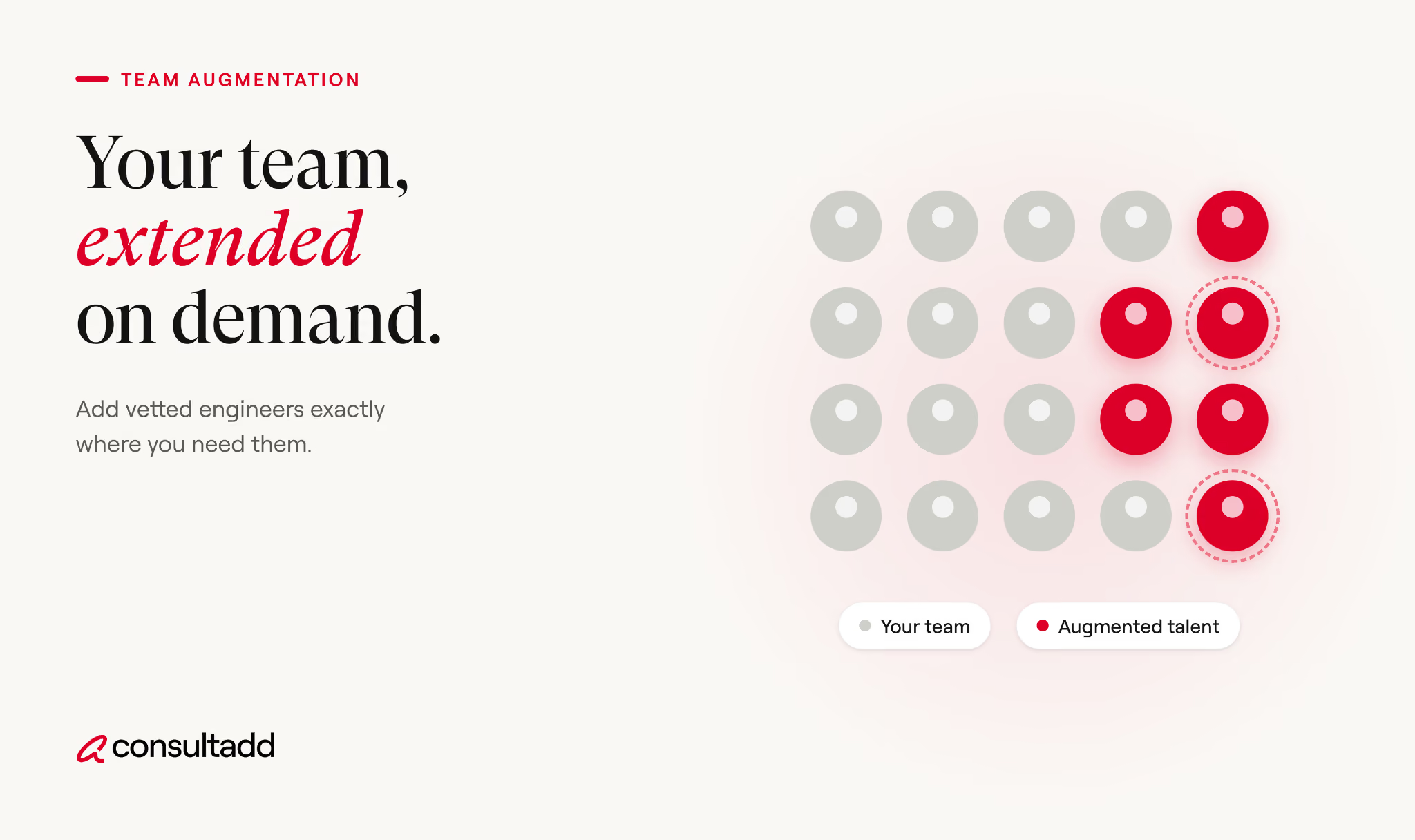
Team augmentation means adding external professionals to your existing team for a set period. They work in your tools and your process, and your managers direct the work. A staffing partner usually employs them and handles payroll, contracts and compliance.
People use "team augmentation" and "staff augmentation" almost interchangeably. When there's a difference, team augmentation usually means adding several people at once, sometimes as a small pod with its own senior lead, rather than one specialist.
That difference matters at the end. Releasing one contractor is a handoff. Releasing a pod of five who built a service together is closer to a small reorganization, and it needs a plan.
For how the model works day to day, see our guide to IT staff augmentation. For how it compares with handing work to a provider, see managed services vs staff augmentation.
Why team augmentation engagements go wrong at the end
The failures we see most often have little to do with skill. They come from four gaps nobody owned.
Knowledge sits with one person. The augmented senior who built the integration also became the only one who understands it. Your permanent team reviewed the pull requests but never ran the thing in production.
The end date arrives as a surprise. Budgets get cut, or the contract simply lapses. A team that expected three more months has two weeks, and documentation is the first thing dropped.
The best people leave first. Contractors know when their contract ends. If nobody talks to them about extension or conversion, the strongest ones take another offer a month early and leave you with the weakest handoff.
Access and IP stay loose. Accounts stay active after people leave. Code ownership turns out to depend on contract wording nobody checked.
All four can be fixed. Most of the fixes cost very little if you set them up on day one, and a lot if you try them in the final week.
Build the exit into the team augmentation contract
The contract is where the ending gets decided. These are the terms worth settling before anyone starts work.
Why IP assignment needs a closer look
The IP clause gets missed because people assume they own anything built for them. The legal picture is less simple.
Under U.S. copyright law, a work made for hire covers work done by an employee within the scope of their job, or certain commissioned works where both sides sign a written agreement. When that applies, the employer is treated as the author, as the U.S. Copyright Office explains.
In most augmentation setups, the engineer is the staffing partner's employee, not yours. Ownership has to pass from the engineer to the partner, then from the partner to you, and the contract should say so in plain words.
Have your counsel check the clause. This is general information, not legal advice.
Our breakdown of IT staff augmentation costs and contract terms covers the commercial side of these agreements.
Keep knowledge with your team while the work happens
Knowledge transfer done in the last two weeks is mostly a reading list nobody reads. The version that works happens every sprint.
1. Make documentation part of the definition of done
A ticket that changes how a service runs isn't done until the runbook reflects it. The same goes for architecture decisions.
A short decision record, written when the decision is made, explains why the code looks the way it does long after the person who wrote it has left.
2. Use a "no single owner" rule
Every system an augmented team member touches should have a named permanent owner. That person reviews the changes, joins the design calls and runs at least one deployment themselves.
If you can't name a permanent owner for a piece of work, that's a signal. Either the work is temporary, or you need to hire for it.
3. Rotate pairing between augmented and permanent staff
Pairing sessions on production problems transfer more than any handoff document.
A sensible pattern is one or two sessions a week, rotating who pairs with whom so knowledge doesn't move into a single new silo.
4. Test the handoff before it's real
Halfway through the engagement, have a permanent engineer handle an incident or a release on a system the augmented team built, with the contractors watching but not helping.
Whatever goes wrong shows you exactly what's missing, while there's still time to fix it.
Decide who stays: conversion, extension or release
Not everyone on an augmented team should leave on the same day. Some people are worth converting, some worth extending, and some should finish on schedule.
Timing matters more than most managers expect. From the supply side, good contractors often start lining up their next role well before the end date if nobody has told them what's coming. Start the conversation six to eight weeks out.
If conversion is likely from the start, a contract-to-hire arrangement sets those expectations on day one.
It also tends to attract candidates who want permanent work.
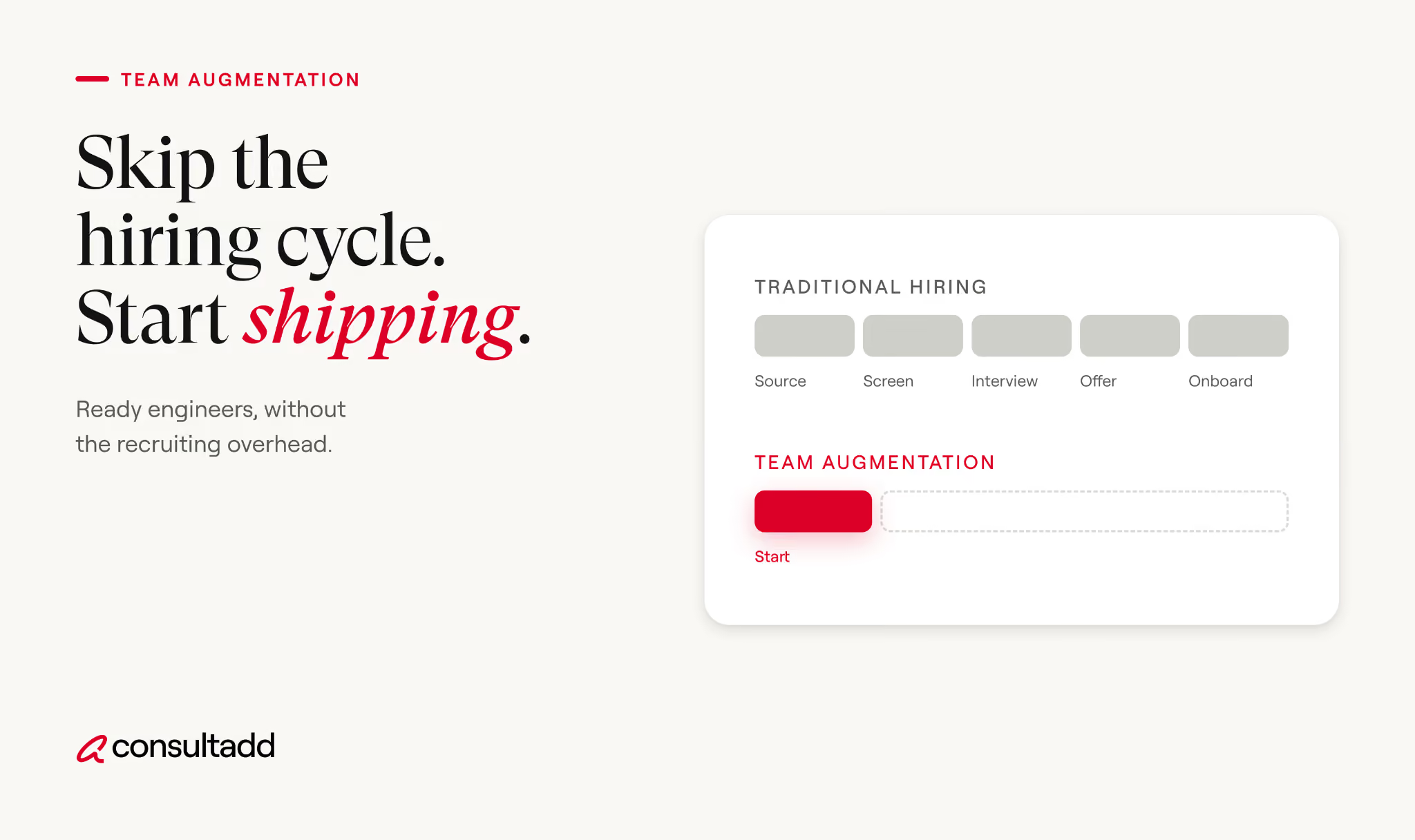
A 30-day ramp-down plan for an augmented team
Once the end date is set, a simple timeline keeps the handoff from collapsing into the final week.
The step teams skip most often is the 21-day mark. Departing contractors keep picking up features until the end, because the backlog is long and they're productive. That leaves no time for the work that actually protects you.
Close access and hand back cleanly
Access cleanup is the least interesting part of an exit and the one with the biggest downside.
The 2026 Verizon Data Breach Investigations Report found that 48% of breaches involved a third party, up from 30% the year before, as TechRepublic reported. The same data showed that only 23% of third-party organizations fully fix missing or misconfigured MFA on their cloud accounts.
NIST's security controls treat this as a standard requirement. NIST SP 800-53 control PS-7 asks organizations to set personnel security requirements for external providers, including notice when external staff with credentials or system access transfer or leave.
On the last day, confirm each of these is closed:
- Identity provider, VPN and SSO accounts
- Code repository access, deploy keys and personal access tokens
- Cloud console roles and any API keys the person created
- Shared passwords, secrets and service accounts they knew about
- Chat, ticketing, design and documentation tools
- Company laptops and any client data on personal devices
Personal access tokens and API keys are the ones that slip. Disabling a login doesn't revoke a token created six months earlier for a CI pipeline.
Signs your team augmentation exit plan is working
You don't need a dashboard. A few plain questions tell you whether the handoff will hold:
- Can your permanent team deploy and roll back every system the augmented team built, without help?
- Has a permanent engineer handled at least one real incident on each of those systems?
- Is every architecture decision from the engagement written down somewhere a new hire would find it?
- Do you know today which contractors you'd convert, and have they been asked?
- Could you list every account and token each contractor holds?
If you answer no to any of these with less than a month to go, that's where the remaining time should go.
Final thoughts on team augmentation
Team augmentation buys you capacity quickly. Whether it leaves anything behind depends on decisions made at the start: what the contract says about the end, who owns each system, and when you talk to the people you'd like to keep.
Before your next engagement starts, add three things to the plan. Write the exit terms into the contract, name a permanent owner for every system the team will touch, and put the ramp-down date in the calendar.
The rest gets much easier from there. Choosing the right people matters too.
Our guide to vetting developers for staff augmentation covers that side.
Start Strong With Consultadd
With 15 years in business and 5,000+ successful staffing engagements, we don’t just fill roles, we build reliability into your process. We’ve supported 65 staffing companies in the past year alone and maintain MSAs with industry leaders like Robert Half and TEKsystems.
Here’s what working with Consultadd looks like:
- Talent sourced in under 24 hours
- Ready-to-deploy candidates, vetted for experience and compliance
- Lower turnover risk: we match long-term goals, not just short-term needs
- Seamless compliance: visa, documentation, onboarding? Handled.
- Dedicated 1:1 account managers for responsive, personalized support
- Top 100 candidate matches delivered in the past year
- Strong partnerships with universities to tap into fresh, committed talent
- Post-placement support so your investment grows beyond day one
For candidates, your next opportunity is more than just a job title, it's a chance to build skills, gain experience, and move your career forward. At Consultadd, we connect technology professionals with projects and employers that align with their goals, whether they're looking for contract, contract-to-hire, or long-term opportunities.
The tech job market moves fast, but the right guidance can make all the difference. Ready to take the next step in your career journey? Explore Opportunities >>
Key takeaways
- Team augmentation usually goes wrong at the end, when knowledge, access and IP haven't been planned for the handoff.
- Write notice periods, a transition window, documentation deliverables, IP assignment and conversion terms into the contract before work starts.
- Give every system a permanent owner, make documentation part of done, and test the handoff halfway through.
- Start conversion and extension conversations six to eight weeks before the end date, before strong contractors take other offers.
- Revoke every account, token and key on the last day, and check again a week later.
FAQs
What is team augmentation?
Team augmentation is a staffing model where external professionals join your existing team for a set period and work under your managers. A staffing partner usually employs them and handles payroll and compliance. You keep control of the work, the priorities and the decisions.
What is the difference between team augmentation and staff augmentation?
The terms are often used interchangeably. When people separate them, staff augmentation usually means adding individual specialists, while team augmentation means adding several people at once, sometimes as a small group with its own lead. The management model is the same in both cases.
How do you transfer knowledge from augmented staff?
Make it part of the work from the start rather than a final-week task. Require runbooks and decision records as part of the definition of done, give each system a permanent owner, and rotate pairing between augmented and permanent engineers. Then test the handoff by having your own team run a release or incident without help.
How much notice should you give before ending a team augmentation contract?
Two to four weeks of written notice is common, but check what your contract says. For a group of augmented engineers who own live systems, plan a ramp-down of around 30 days so there's time for handoff. Talking to the people involved six to eight weeks ahead gives you the best chance of keeping the ones you want.
Can you hire augmented team members full-time?
Usually, yes. Most staffing partners allow conversion to full-time, often for a fee that may decrease the longer the person has worked with you. Check the conversion terms before the engagement starts, and confirm the person actually wants a permanent role.
Who owns the code written by an augmented team?
You should, but only if the contract says so. In most setups the engineer is employed by the staffing partner, so ownership needs to pass from the engineer to the partner and then to you through a written IP assignment. Have your legal team review that clause before work begins.

Bench Sales Explained: Process, Roles And Best Practices
Introduction
Most recruiting starts with a job and goes looking for a person. Bench sales starts with a person and goes looking for a job.
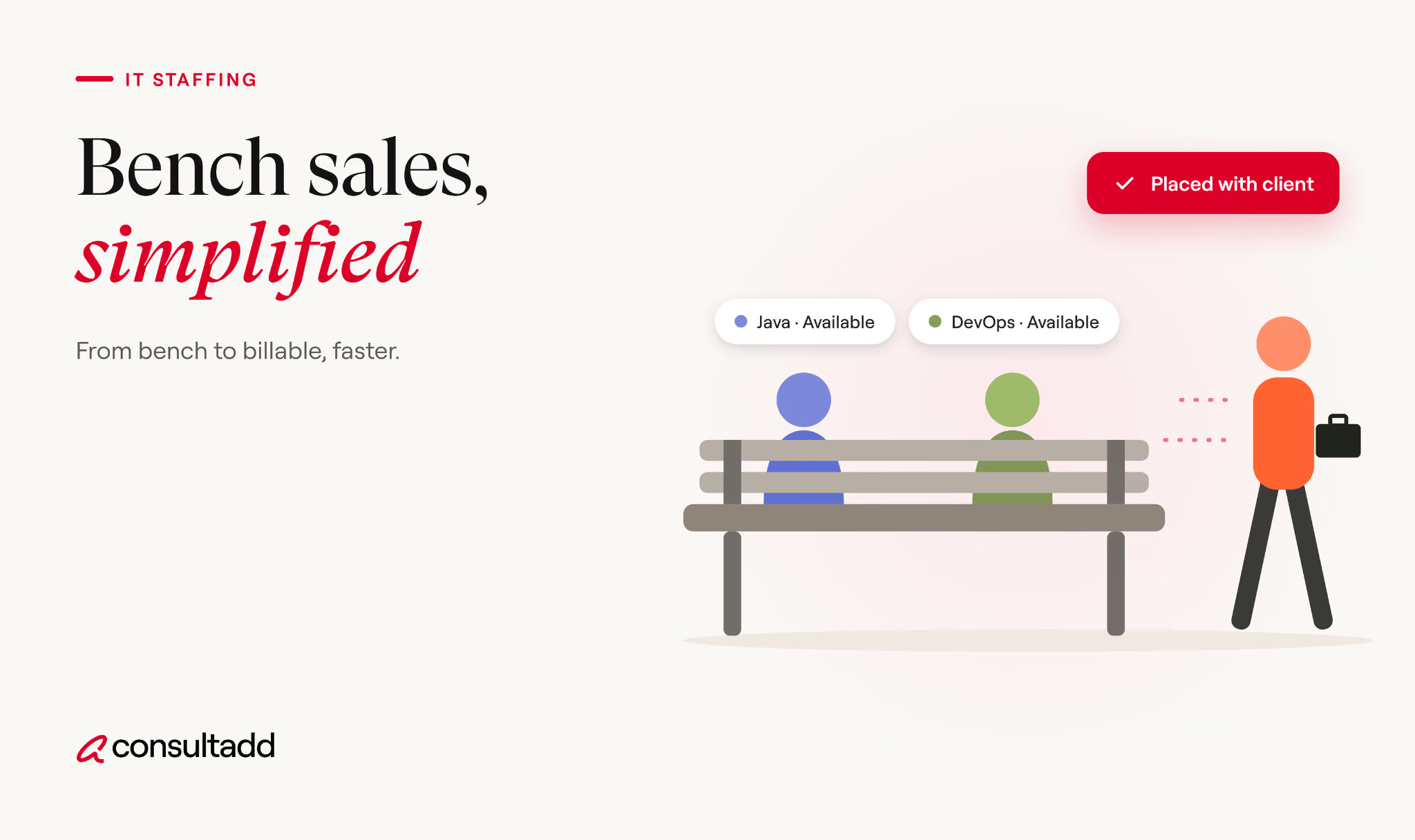
In US IT staffing, bench sales is the work of placing consultants who are already on a staffing firm's payroll but aren't billing on a client project. A bench sales recruiter markets those consultants to vendors and clients, submits them to matching requirements, and moves them onto a new contract as fast as possible.
Speed matters because every week a consultant sits on the bench, the firm is paying salary with no revenue coming in.
This guide covers how the bench sales process works, the terms you'll hear every day, how it differs from regular IT recruiting, which metrics to track, and the compliance rules that good bench sales teams follow.
TL;DR
- Bench sales is reverse recruiting: the firm already employs the consultant and has to find them a billable contract.
- The process runs from profile prep and hotlists to requirement sourcing, RTRs, submissions, rate confirmation, interviews and onboarding.
- Bench time is a cost, not a source of revenue. The firm pays the consultant while they wait, so faster placement protects margin.
- Track average bench days and the ratios from submission to interview to offer, not just raw submission volume.
- For H-1B consultants, employer-caused bench time generally has to be paid at the required wage, and resumes must reflect real experience.
What bench sales is
In IT staffing, the "bench" is the group of consultants a firm employs who aren't currently assigned to a client project. They might have just finished a contract, been released early, or recently joined the firm.
Bench sales, sometimes called bench marketing, is the work of getting those consultants back onto billable projects. The recruiter doesn't have an open job to fill. They have a Java developer, a DevOps engineer or a data analyst ready to start, and they need to find the right contract.
Most bench sales happens in the C2C and W-2 contract market. A smaller staffing firm employs the consultant and signs a contract with a larger vendor or implementation partner, which in turn serves the end client.
For how that structure works, see our guide to corp-to-corp staffing.
How the bench sales process works
The steps are fairly consistent across firms. What separates strong teams is how carefully they handle each one.
- Consultant intake. The recruiter confirms the consultant's skills, recent projects, work authorization, location preferences, availability and minimum rate.
- Profile prep. The resume is updated to reflect real, recent work and targeted at the roles the consultant is most likely to win. Many firms mask contact details so vendors have to go through the firm.
- Hotlist distribution. The consultant is added to the firm's hotlist, a regularly shared list of available consultants, skills and locations sent to vendor contacts.
- Requirement sourcing. The recruiter works vendor emails, job boards, vendor portals and direct relationships to find open contract requirements that match.
- RTR and submission. Before submitting, the recruiter gets the consultant's written right to represent them for that specific requirement, then sends the profile with the agreed rate.
- Rate confirmation. The bill rate to the vendor and the consultant's pay are confirmed before interviews, not after.
- Interviews. The vendor or end client interviews the consultant, usually over video, with one or two technical rounds.
- Onboarding. Contracts or work orders are signed, background checks and employment paperwork are completed, and the consultant starts.
The step teams most often rush is the first one. A recruiter who doesn't know the consultant's real strengths ends up sending them to the wrong roles, and the consultant's profile starts to look worn after a dozen rejections.
Bench sales terms you'll hear every day
New recruiters and consultants run into a lot of shorthand. Here are the terms that come up most.
Bench sales vs traditional IT recruiting
The two jobs use similar tools but run in opposite directions.
Many job postings blur these roles. A role titled "C2C recruiter" is often a bench sales job in practice. Our guide to what a C2C recruiter does covers how the titles overlap.
What a bench sales recruiter does day to day
A typical day mixes sales, research and consultant care:
- Reading new requirements from vendor emails and portals, and filtering out ones that don't fit
- Calling vendor contacts to learn about upcoming roles before they're widely shared
- Getting RTRs, submitting consultants and tracking every submission
- Preparing consultants for interviews with notes about the client, the team and likely questions
- Sending the hotlist and updating it as consultants are placed
- Checking in with consultants on the bench so they stay engaged and don't drift to another firm
The consultant check-ins matter more than most people expect. A consultant who hears nothing for two weeks starts taking calls from other firms. A short weekly update, even with no news, keeps them working with you.
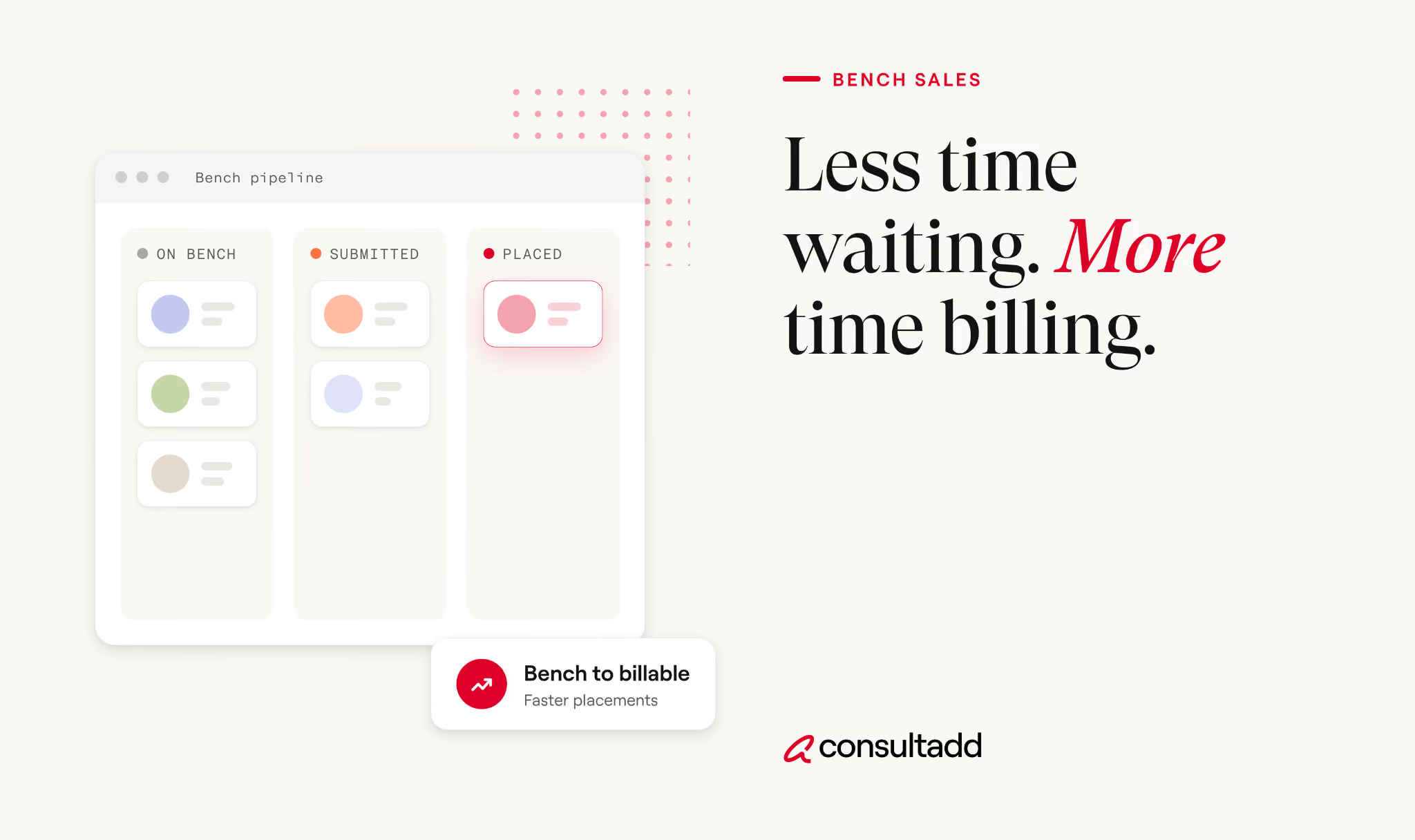
Bench sales metrics worth tracking
Raw submission volume is the easiest number to count and the least useful on its own. Sending fifty weak submissions wears out vendor relationships and the consultant's profile.
Look at these by skill area, not just across the whole bench. A firm can have a healthy average while its .NET consultants sit for weeks and its cloud engineers place in days.
Compliance and ethics in bench sales
Bench sales has a reputation problem in parts of the industry, mostly because of shortcuts some firms take under pressure. Good teams treat these rules as part of the job.
1. Pay during bench time
For H-1B consultants, employer-caused bench time is generally not unpaid time. The U.S. Department of Labor's guidance on H-1B nonproductive time says the required wage must be paid when a worker is in nonproductive status because of the employer, such as lack of assigned work. The rule sits in20 CFR 655.731.
Our post on bench candidates covers what that means for the consultant.
2. Honest resumes
Updating a resume to highlight relevant work is normal. Adding skills, titles or projects the consultant didn't actually have is not.
Fabricated experience usually comes out in the technical interview. When it doesn't, it shows up in the first few weeks on the project, and the vendor stops taking that firm's submissions.
3. One RTR per requirement
Submitting the same consultant to the same requirement through two vendors creates a dispute about who represents them. Most vendors and clients will reject the consultant to avoid it. Get a written RTR for each requirement, track it, and tell the consultant not to give a second one for the same role.
4. Employer relationship and worksite
For visa-sponsored consultants, the sponsoring firm needs a real employer relationship. USCIS policy guidance looks at whether the employer can hire, pay, fire, supervise or otherwise control the work.
The job title, duties and worksite in filings also need to match where and how the consultant actually works.
5. Worker classification
Consultants on W-2 are employees of the firm, with the obligations that come with that. The Department of Labor explains why employee misclassification creates wage and overtime exposure. This is general information, not legal advice.
Making bench sales work
Good bench sales comes down to knowing your consultants well, sending fewer but better-matched submissions, and keeping strict records on RTRs and rates.
Start with intake. Spend real time understanding each consultant's strongest recent work and set a realistic rate range with them on day one. Then build vendor relationships that send you requirements early, track bench days by skill, and keep in touch with every consultant while they wait.
The firms that do bench sales well tend to have shorter bench periods, fewer duplicate submissions and consultants who stay with them for years. That's where the margin comes from.
Start Strong With Consultadd
With 15 years in business and 5,000+ successful staffing engagements, we don’t just fill roles, we build reliability into your process. We’ve supported 65 staffing companies in the past year alone and maintain MSAs with industry leaders like Robert Half and TEKsystems.
Here’s what working with Consultadd looks like:
- Talent sourced in under 24 hours
- Ready-to-deploy candidates, vetted for experience and compliance
- Lower turnover risk: we match long-term goals, not just short-term needs
- Seamless compliance: visa, documentation, onboarding? Handled.
- Dedicated 1:1 account managers for responsive, personalized support
- Top 100 candidate matches delivered in the past year
- Strong partnerships with universities to tap into fresh, committed talent
- Post-placement support so your investment grows beyond day one
For candidates, your next opportunity is more than just a job title, it's a chance to build skills, gain experience, and move your career forward. At Consultadd, we connect technology professionals with projects and employers that align with their goals, whether they're looking for contract, contract-to-hire, or long-term opportunities.
The tech job market moves fast, but the right guidance can make all the difference. Ready to take the next step in your career journey? Explore Opportunities >>
Key takeaways
- Bench sales is reverse recruiting: placing consultants the firm already employs onto new billable contracts.
- Bench time is a cost to the firm, so faster, better-matched placements protect margin.
- The process depends on careful intake, targeted submissions, written RTRs and rates confirmed before interviews.
- Track average bench days and conversion ratios by skill area, not just submission volume.
- Pay H-1B consultants during employer-caused bench time, keep resumes accurate, and never double-submit a consultant to the same requirement.
FAQs
What is bench sales in IT staffing?
Bench sales is the process of finding new contract projects for consultants who are already employed by a staffing firm but aren't currently billing. The recruiter markets those consultants to vendors and clients and submits them to matching requirements. It's sometimes called bench marketing.
What does a bench sales recruiter do?
A bench sales recruiter markets the firm's available consultants, finds matching contract requirements, gets RTRs, submits profiles and confirms rates. They also prepare consultants for interviews and stay in touch with them during bench time. Most of their contacts are vendors and implementation partners rather than hiring managers.
What is a hotlist in bench sales?
A hotlist is a list of a firm's available consultants, usually sent to vendor contacts on a regular schedule. It typically shows each consultant's main skills, years of experience, location and work authorization. Vendors use it to spot consultants who match their open requirements.
What is RTR in bench sales?
RTR stands for right to represent. It's written permission from the consultant allowing one firm to submit them for one specific requirement. It prevents duplicate submissions, which can get a consultant rejected for the role.
Do bench consultants get paid?
It depends on the employment arrangement. For H-1B workers, the Department of Labor generally requires the employer to pay the required wage during nonproductive time caused by the employer, such as lack of assigned work. Consultants should confirm their bench pay terms in writing before they join a firm.
What is the difference between bench sales and IT recruiting?
Traditional IT recruiting starts with an open job and searches for a candidate. Bench sales starts with a consultant the firm already employs and searches for a job. That's why bench sales recruiters work mostly with vendors and other staffing firms, while traditional recruiters work mostly with hiring managers.