
IT Staffing
.avif)
How Do Staffing Agencies Get Contracts? A Real Playbook
Introduction
Every staffing agency owner asks the same question at some point: how do staffing agencies get contracts when the market is already full of firms doing the same thing?
The honest answer is that most contracts don't come from luck or a slick pitch deck. They come from a repeatable process built around timing, proof, and paperwork that actually protects both sides.
This isn't a theory piece. It's a walkthrough of how agencies find clients, what a contract actually needs to say, and why some firms keep winning renewals while others keep starting from zero.
TL;DR
- Most first contracts come from direct outreach tied to a specific hiring pain point, not from ads or cold email blasts.
- A Master Service Agreement is the foundation of every client relationship. Get the billing model, replacement clause, and payment terms right before anything else.
- Vendor management systems (VMS) and managed service providers (MSP) control access to a large share of enterprise staffing spend, and agencies need a strategy to get on those panels.
- Government staffing contracts require SAM.gov registration, a Unique Entity Identifier, and the right NAICS code, but they offer steady, longer-term revenue once won.
- Winning the first contract matters less than what happens after. Retention and referrals are where staffing agencies actually make their margin.
Finding the clients worth pursuing
Agencies that consistently sign new contracts don't chase everyone. They watch for specific signals: a company posting the same role three times in two months, a sudden spike in job listings, or a LinkedIn post about a new product launch that will need staff behind it.
Repeated job posts, urgent backfills, and multiple openings for the same function are the clearest indicators that a company is struggling to hire on its own.
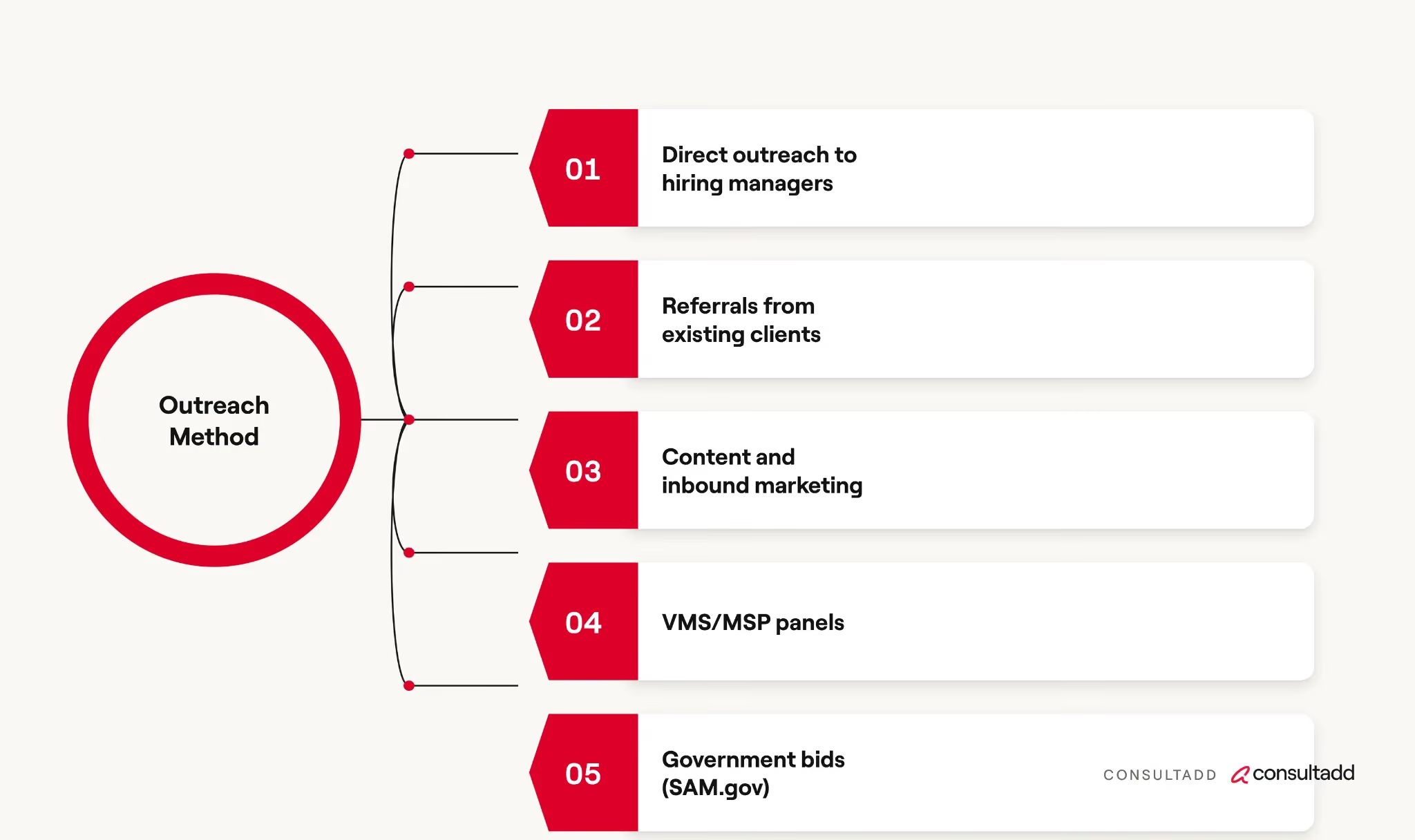
Most agencies build a target list from a mix of sources:
- LinkedIn Jobs
- Company career pages
- Referrals from existing clients
- Their own CRM data on past conversations that didn't close
The point isn't to email everyone in a spreadsheet. It's to show up when a company is already feeling the pain of an open seat.
What actually works in the first pitch
Cold outreach still works, but only when it's specific. Cold pitching works only when it's highly targeted and value-driven, and generic "we place great talent" emails rarely get a reply.
The pitches that land usually center on one open role, one clear pain point, and one piece of proof, like a past placement in the same function or a shortlist turnaround time.
Referrals do the heavy lifting once an agency has a track record. Satisfied clients become the best advocates for a staffing firm, and referrals tend to convert faster than cold outreach because trust is already built in. An agency that has filled ten roles well for one client has, without meaning to, built a case study it can use on the next ten prospects.
The trust factor matters even more for contract staffing than for one-off placements. A client is being asked to make an agency its ongoing employment partner for an entire category of workers, which is a bigger commitment than a single hire, so the sales conversation needs to reflect that.
The MSA: what it needs to say
No staffing contract is real until the Master Service Agreement is signed. This document sets the terms for everything that follows, and agencies that treat it as a formality tend to regret it later. A proper MSA should be tailored to the staffing model in use, not copied from a generic vendor template.
A few things belong in every MSA, regardless of size:
- The billing model, whether it's a bill rate, a placement fee, or a retainer, and exactly what that rate includes (markup, payroll taxes, statutory benefits, pass-through costs).
- Invoice terms, including the billing cycle, due date, and the point at which a payment counts as late.
- A replacement clause that defines the replacement window and what qualifies as a failed placement.
- Language covering how cost increases, like payroll tax changes, get handled mid-contract.
If a client asks for net-60 or net-90 payment terms, the markup needs to be adjusted to protect payroll cash flow, since the agency is usually paying its contractors well before the client pays the invoice.
This is one of the more common mistakes newer agencies make. They agree to long payment windows without adjusting their margin, and the cash flow gap eventually catches up with them.
The MSA is also just the first layer. Contract staffing runs on a stack of related documents.
A single placement can involve four to six separate signed documents across two or three parties:
- The client-facing MSA
- A contractor employment agreement
- An assignment-specific statement of work
- Compliance paperwork like I-9 verification
Agencies that don't have a system for tracking all of it end up chasing signatures instead of filling roles.
For agencies weighing whether their rate structure actually holds up once payroll and compliance costs are factored in, it's worth running the numbers before signing anything long-term.
Our breakdown of the IT staffing process covers where those costs typically show up.
Getting past the VMS gatekeeper
Larger clients rarely sign staffing contracts directly anymore. They route hiring through a vendor management system, a platform that centralizes every staffing supplier's submissions in one place.
Instead of sending every staffing supplier separate emails and spreadsheets, the client uses one platform to distribute job requisitions to all approved vendors at once.
Getting a supplier agreement with the company running the VMS doesn't guarantee volume. It just gets an agency onto the list of vendors who see the requisitions. From there, speed and quality of submissions decide who actually gets placements.
A smaller firm can compete for corporate contracts through a VMS as long as it understands the platform's rules and has reliable back-office infrastructure for onboarding, payroll, and compliance.
If you're trying to figure out where your firm fits against the larger players in the space, our rundown of top IT staffing firms breaks down how different agencies specialize.
This is where a lot of independent agencies stall. They win the supplier agreement, then lose ground because their internal process for submitting candidates is slower than a competing agency's, or their compliance paperwork isn't ready when a program manager asks for it.
Government staffing contracts
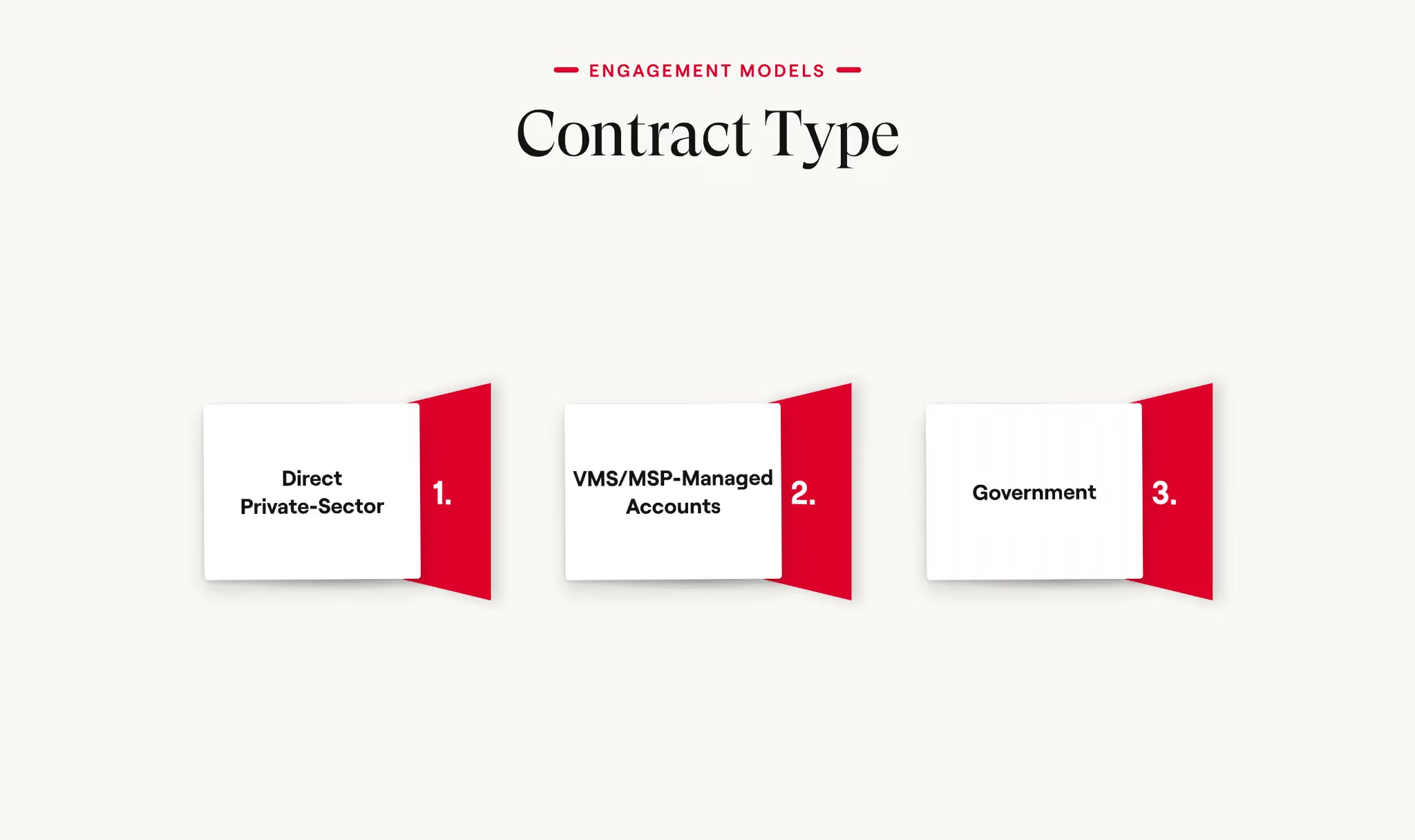
Federal and state agencies represent a different track entirely, with its own registration process:
To bid on government contracts, agencies need to register on SAM.gov, obtain a Unique Entity Identifier, and select the NAICS codes relevant to their services, such as 561320 for contract staffing.
Winning a government bid requires a detailed proposal that demonstrates experience, quality, pricing, and the ability to actually meet the staffing need described in the request. It's a slower sales cycle than private-sector work, often taking months instead of weeks, but the payoff is different too.
Government contracts tend to offer steadier, more predictable revenue than private-sector placements, and winning one adds credibility that helps with other prospective clients as well.
For agencies with the compliance infrastructure to handle federal requirements, it's worth the registration overhead.
What happens after the contract is signed
Winning the first contract opens the door. Keeping the client is a separate job.
Agencies need to prove their value over time by truly understanding each client's talent needs, delivering quality matches, and providing a consistently good experience through the process.
These turn a one-off contract into a preferred-provider relationship that can span years:
- Follow-through
- Responsiveness
- Successful placements
That relationship is worth more than any single deal, because renewal and expansion work is cheaper to win than a brand-new logo.
The staffing market itself has been uneven the past couple of years, which makes retention even more important.
According to the American Staffing Association, temporary and contract staffing sales totaled $113.5 billion in 2025, down 8.5% from 2024, though the fourth quarter showed signs of stabilization with sales rising 2.6% from the prior quarter.
In a market like that, an agency's existing book of clients carries more weight than it would in a growth year.
For a closer look at how agencies structure the client-facing side of the relationship once a contract is live, see our guide on hiring and recruiting strategies.
Start Strong With Consultadd
With 15 years in business and 5,000+ successful staffing engagements, we don't just fill roles, we build reliability into your process. We've supported 65 staffing companies in the past year alone and maintain MSAs with industry leaders like Robert Half and TEKsystems.
Here's what working with Consultadd looks like:
- Talent sourced in under 24 hours
- Ready-to-deploy candidates, vetted for experience and compliance
- Lower turnover risk: we match long-term goals, not just short-term needs
- Seamless compliance: visa, documentation, onboarding? Handled.
- Dedicated 1:1 account managers for responsive, personalized support
- Top 100 candidate matches delivered in the past year
- Strong partnerships with universities to tap into fresh, committed talent
- Post-placement support so your investment grows beyond day one
For candidates, your next opportunity is more than just a job title, it's a chance to build skills, gain experience, and move your career forward. At Consultadd, we connect technology professionals with projects and employers that align with their goals, whether they're looking for contract, contract-to-hire, or long-term opportunities.
The tech job market moves fast, but the right guidance can make all the difference. Ready to take the next step in your career journey? Explore Opportunities >>
Key Takeaways
- Contracts get won through targeted outreach tied to a visible hiring pain point, not mass cold email.
- The MSA is the foundation of the relationship. Billing terms, replacement clauses, and payment cycles need to be specific, not boilerplate.
- VMS and MSP platforms gate a large share of enterprise staffing work, and getting approved is only step one; submission speed decides who actually places candidates.
- Government contracts take longer to win but offer more stable revenue once secured.
- Retention and referrals, not new-logo wins, are where most agencies actually build sustainable margin.
FAQs
How long does it typically take a staffing agency to land its first client contract?
It varies widely, but most agencies see their first signed contract within one to three months of consistent outreach. Government contracts and enterprise VMS accounts take longer, sometimes six months or more, because of registration and approval steps.
What's the difference between a staffing contract and a staffing agreement?
In practice, the terms are often used interchangeably. Technically, an "agreement" like an MSA sets the ongoing framework, while individual "contracts" or statements of work cover specific placements under that framework.
Do small staffing agencies have a real shot at enterprise contracts?
Yes, particularly through VMS and MSP programs, which are designed to let smaller suppliers compete alongside larger firms. The main requirement is reliable back-office infrastructure for payroll, onboarding, and compliance.
What should a staffing agency never skip in an MSA?
The replacement clause and the billing model. Both directly affect cash flow and dispute risk, and vague language in either one tends to cause problems months into the relationship, not at signing.
Can a staffing agency bid on government contracts without prior government experience?
Yes, but it takes preparation. Registering on SAM.gov and selecting the correct NAICS code is the entry point; the proposal itself needs to demonstrate capability even without a long federal track record.
Why do some staffing agencies win contracts but struggle to keep clients?
Usually because they treat the signed contract as the finish line rather than the start of the relationship. Retention depends on consistent delivery and responsiveness after the ink dries, not on how strong the initial pitch was.
.avif)
What Is Staff Augmentation? A Practical Breakdown
Introduction
What is staff augmentation, really, beyond the buzzword it's become in every hiring pitch deck? Stripped down, it's a workforce model where a company brings in outside professionals to work inside its existing team, under its own management, for a defined stretch of time.
They join the standups. They get repo access. They follow the roadmap the internal team already set. The only thing that's different is who technically employs them.
It's a distinct model, not a synonym for outsourcing or a staffing agency handing over a finished project. The distinction matters because picking the wrong model for the situation tends to cost more than it saves.
Here's what staff augmentation actually looks like in practice, and when it's the right call.
TL;DR
- Staff augmentation means adding external professionals to your team who work under your direction, not a vendor's.
- It differs from outsourcing, where a third party owns the outcome and manages the work itself.
- It fits best for time-bound needs, specialized skills, or gaps that a permanent hire would take too long to fill.
- The company keeps control of the roadmap and daily direction; the staffing partner handles payroll, compliance, and backup coverage.
- It isn't free of overhead. Someone internal still has to manage and integrate the augmented staff for it to work well.
The plain-language definition
Staff augmentation is the practice of temporarily adding individual professionals, or a small group of them, directly into an existing internal team to fill a specific skill or capacity gap.
The augmented staff report into the company's own management structure and work on the company's actual tools and priorities, not a separate deliverable managed elsewhere.
In IT specifically, this usually means bringing in developers, QA engineers, DevOps specialists, or data professionals who sit inside the existing engineering org for the length of a project or a defined period.
They're doing the same kind of work a full-time hire would do. The employment relationship, payroll, benefits, and often the sourcing and vetting, just sits with a staffing partner instead of the company itself.
Staff augmentation versus outsourcing versus consulting
These three terms get used loosely, and the confusion causes real problems when a company picks the wrong one for what it actually needs.
Outsourcing hands a task or function to another company that manages it start to finish. Staff augmentation keeps that management inside the hiring company and just changes where the people come from.
A company that outsources a project loses day-to-day visibility in exchange for less management burden. A company that augments staff keeps the visibility and control but takes on the work of directing people who technically aren't its employees.
When staff augmentation actually makes sense
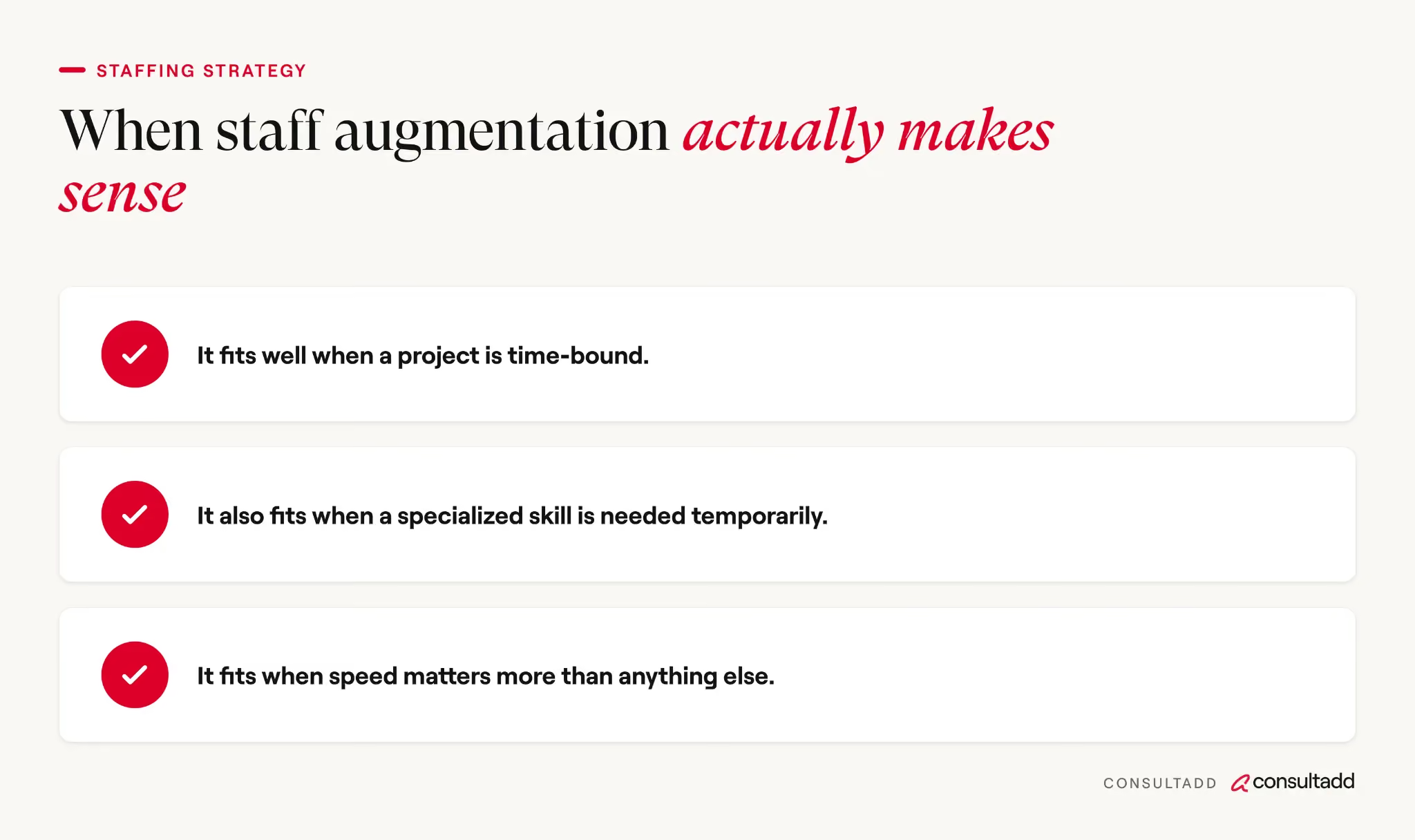
The model works best in a specific set of situations, and it tends to underperform outside of them.
- It fits well when a project is time-bound and the need will genuinely go away once the work is done.
- It also fits when a specialized skill is needed only temporarily, the kind of expertise that doesn't justify a permanent headcount line.
- It fits when speed matters more than anything else, because industry data puts the average time to fill a specialized technical role at roughly 88 days, a delay that can quietly become a strategic liability for a company running on quarterly product cycles.
It fits less well when the company doesn't have strong internal leadership already in place to direct the augmented staff. Without that, adding outside people to a team with unclear priorities or thin management bandwidth usually just adds friction instead of capacity.
Staff augmentation assumes the company already knows what it wants built and just needs more hands to build it, not a partner to figure out the plan.
How the engagement actually works
The process usually starts with:
Step 1: The company defines the gap clearly: which skills, for how long, and how the person will integrate into existing workflows.
Step 2: A staffing partner then sources and vets candidates against that specific need, handles the employment relationship, and manages the administrative side, tax classification, benefits, and onboarding documentation, so the hiring company's own HR team isn't left untangling paperwork for someone who isn't technically their employee.
Step 3: Once someone starts, they typically join the same tools the internal team already uses, the same sprint planning, the same code review process.
The line between an augmented team member and a full-time employee, on a day-to-day basis, is often invisible to everyone except payroll.
Our step-by-step breakdown of the IT staff augmentation process covers what a well-run engagement looks like from intake through placement.
The tradeoffs nobody puts in the pitch deck
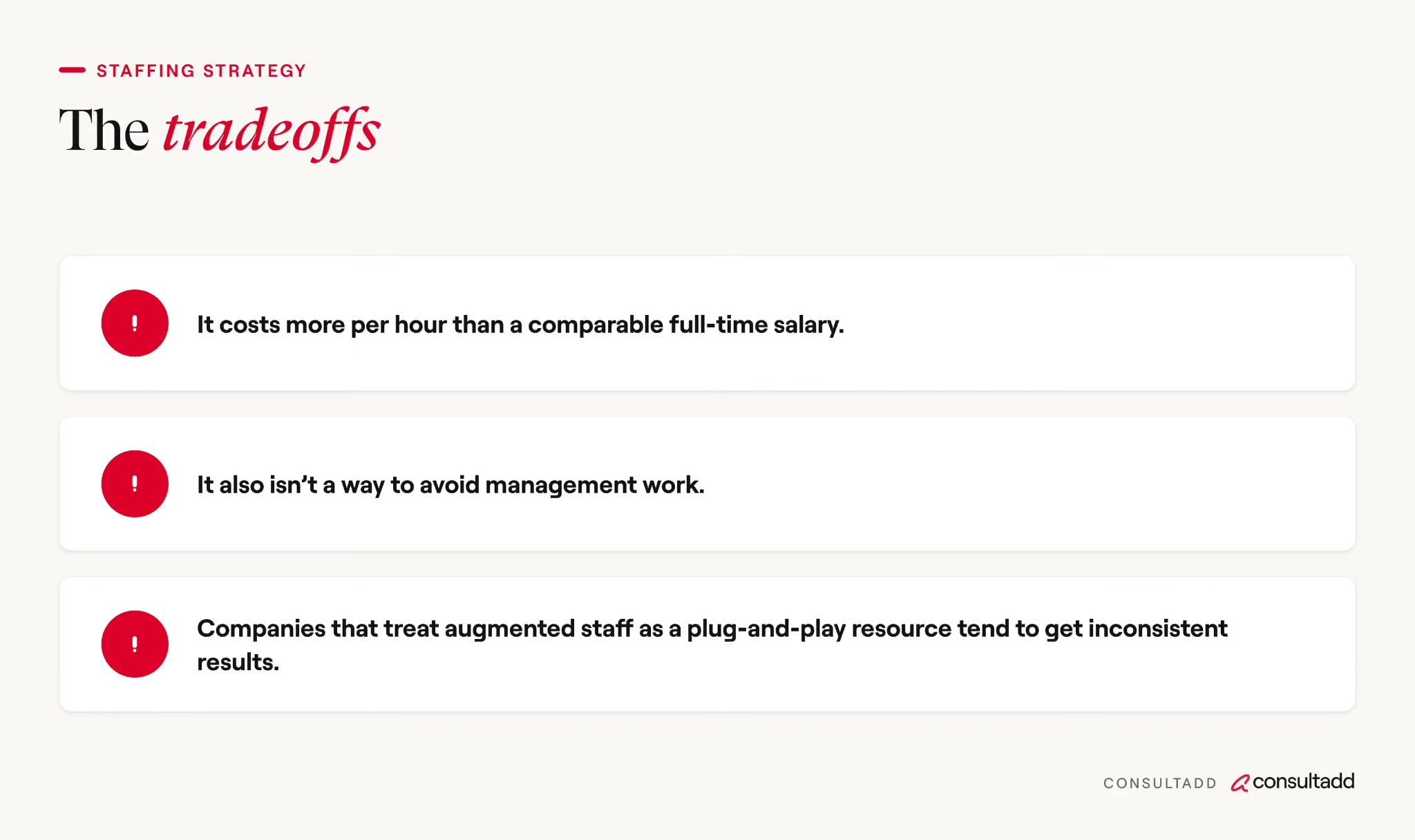
Staff augmentation isn't the cheapest option available, and it isn't the most hands-off either.
- It costs more per hour than a comparable full-time salary in most cases, because the rate has to cover the staffing partner's sourcing, compliance work, and margin on top of the person's actual pay.
- It also isn't a way to avoid management work. The company still has to onboard, direct, and integrate the augmented staff just as it would a direct hire, arguably more carefully, since there's no shared tenure or institutional context to fall back on.
- Companies that treat augmented staff as a plug-and-play resource, with no real onboarding or clear direction, tend to get inconsistent results and blame the model instead of the process.
The upside, when it's used well, is real:
A company gets specialized skills without a permanent commitment, fills a capacity gap in weeks instead of months, and keeps full control over how the work gets done.
That combination is why the model has moved from a stopgap measure to a core part of how many technology organizations plan their workforce.
Why this model has grown so fast in tech specifically
Demand for specialized technical skills, particularly around AI, cloud infrastructure, and cybersecurity, has consistently outpaced the supply of qualified full-time candidates.
IDC projects that more than 90% of organizations worldwide will be affected by the broader IT skills crisis, which is a large part of why staff augmentation has become the default answer rather than a fallback.
For agencies and companies sourcing this kind of talent, the harder part usually isn't finding people who claim the right skills. It's verifying they actually have them, particularly for AI-related roles where demand has grown faster than almost any other category.
Our guide on closing the AI skills gap covers how staffing partners are adjusting sourcing to keep up with that specific demand.
Start Strong With Consultadd
With 15 years in business and 5,000+ successful staffing engagements, we don't just fill roles, we build reliability into your process. We've supported 65 staffing companies in the past year alone and maintain MSAs with industry leaders like Robert Half and TEKsystems.
Here's what working with Consultadd looks like:
- Talent sourced in under 24 hours
- Ready-to-deploy candidates, vetted for experience and compliance
- Lower turnover risk: we match long-term goals, not just short-term needs
- Seamless compliance: visa, documentation, onboarding? Handled.
- Dedicated 1:1 account managers for responsive, personalized support
- Top 100 candidate matches delivered in the past year
- Strong partnerships with universities to tap into fresh, committed talent
- Post-placement support so your investment grows beyond day one
For candidates, your next opportunity is more than just a job title, it's a chance to build skills, gain experience, and move your career forward. At Consultadd, we connect technology professionals with projects and employers that align with their goals, whether they're looking for contract, contract-to-hire, or long-term opportunities.
The tech job market moves fast, but the right guidance can make all the difference. Ready to take the next step in your career journey? Explore Opportunities >>
Key Takeaways
- Staff augmentation adds outside talent under the hiring company's own direction, unlike outsourcing where a vendor owns the outcome.
- It works best for time-bound needs and specialized skills that don't justify a permanent hire.
- It requires real internal management, not just a signed contract, to actually work well.
- Cost per hour typically runs higher than a comparable salary, offset by speed and flexibility.
- The model has become a core workforce strategy in tech specifically, driven by persistent skills shortages.
FAQs
How is staff augmentation different from a regular staffing agency placement?
The line is thin in practice, but staff augmentation typically implies the person integrates closely into an existing team's tools and workflow for a defined engagement, while a general staffing placement can be more standalone. Many staffing partners handle both under similar terms.
Is staff augmentation cheaper than hiring full-time?
Usually not on a pure hourly basis. The rate includes the staffing partner's sourcing, vetting, and compliance work. The savings come from avoiding the cost and time of a permanent hire for a need that won't last, not from a lower headline rate.
What industries use staff augmentation most?
IT and software development are the heaviest users, but the model shows up in engineering, life sciences, and other technical fields where specialized skills are hard to find and projects are time-bound.
Can staff augmentation lead to a permanent hire?
Yes, this happens often. Many companies use an augmentation engagement to evaluate someone's performance and fit before extending a permanent offer, effectively an extended trial period with less commitment on both sides upfront.
Who handles compliance and payroll for augmented staff?
The staffing partner typically manages payroll, tax classification, benefits, and onboarding documentation, while the hiring company manages the person's actual day-to-day work and priorities.
What's the biggest mistake companies make with staff augmentation?
Treating it as a plug-and-play resource with no real onboarding or clear direction. Augmented staff still need context, priorities, and management attention to be productive, and skipping that step is the most common reason engagements underperform.
.avif)
Top IT staffing companies in the USA
Introduction
Picking a staffing partner isn't really about finding the biggest name. It's about matching the firm to the hiring problem in front of you.
A company staffing up a 200-person enterprise IT program has a different need than a startup trying to land one senior backend engineer in three weeks, and the firms that excel at one aren't always the ones to call for the other.
This list covers the IT staffing companies that consistently show up across industry revenue rankings, client reviews, and Staffing Industry Analysts (SIA) reporting for 2026.
Rather than just naming the biggest players, each entry notes what the firm is actually good at and who tends to get the most value from working with them.
TL;DR
- TEKsystems remains the largest IT staffing firm in the US by revenue, built for large-scale enterprise programs.
- Insight Global is the second-largest by SIA revenue ranking, known for standing up entire technical teams quickly.
- Firms like Motion Recruitment and CyberCoders specialize in more focused technical niches rather than broad-scale staffing.
- Contract, contract-to-hire, and direct hire are different engagement models, and the right staffing partner often depends on which one you need.
- Smaller, more specialized staffing partners can outperform larger firms on niche roles even without the same brand recognition.
How this list was put together
The firms below were selected based on a mix of estimated IT staffing revenue, SIA industry rankings, and consistent mentions across current buyer's guides and client review sources.
Revenue and scale matter for some buyers and matter far less for others, so each entry also flags what kind of hiring situation the firm tends to fit best.
The leading IT staffing companies in 2026
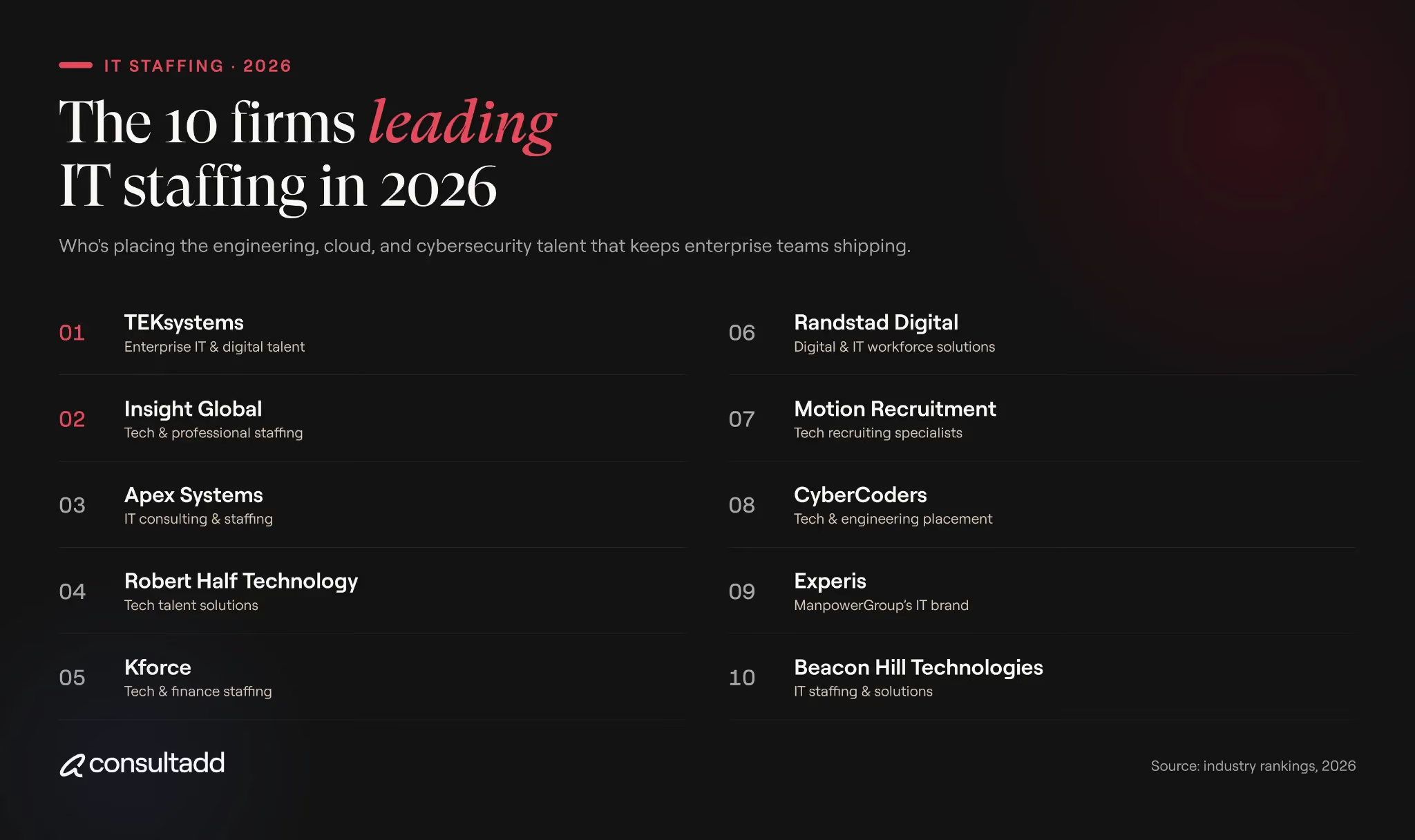
1. TEKsystems
- TEKsystems is the largest IT staffing firm in the country by estimated revenue, and its scale shows in what it can absorb.
- The firm has moved well beyond placing individual contractors into offering full managed-services delivery for companies that want to hand off an entire function rather than add headcount one role at a time.
Best for: Large enterprises running high-volume, multi-year IT hiring programs. Less differentiated for niche or highly specialized single-role searches.
2. Insight Global
- Insight Global ranks second among US IT staffing firms by SIA revenue, reporting roughly $3.28 billion in IT staffing revenue in 2025 across more than 70 global offices.
- The firm has a track record of building out entire technical departments from a standing start, which matters for companies scaling fast rather than filling one seat at a time.
Best for: Companies that need to stand up a technology team quickly and have the internal structure to onboard a large volume of contract talent at once.
3. Apex Systems
- Apex Systems operates at enterprise scale and is a common choice for government and defense-adjacent IT hiring, given its infrastructure supports FedRAMP and CMMC compliance requirements.
- It now sits within the same corporate family as CyberCoders under ASGN's Everforth portfolio.
Best for: Organizations with compliance-heavy IT hiring needs, including government contractors and regulated industries.
4. Robert Half Technology
- Robert Half is one of the most recognized names in staffing generally, not just IT, with roots going back to 1962.
- That longevity translates into deep market relationships and broad coverage across contract, contract-to-hire, and direct hire engagements.
Best for: Mid-market companies and hiring managers who want a stable, well-known partner across multiple staffing models rather than a single specialty.
5. Kforce
- Kforce operates more than 50 offices across the US and has built a strong dual practice spanning both IT and finance staffing, which makes it a useful option for companies hiring across both functions rather than IT alone.
Best for: Mid-sized organizations that want a single staffing partner covering both technology and finance or operations roles.
6. Randstad Digital
- Randstad Digital brings global scale, with more than 500 recruiters and 60-plus US locations under the broader Randstad Technologies umbrella.
- The firm also runs a dedicated program for placing nonimmigrant foreign professionals on work visas, which is a differentiator for companies hiring internationally sourced technical talent.
Best for: Enterprise buyers who need global reach, workforce programs at scale, or support with visa-sponsored technical hiring.
7. Motion Recruitment
- Motion Recruitment, formerly known as Stride & Associates before its 2024 acquisition by Kelly Services, has built its reputation around niche technical specialization rather than broad-scale staffing.
- The firm is particularly strong in high-growth tech hubs like San Francisco, New York, Seattle, and Austin, where competition for senior engineering talent is fiercest.
Best for: Startups and mid-sized companies hiring for specific technology stacks, especially software engineering, product, and data roles in major tech markets.
8. CyberCoders
- CyberCoders operates on a purely contingency basis, meaning there's no upfront cost and payment is tied to a successful placement.
- The firm focuses entirely on direct hire, technology recruiting, with no contract staffing offering, which makes it a fit for companies specifically looking for permanent placements.
Best for: Companies that want direct hire only, prefer a contingency pricing model, and aren't working against a tight deadline.
9. Experis (ManpowerGroup)
- Experis brings the scale of its parent company ManpowerGroup to IT-specific staffing, which matters for buyers who want a single vendor relationship spanning multiple types of workforce needs beyond just technology roles.
Best for: Large organizations already using ManpowerGroup for broader workforce needs who want IT staffing under the same umbrella.
10. Beacon Hill Technologies
- Beacon Hill has carved out a mid-market niche built around close recruiter relationships and personalized service, the kind of attention that can get lost at some of the larger enterprise-scale firms.
- The firm earned ClearlyRated's Best of Staffing award and was named to SIA's 2026 Best Staffing Firms to Work For list.
Best for: Mid-market companies that value a more relationship-driven recruiting process over sheer scale.
How to choose between them
Start with the shape of the hiring problem, not the name recognition of the firm.
A large enterprise standing up a multi-year IT program has different needs than a startup trying to land one senior engineer inside a tight deadline, and the wrong-sized partner for the job tends to show up in slower fills or weaker candidate matches, not in the sales pitch.
If you're weighing whether to use any staffing partner at all versus hiring entirely in-house, this breakdown of the tradeoffs is a useful place to start before comparing specific firms.
How Consultadd helps staffing companies deliver more
Many of the staffing companies on this list already have strong client relationships and recruiting teams. The challenge isn't always finding the next clien2t. It's having the right technical talent ready when that client needs it.
That's where Consultadd fits in.
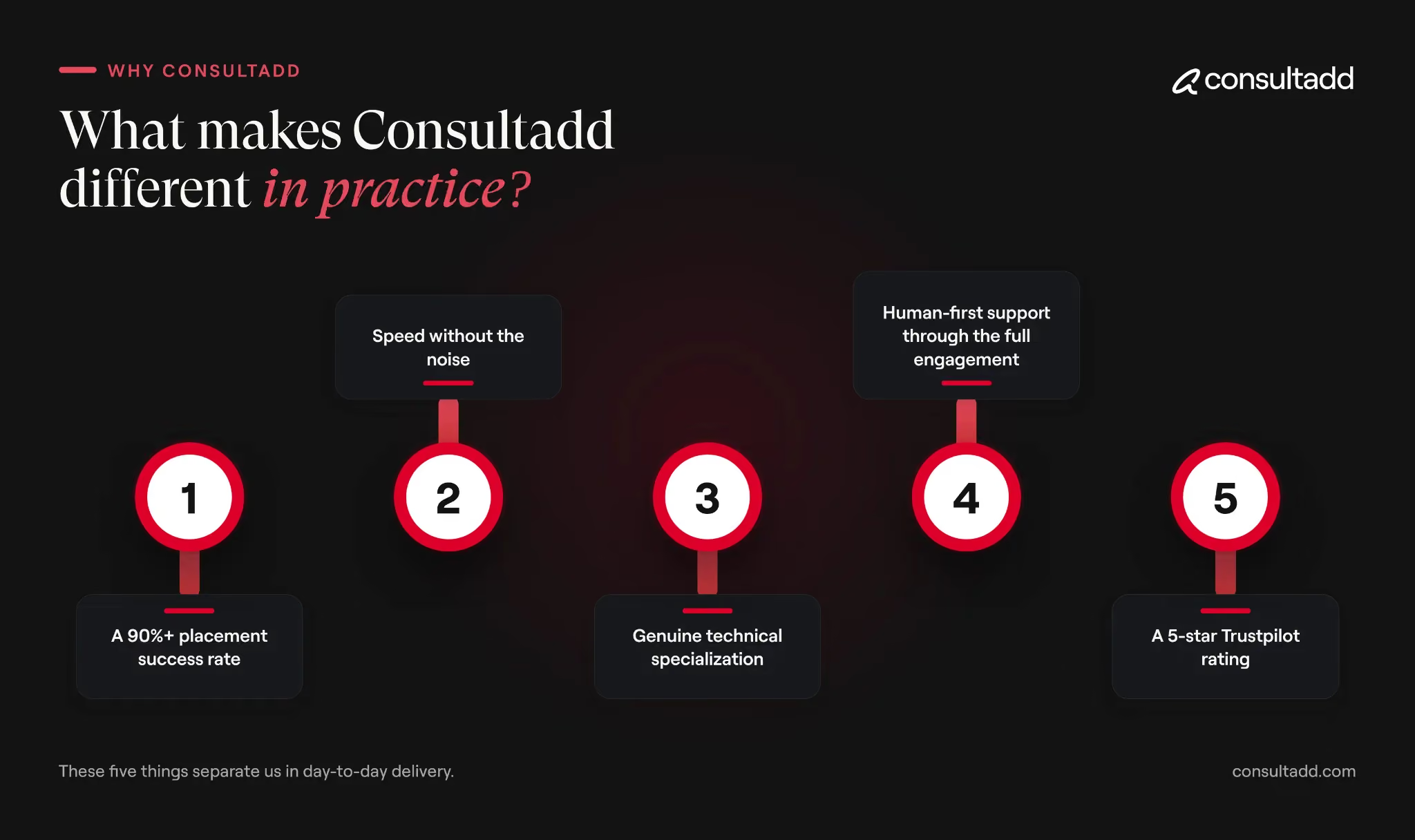
We've worked with staffing companies of different sizes, including established firms with large enterprise accounts. Over the past year alone, we've supported 65 staffing companies and maintained MSAs with industry leaders such as Robert Half and TEKsystems.
Our role is to help staffing partners extend their recruiting capacity without having to build every part of the talent pipeline themselves.
We've worked with a few. We can help more.
Our experience working alongside established staffing companies has given us a practical understanding of what happens behind the scenes when a client requirement comes in: the role needs to be understood quickly, qualified candidates need to be sourced, compliance needs to be checked, and profiles need to reach the client without unnecessary delays.
That's the gap Consultadd is built to help close.
Whether you're a large staffing firm managing hundreds of requirements or a growing agency looking for a reliable technical talent partner, we can work alongside your existing team to expand your delivery capacity.
You keep the client relationship. We help you strengthen the talent pipeline behind it.
Comparing engagement models
Different staffing firms lean toward different contract structures, and understanding the difference matters as much as picking the right company name.
If you're not sure which model fits your situation, our breakdown of contract-to-hire and how it actually works is worth reading before signing with any partner.
What actually separates a good staffing partner from a mediocre one
Revenue and office count are easy to measure and don't tell you much about whether a firm will deliver for your specific hiring need. A few questions matter more:
- How rigorous is the screening process? Do recruiters test for actual skills, or just filter resumes by keyword match?
- How fast can they realistically deliver a qualified candidate for the type of role you're filling?
- Do they have specific experience in your technology stack, or are they generalists spread across every industry?
- If the role involves visa sponsorship or complex compliance requirements, does the firm have a track record handling that specific complexity?
Our more detailed buyer's guide to evaluating IT staffing firms walks through how to weigh these factors against the specific role you're trying to fill.
Start Strong With Consultadd
With 15 years in business and 5,000+ successful staffing engagements, we don't just fill roles, we build reliability into your process. We've supported 65 staffing companies in the past year alone and maintain MSAs with industry leaders like Robert Half and TEKsystems.
Here's what working with Consultadd looks like:
- Talent sourced in under 24 hours
- Ready-to-deploy candidates, vetted for experience and compliance
- Lower turnover risk: we match long-term goals, not just short-term needs
- Seamless compliance: visa, documentation, onboarding? Handled.
- Dedicated 1:1 account managers for responsive, personalized support
- Top 100 candidate matches delivered in the past year
- Strong partnerships with universities to tap into fresh, committed talent
- Post-placement support so your investment grows beyond day one
For candidates, your next opportunity is more than just a job title, it's a chance to build skills, gain experience, and move your career forward. At Consultadd, we connect technology professionals with projects and employers that align with their goals, whether they're looking for contract, contract-to-hire, or long-term opportunities.
The tech job market moves fast, but the right guidance can make all the difference. Ready to take the next step in your career journey? Explore Opportunities >>
Key takeaways
- TEKsystems and Insight Global are the two largest US IT staffing firms by revenue, best suited to large-scale, high-volume hiring programs.
- Firms like Motion Recruitment and Beacon Hill specialize in more focused, relationship-driven recruiting rather than sheer scale.
- CyberCoders operates on a contingency, direct-hire-only model, which fits a specific kind of permanent hiring need.
- Contract, contract-to-hire, direct hire, and managed services are distinct engagement models, and not every firm offers all of them.
- The right staffing partner depends more on the shape of your hiring need than on which firm has the biggest name.
FAQs
What's the difference between an IT staffing agency and a recruiting firm?
The terms are often used interchangeably, but staffing agencies typically manage the employment relationship for contract workers, while some recruiting firms focus purely on direct-hire placements without an ongoing employment role.
Are larger IT staffing firms always the better choice?
Not necessarily. Larger firms tend to offer scale and broad coverage, but smaller or more specialized firms often deliver faster, better-matched results for niche technical roles or smaller hiring volumes.
How much does it cost to use an IT staffing agency?
Pricing varies by model. Contract staffing is typically billed at an hourly markup over the worker's pay rate, while direct hire placements usually involve a percentage-based fee tied to the placed employee's salary.
Can IT staffing firms help with visa-sponsored hiring?
Some can. Firms with dedicated visa or global mobility programs, rather than generalist staffing operations, tend to have the compliance infrastructure to handle sponsored hiring correctly.
What's the difference between contract, contract-to-hire, and direct hire staffing?
Contract roles are time-limited engagements where the worker stays employed by the staffing firm. Contract-to-hire starts the same way but includes an option to convert to permanent employment. Direct hire places the candidate straight onto the client's own payroll from day one.
How long does it typically take an IT staffing firm to fill a role?
It varies widely by seniority and specialization, but firms with strong existing sourcing pipelines for a given skill set can often move considerably faster than internal recruiting teams working the same search from scratch.
.avif)
Offshore IT Staffing Solutions: What Actually Works In 2026
Introduction
Offshore IT staffing solutions connect your company with tech professionals based in another country who work as an extension of your team, usually at a lower cost than hiring locally. That's the short version. The longer version, the one that actually matters once you're signing a contract, has a lot more nuance to it.
Most companies come to this topic because they're stuck. A senior developer role has been open for three months. The local candidate pool for a niche skill set is thin. Budget got cut, but the roadmap didn't. Offshore staffing gets pitched as the fix for all three problems at once, and sometimes it is. Sometimes it also creates a new set of headaches nobody warned you about.
This article walks through how the model actually works, what it costs, where companies get burned, and how to set an engagement up so it doesn't become one more thing you have to manage on top of everything else.
TL;DR
- Offshore IT staffing solutions place vetted tech professionals from another country onto your team, managed under your processes rather than handed off as a project.
- Cost savings are real, but they come from lower salary bases in the hiring country, not from cutting corners on skill or oversight.
- The model works best for roles with clear scope: development, QA, DevOps, data engineering. It works worse for roles that need constant real-time collaboration with stakeholders.
- Time zone overlap, communication habits, and data security terms matter more to long-term success than the hourly rate.
- The partner you choose, not the country you choose, is usually the bigger factor in whether the engagement succeeds.
What offshore IT staffing solutions actually mean
The term gets used loosely, so it helps to separate it from things it gets confused with.
Offshore staffing is not the same as offshore outsourcing.
- Outsourcing hands an entire project or function to a vendor who owns the outcome.
- Offshore staffing places individual professionals, or a small team, directly into your existing workflows. They join your standups, use your project management tools, and report to your leads. The staffing company handles recruiting, payroll, compliance, and HR administration in the worker's home country. You handle the day-to-day direction of the work.
It's also worth separating offshore from nearshore.
- Nearshore means hiring from a neighboring or nearby region, often with closer time zone alignment.
- Offshore usually means a bigger time difference, which is a tradeoff we'll get into later.
Why the model has picked up again
Two things are pushing companies back toward offshore staffing right now.
First, the talent gap hasn't closed.
- A recent SHRM Talent Trends report found that 80% of HR professionals report the greatest difficulty finding candidates with systems and resource management skills, including judgment, decision-making, and complex problem-solving.
- That gap shows up hardest in technical roles where the required skill set is narrow and the local pipeline is shallow.
Second, IT budgets are growing again, but they're growing toward infrastructure and AI, not toward headcount.
- Gartner's 2026 forecast puts IT services spending, covering application implementation, managed services, and infrastructure delivery, at more than $1.87 trillion for the year, with data center systems spending seeing the sharpest growth.
- When the money is going toward systems and platforms, staffing budgets get squeezed, and companies look for ways to add technical capacity without a proportional jump in cost.
Offshore staffing sits right in that gap. It adds headcount without the full weight of a local salary, benefits package, and office footprint.
Offshore vs onshore vs nearshore: how they actually compare
There's no universally "best" option here. It depends on the role, the budget, and how much real-time collaboration the work demands.
None of these rule out a blended approach. A lot of teams run onshore leads paired with offshore developers, which keeps client communication local while shifting execution work to a lower-cost base.
If you're weighing whether to bring any of this in-house versus going through an agency at all, it's worth reading our breakdown on the pros and cons of working with staffing agencies before you pick a model.
What an engagement actually looks like week to week
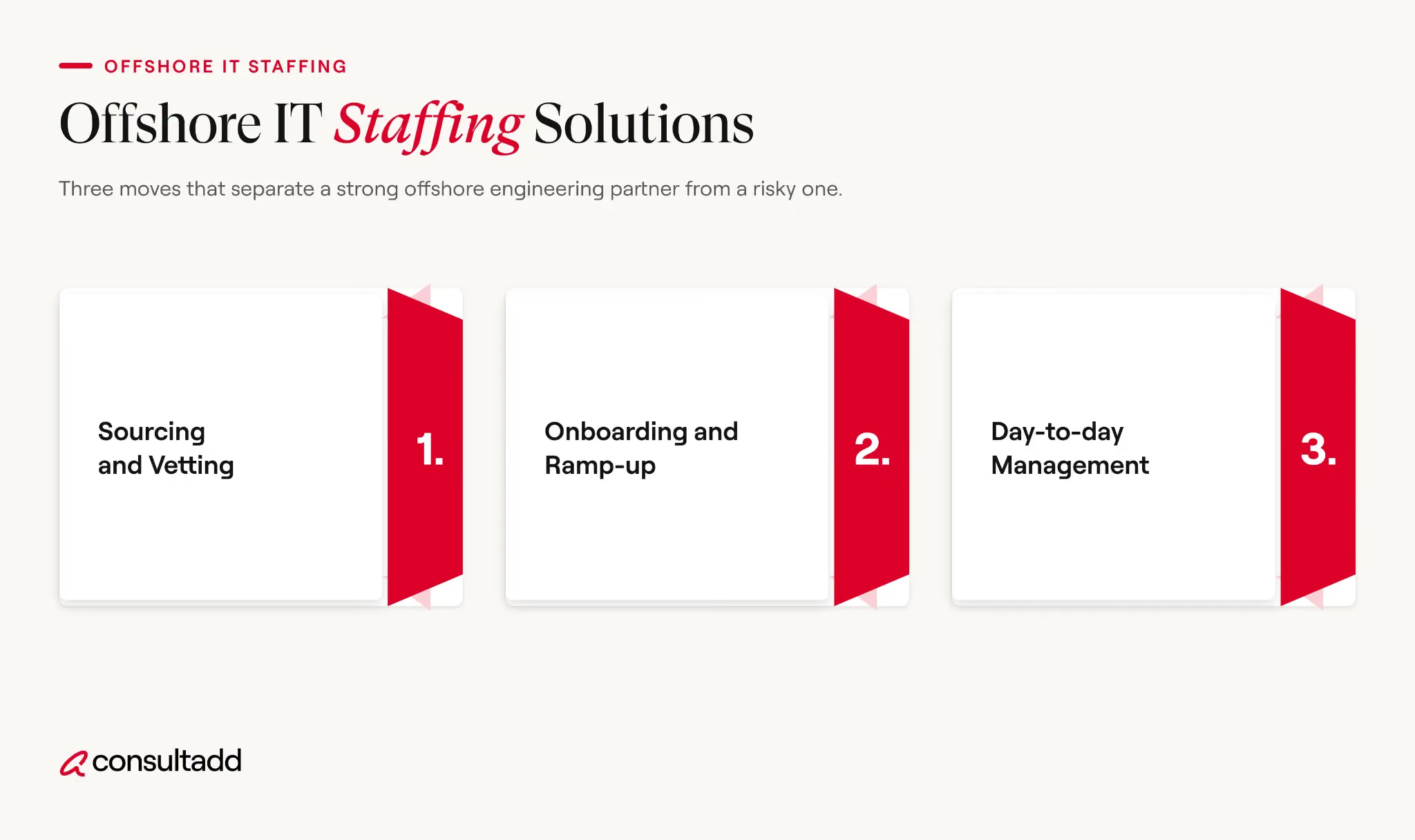
The pitch decks make offshore staffing sound like flipping a switch. Reality has a few distinct phases.
1. Sourcing and vetting
A reliable offshore staffing partner sources candidates against your job description, screens for technical skill and English proficiency, and runs them through client-specific interviews before you ever see a resume. If a partner is sending you unscreened profiles just to hit a submission quota, that's a sign to look elsewhere.
2. Onboarding and ramp-up
Even a strong candidate needs time to learn your codebase, your tools, and your team's shorthand. The budget two to four weeks before an offshore hire is contributing at full speed, similar to what you'd expect from a remote domestic hire.
3. Day-to-day management
This is where most of the friction actually lives. Offshore staff should be attending your standups, using your ticketing system, and getting the same feedback loops as anyone else on the team. Engagements fail more often from a communication gap than a skill gap.
Costs, contracts, and what actually drives the price
Offshore rates vary by country, skill level, and specialization, and any staffing partner quoting a flat number without asking about your role is guessing. What does move the needle:
- Seniority. A senior backend engineer with cloud certifications costs more than a junior QA tester, regardless of location.
- Specialization. Skills like AWS architecture or security engineering command a premium even offshore, since IT sector employers worldwide continue to report difficulty finding tech talent, and that scarcity isn't limited to the US market.
- Engagement structure. How you structure the contract, whether it's a direct placement, a contract role, or a corp-to-corp arrangement, changes the cost, the compliance burden, and who carries the risk.
- Contract-to-hire options. Some offshore arrangements convert to a different structure over time.
If you're considering that path, it's worth understanding how contract-to-hire staffing compares to a straight permanent hire before you commit to a conversion clause.
The real risks, and how to handle them
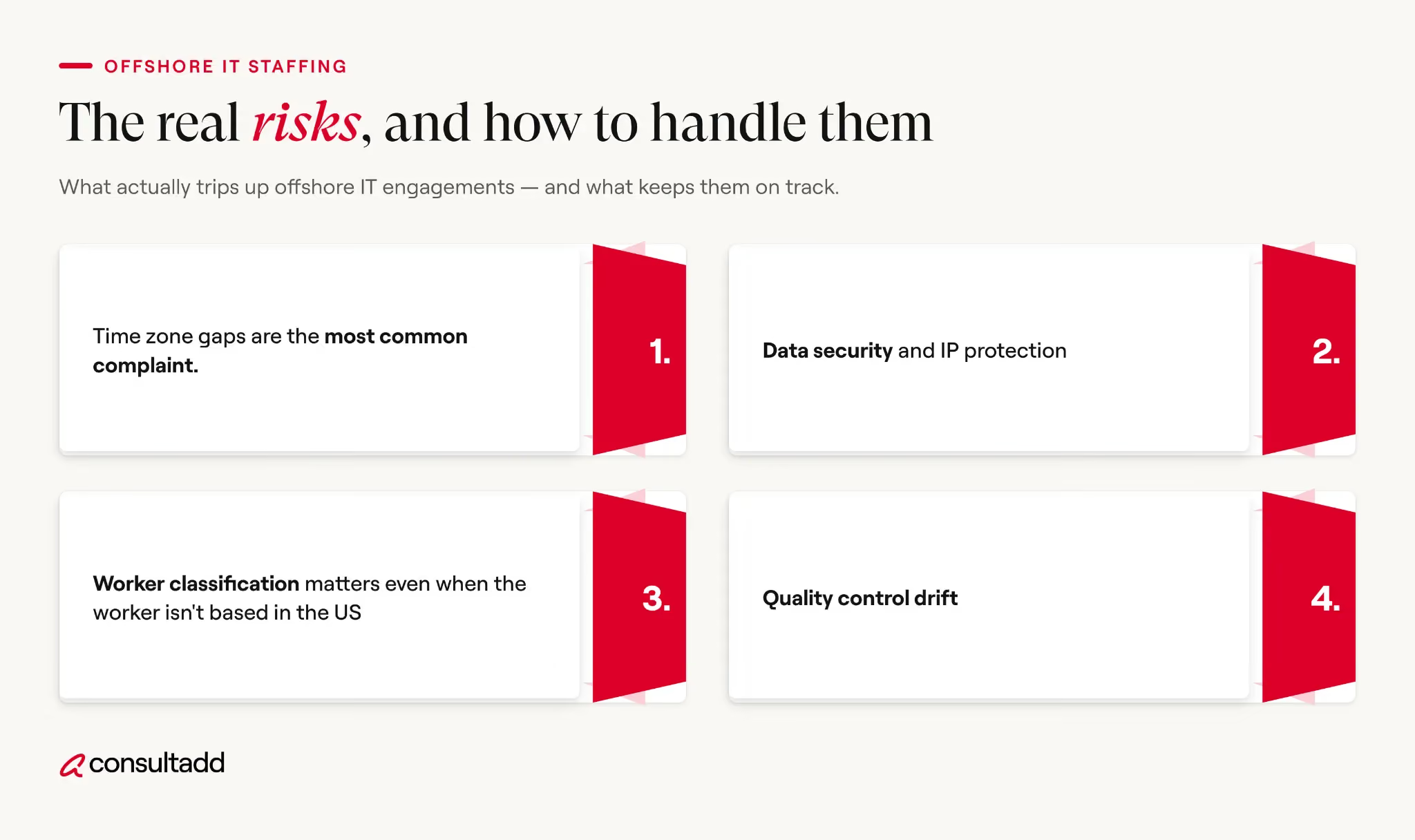
Offshore staffing isn't risk-free, and pretending otherwise sets teams up for a bad first engagement.
1. Time zone gaps are the most common complaint.
A 10-12 hour difference means less real-time back-and-forth, which works fine for well-scoped development work and poorly for roles that need constant stakeholder input. Build in overlap hours as a contract requirement, not an afterthought.
2. Data security and IP protection need to be spelled out before day one, not negotiated after an incident.
Contracts should cover data handling, access controls, and IP ownership explicitly, and this is one area where it's worth having legal review terms rather than relying on a template.
3. Worker classification matters even when the worker isn't based in the US, particularly for any hybrid arrangement involving US-based contractors alongside offshore staff.
The Department of Labor treats misclassification of employees as independent contractors as a serious compliance issue tied to minimum wage and overtime protections under the Fair Labor Standards Act, so any blended onshore/offshore setup should have its US-side classification checked by someone who knows the current rule.
4. Quality control drift happens when nobody owns the offshore relationship day to day.
Assign an internal point of contact, not just a vendor account manager, who tracks output the same way they'd track any other team member's.
How to choose an offshore IT staffing partner
Not every offshore staffing company runs the same playbook. A few questions separate the ones worth trusting from the ones just filling seats:
- Do they screen for English proficiency and technical skill, or just technical skill?
- Can they show references from companies in your industry, not just general testimonials?
- What's their process when a placed candidate doesn't work out? A real partner has a replacement policy, not just an apology.
- How do they handle compliance and documentation on their end, so it isn't landing on your desk?
- Is there a single account manager you can actually reach, or does every issue go through a ticket queue?
If a partner can't answer these clearly in the first conversation, that's useful information on its own.
For a broader look at what a good recruitment partnership should deliver, see our piece on how recruitment partners add value to your hiring process.
Start Strong With Consultadd
With 15 years in business and 5,000+ successful staffing engagements, we don't just fill roles, we build reliability into your process. We've supported 65 staffing companies in the past year alone and maintain MSAs with industry leaders like Robert Half and TEKsystems.
Here's what working with Consultadd looks like:
- Talent sourced in under 24 hours
- Ready-to-deploy candidates, vetted for experience and compliance
- Lower turnover risk: we match long-term goals, not just short-term needs
- Seamless compliance: visa, documentation, onboarding? Handled.
- Dedicated 1:1 account managers for responsive, personalized support
- Top 100 candidate matches delivered in the past year
- Strong partnerships with universities to tap into fresh, committed talent
- Post-placement support so your investment grows beyond day one
For candidates, your next opportunity is more than just a job title, it's a chance to build skills, gain experience, and move your career forward. At Consultadd, we connect technology professionals with projects and employers that align with their goals, whether they're looking for contract, contract-to-hire, or long-term opportunities.
The tech job market moves fast, but the right guidance can make all the difference. Ready to take the next step in your career journey? Explore Opportunities >>
Key takeaways
- Offshore IT staffing solutions work best for roles with clear scope and deliverables, not roles needing constant real-time input.
- Cost savings come from the hiring country's salary base, not from lower quality, when the partner is doing its job right.
- Time zone overlap and communication cadence matter more to long-term success than the headline hourly rate.
- Worker classification and IP protection need to be locked down in the contract, not handled reactively.
- The staffing partner's screening and account management process matters more than the country you're hiring from.
FAQs
Is offshore IT staffing the same as outsourcing?
No. Outsourcing hands a project to a vendor who owns the outcome. Offshore staffing places individuals into your team who follow your processes and report to your leads.
How much can offshore IT staffing actually save?
It varies by role, seniority, and country, since specialized skills command a premium regardless of location. There's no single fixed percentage that applies across every role or region.
What roles work best for offshore staffing?
Development, QA, DevOps, and data engineering roles with clear specs tend to work well. Roles needing heavy real-time client interaction are harder to run offshore successfully.
How long does it take to onboard an offshore hire?
Sourcing and screening can move quickly with an established partner, but expect two to four weeks before a new hire is contributing at full speed, similar to any remote hire.
What's the biggest risk with offshore IT staffing?
Communication gaps caused by time zone differences and unclear management ownership, more often than skill gaps.
Do I need a different contract structure for offshore workers?
Yes, offshore engagements are typically structured differently from W2 or C2C domestic arrangements, and the right structure depends on the role and how long-term the placement is meant to be.

IT Staff Augmentation: How To Hire Tech Talent Fast
Introduction
If you've spent the last three months trying to fill a single DevOps role, you already know why IT staff augmentation is getting so much attention right now. It's a hiring model where you bring in outside developers, testers, or engineers who work inside your existing team instead of handing a project to an outside vendor. You keep control of the work. You just stop waiting months for the right resume to show up.
The timing makes sense. The average time to fill a specialized technical role now sits at 88 days, and ManpowerGroup's latest global survey found 72% of employers are struggling to find people with the skills they need, as demand for AI-related capabilities has outpaced traditional engineering skills. For a team running quarterly release cycles, that gap isn't a minor inconvenience. It's a real threat to your roadmap.
This guide walks through what IT staff augmentation actually looks like day to day, when it makes sense, when it doesn't, and how to pick a partner who won't leave you stuck three weeks into a project.
TL;DR
- IT staff augmentation lets you add developers, QA engineers, or specialists to your existing team without going through a full-time hiring process.
- It differs from outsourcing because you keep direct oversight of the work, the tools, and the roadmap.
- It fits best for short-term skill gaps, sudden workload spikes, or niche expertise you don't need permanently.
- The global market for these services is projected to reach $857.2 billion by 2032, growing at a 13.2% annual rate.
- Picking the right partner matters more than picking the cheapest one. Vetting, compliance, and account management make or break the engagement.
What Is IT Staff Augmentation?
IT staff augmentation is a staffing model where a company adds external technology professionals to its internal team on a temporary or contract basis. The augmented staff report into your existing managers, use your existing tools, and follow your existing processes. Nothing about how the work gets done really changes. You just have more hands doing it.
This is different from hiring a full project team from an outside firm and handing them a spec to execute on their own. With staff augmentation, your team stays in the driver's seat. The outside talent is filling a gap, not replacing your management structure.
Companies typically reach for this model when they need:
- A specific skill set they don't have in-house, like a Salesforce architect or a Kubernetes specialist
- Extra hands during a busy release cycle
- Someone to cover a leave of absence or an open req that's taking too long to fill
- Faster ramp-up on a new product without committing to permanent headcount
The market data backs up how common this has become. Around 74% of enterprises now use staff augmentation services to deal with talent shortages, and 68% say it's helped them run IT operations more efficiently. That's not a niche tactic anymore. It's a standard part of how technology teams staff their work.
How IT Staff Augmentation Works
The process is more straightforward than most first-time buyers expect. It generally breaks down into four steps.
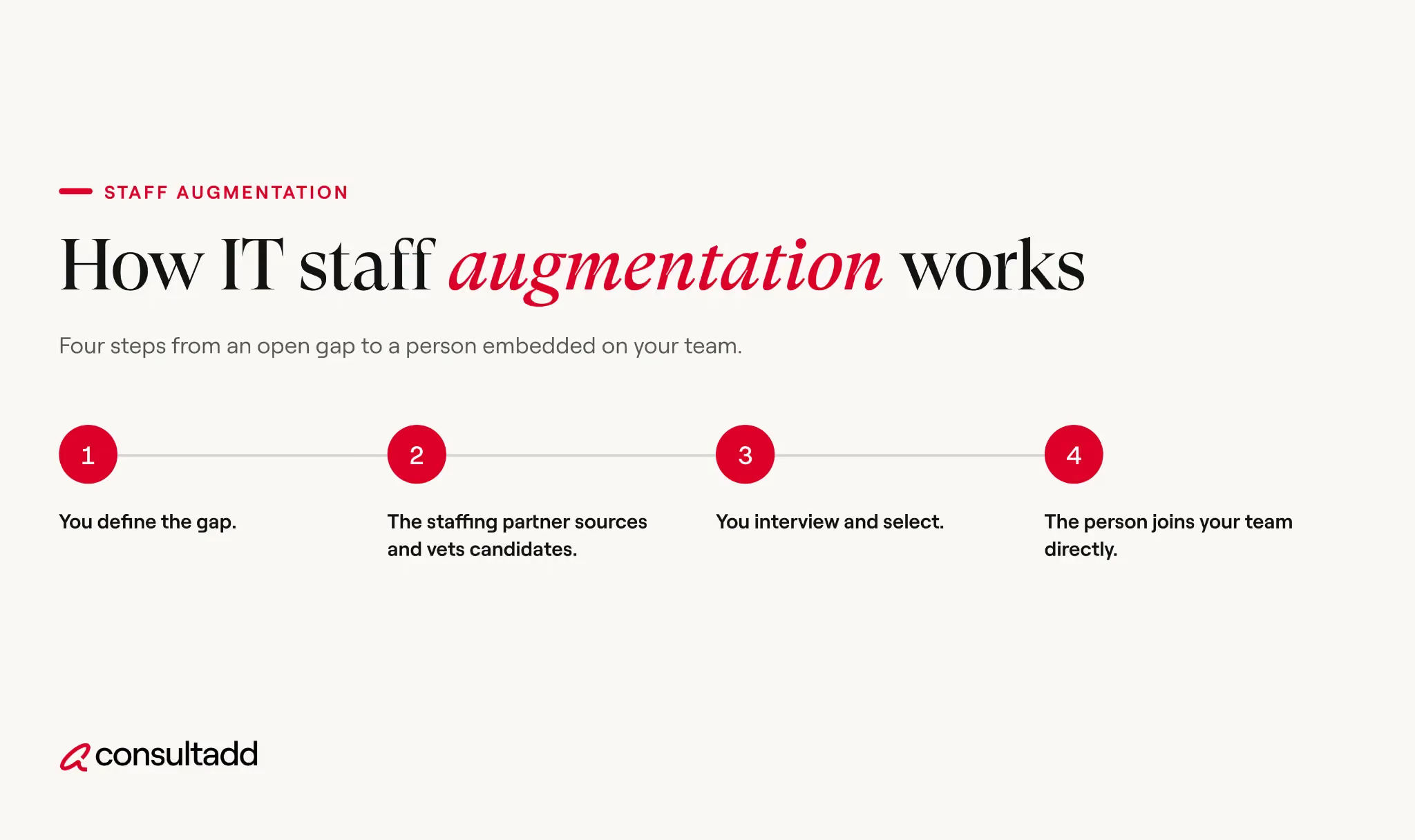
1. You define the gap.
This means naming the exact skill, the expected duration, and whether the person needs to work in your time zone or can be fully remote.
2. The staffing partner sources and vets candidates.
A good partner already has a bench of pre-screened professionals, so you're reviewing shortlists in days, not weeks.
3. You interview and select.
You still run the interview. You're the one deciding who joins your team, not the staffing firm.
4. The person joins your team directly.
They use your Slack, your Jira board, your sprint cadence. Your manager assigns their work.
Contracts can run anywhere from a few weeks to over a year, and many arrangements include a contract-to-hire option if the fit turns out to be a good one long-term.
IT Staff Augmentation vs. Traditional Outsourcing
People mix these two up constantly, and the confusion causes real problems when it's time to sign a contract. The difference comes down to who controls the day-to-day work.
Neither approach is universally better. If you want to hand off an entire project and never think about it again, outsourcing might fit. If you want to keep ownership of the roadmap while filling a gap, staff augmentation is the better call.
When to Use IT Staff Augmentation
Not every hiring gap calls for this model. It works best in a specific set of situations, and it's worth being honest about where it doesn't.
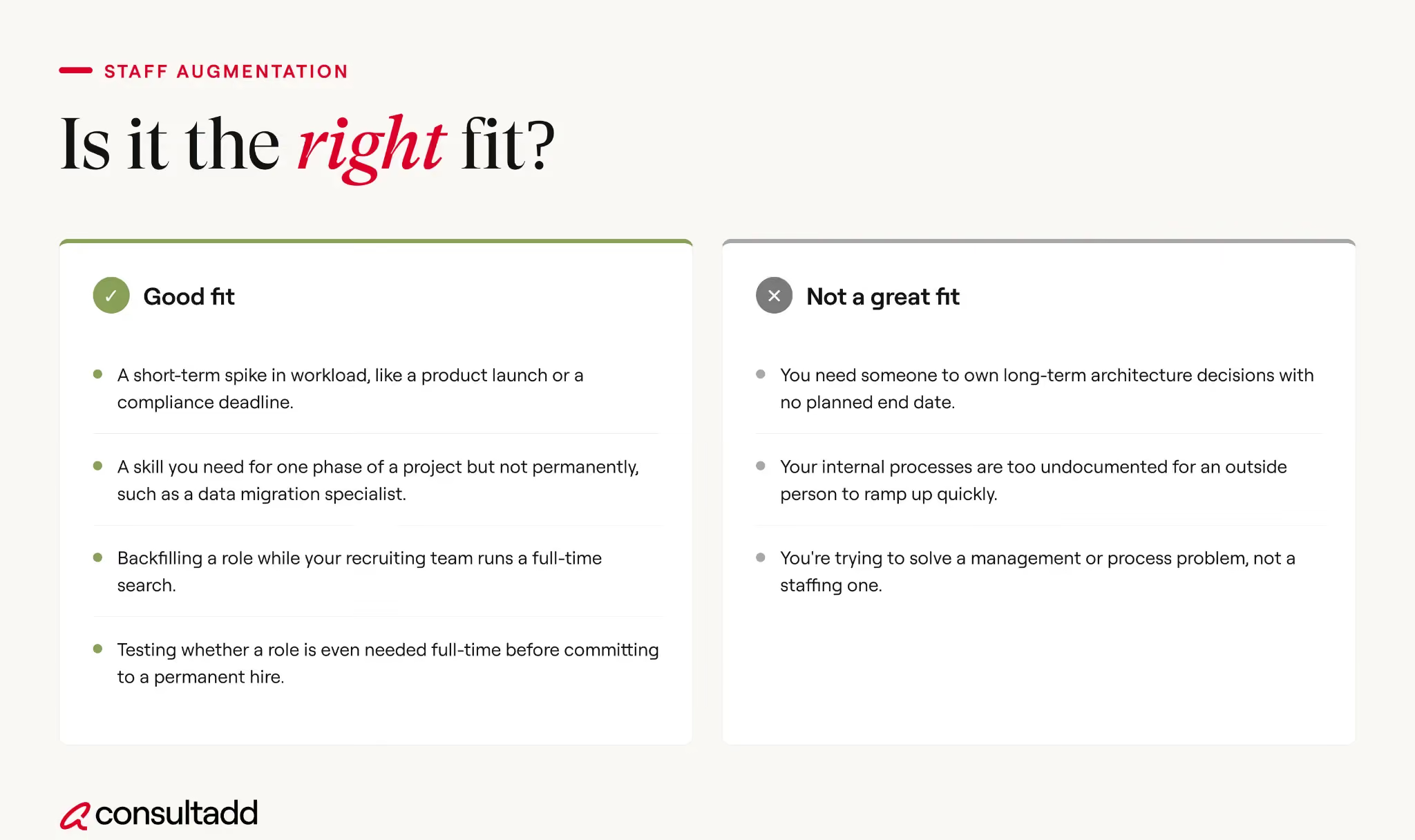
Good fit:
- A short-term spike in workload, like a product launch or a compliance deadline
- A skill you need for one phase of a project but not permanently, such as a data migration specialist
- Backfilling a role while your recruiting team runs a full-time search
- Testing whether a role is even needed full-time before committing to a permanent hire
Not a great fit:
- You need someone to own long-term architecture decisions with no planned end date
- Your internal processes are too undocumented for an outside person to ramp up quickly
- You're trying to solve a management or process problem, not a staffing one
Augmentation works when you know exactly what you need and for how long. It gets messy fast when the scope is still a question mark.
Benefits of IT Staff Augmentation
The appeal isn't just speed, though speed is a big part of it. A few other things stand out once teams actually try this model.
1. You cut the cost of a bad long-term hire.
Recruiting, onboarding, and benefits for a permanent employee add up fast, and if the role turns out to be temporary, you've overpaid for it.
2. You get access to niche skills without a search that drags on.
The tech job market has split into generalist roles that are easy to fill and specialist roles, especially in AI, cloud, and cybersecurity, that are brutally hard to find. Augmentation gives you a shortcut to the second group.
3. You can scale down without layoffs.
When the project wraps, the contract ends. There's no restructuring conversation to have.
4. Your core team stays lean.
You're not carrying permanent overhead for a need that might only last two quarters.
Challenges to Watch For
None of this is risk-free, and a good staffing partner will tell you that upfront rather than pretend it's all upside.
Onboarding still takes real effort. Even a strong contractor needs a few days to learn your codebase, your tools, and your team's habits. Budget time for that.
Compliance gets complicated with visa status, contractor classification, and documentation. The U.S. Bureau of Labor Statistics notes technology occupations continue to see much faster than average employment growth, which means competition for compliant, work-authorized talent isn't easing up anytime soon.
Knowledge can walk out the door when a contract ends if you don't document decisions as you go. Build handoff notes into the engagement from day one, not as an afterthought in the final week.
How to Choose an IT Staff Augmentation Partner
The partner matters more than the pricing sheet. A cheap vendor with a thin bench will cost you more in delays than you'll ever save on the invoice.
Start Strong With Consultadd
With 15 years in business and 5,000+ successful staffing engagements, we don't just fill roles, we build reliability into your process. We've supported 65 staffing companies in the past year alone and maintain MSAs with industry leaders like Robert Half and TEKsystems.
Here's what working with Consultadd looks like:
- Talent sourced in under 24 hours
- Ready-to-deploy candidates, vetted for experience and compliance
- Lower turnover risk: we match long-term goals, not just short-term needs
- Seamless compliance: visa, documentation, onboarding? Handled.
- Dedicated 1:1 account managers for responsive, personalized support
- Top 100 candidate matches delivered in the past year
- Strong partnerships with universities to tap into fresh, committed talent
- Post-placement support so your investment grows beyond day one
For candidates, your next opportunity is more than just a job title, it's a chance to build skills, gain experience, and move your career forward. At Consultadd, we connect technology professionals with projects and employers that align with their goals, whether they're looking for contract, contract-to-hire, or long-term opportunities.
The tech job market moves fast, but the right guidance can make all the difference. Ready to take the next step in your career journey? Explore Opportunities >>
Key Takeaways
- IT staff augmentation adds external talent to your existing team while you keep control of the work.
- It's a faster route to niche skills than a traditional full-time search, especially in AI, cloud, and security roles.
- It works best for defined, time-bound needs, not open-ended ownership roles.
- The global market for these services is expected to grow at roughly 13% a year through the early 2030s.
- The partner you choose matters as much as the model itself. Vetting, compliance, and communication separate a good engagement from a frustrating one.
FAQs
What is the difference between IT staff augmentation and a managed service?
Staff augmentation places individuals under your direct management. A managed service hands over an entire function or outcome to the vendor, who manages the team and the delivery. You lose day-to-day control but also the day-to-day management burden.
How quickly can I bring on augmented IT staff?
Most established staffing partners can present a shortlist within days once you've defined the role, and placements often start within one to two weeks. This is one of the biggest reasons companies choose this model during time-sensitive projects.
Is IT staff augmentation more expensive than hiring full-time?
It depends on duration. For short-term or uncertain-length needs, augmentation usually costs less overall once you factor in recruiting fees, benefits, and severance risk tied to a permanent hire that doesn't work out.
Can augmented staff convert to full-time employees?
Yes, in most contract-to-hire arrangements. If the working relationship goes well, many companies extend a permanent offer after an initial contract period, which lets both sides evaluate fit before committing long-term.
What roles are most commonly filled through staff augmentation?
Software developers, QA engineers, DevOps specialists, cybersecurity analysts, and data engineers are the most requested. Demand for AI and cloud-related skills has grown the fastest in the last two years.
How do staffing partners handle compliance and visa status?
A qualified partner manages work authorization verification, tax classification, and onboarding documentation directly, so your internal HR team isn't left untangling paperwork for contract workers.

IT Staffing Company: Business Plan Requirements
Introduction
Starting an IT staffing company looks deceptively simple from the outside: find candidates, place them with clients, collect the markup. The part that trips up most first-time founders is everything underneath that simple description.
IT staffing company business plan requirements span two very different categories: the business plan itself, the document that maps your niche, market, and financial model, and the legal and operational requirements that let you actually place your first candidate without violating labor law, insurance rules, or a client's contract.
Miss the second category and the first one doesn't matter. You can have a beautifully modeled five-year revenue projection and still be unable to run payroll legally, because a staffing company takes on employer-of-record responsibility the moment it places someone, often before the client's invoice is even due.
That single fact, that you're paying your placed talent well before you're paid yourself, shapes almost every requirement in this guide.
This piece covers both halves: what a credible IT staffing business plan needs to contain, and the legal, financial, and operational requirements that have to be in place before you place your first candidate.
TL;DR
- A staffing company becomes the employer of record for placed workers, meaning payroll, tax withholding, and often workers' comp are your legal responsibility, typically before client invoices are paid.
- Core legal requirements: business entity formation, an EIN, state and sometimes county business registration, and industry-specific licenses if you place candidates in regulated fields.
- Minimum insurance stack: general liability, professional liability (errors & omissions), and workers' compensation; some states require registration even without a physical office there.
- Startup capital ranges widely: roughly $3,000-$10,000 for a lean, self-managed launch, considerably more once legal counsel, software, and payroll funding are factored in.
- Payroll funding, sometimes through invoice factoring, is often the real constraint on growth, since you must pay placed workers weekly or biweekly while client payment terms often run 30-90 days.
Why staffing is a different business than it looks like
Most service businesses collect payment before, or shortly after, delivering the service. Staffing runs the opposite direction. The moment you place a W2 candidate with a client, you typically become their employer of record: responsible for payroll, tax withholding, and often benefits and workers' compensation, regardless of when the client actually pays your invoice.
Client payment terms of 30, 60, or even 90 days are common in enterprise IT staffing, while placed employees expect to be paid weekly or biweekly.
That timing gap is the single fact that makes staffing capital-intensive in a way most first-time founders underestimate. It's also why the business plan and the legal/operational requirements can't be treated as separate projects: your financial model has to account for exactly how you'll fund payroll during that gap, and your legal setup has to be ready to handle employer obligations from day one, not after your first big contract lands.
What the business plan needs to contain
A staffing business plan serves two audiences at once: it's your own operating roadmap, and it's what a lender, investor, or factoring company will actually read before extending you credit. A credible plan for an IT staffing company includes:
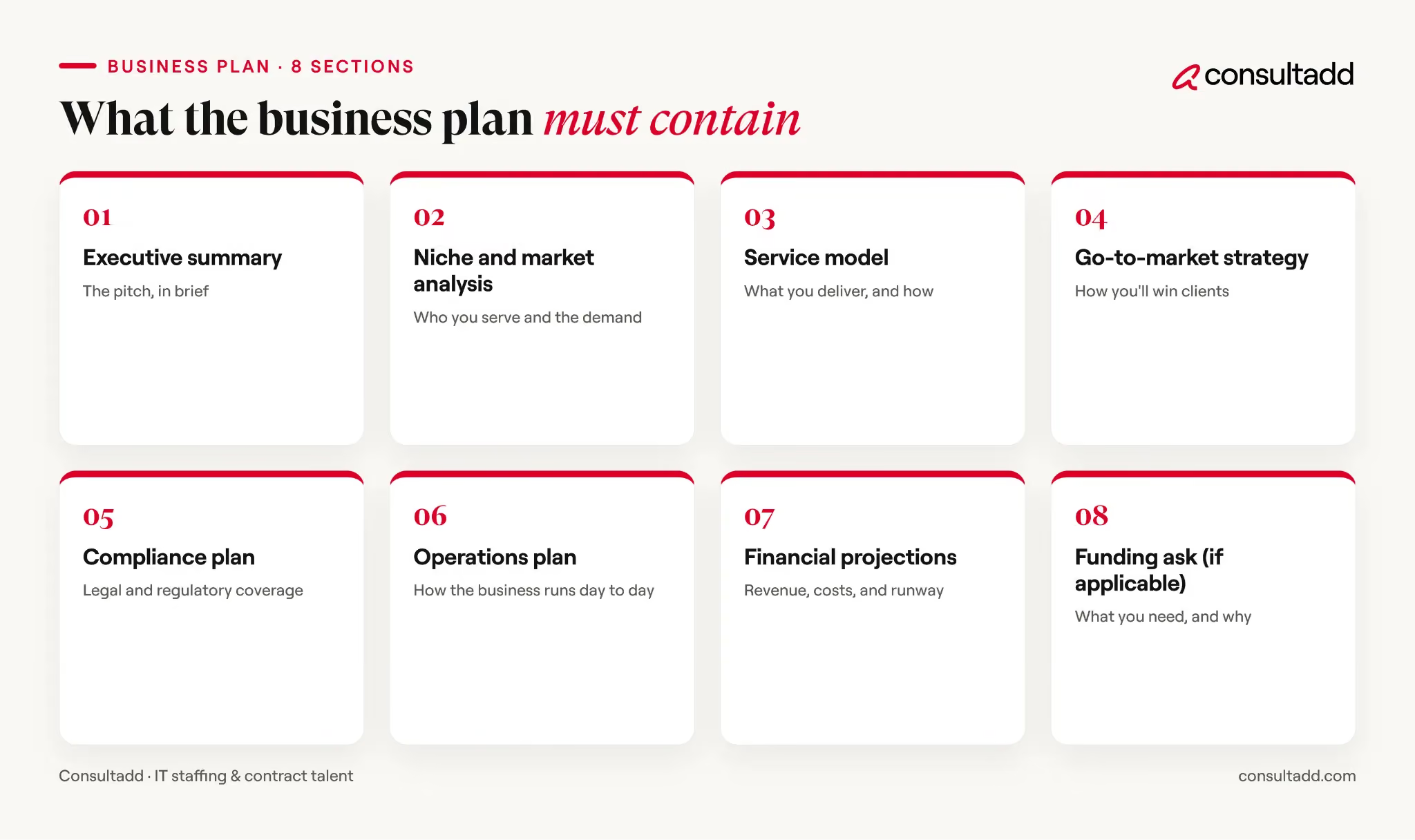
Over 20,000 staffing and recruiting companies already operate in the US, so credibility with clients comes from depth in a specific lane (cloud infrastructure, cybersecurity, ERP implementations, generative AI engineering) rather than a generalist "we place anyone in tech" pitch.
If you're still narrowing that focus, our guides to hiring generative AI engineers and hiring AWS developers illustrate how specific and technical client expectations have become in high-demand IT lanes, which is exactly the depth your plan needs to demonstrate.
Legal formation and registration requirements
Before placing a single candidate, the legal foundation needs to be in place:
Business entity formation: Most staffing founders form an LLC or corporation rather than operating as a sole proprietor, since the entity structure provides liability separation that matters enormously in a business built on employment relationships.
A business attorney is worth the cost here; entity structure affects tax treatment, liability exposure, and how cleanly you can bring on partners or investors later.
EIN and tax registration: An Employer Identification Number from the IRS is required to run payroll, and you'll need to register for state tax withholding and unemployment insurance accounts before your first placement starts.
State and local business registration: Requirements vary meaningfully by state and sometimes by county or city, so this isn't a one-time national filing. Some states have surprising reach: Massachusetts, for example, requires staffing agencies conducting business in the state to register even without a physical office there, which matters enormously if you're placing remote IT talent across state lines, an increasingly common model.
Check requirements in every state where you'll actually place workers, not just where you're headquartered.
Industry-specific licensing: IT staffing generally faces fewer specialized licensing requirements than healthcare or legal staffing, but if your clients or placements touch regulated sectors, financial services, healthcare IT, government contracting, additional registrations or clearances may apply.
Confirm this per client vertical rather than assuming a blanket IT staffing license covers every placement.
Insurance requirements
Insurance isn't optional overhead in staffing; it's frequently a contractual precondition clients require before they'll sign an MSA. At minimum, plan for:
Enterprise clients, and especially larger staffing MSAs, will often specify minimum coverage limits in the contract itself before they'll engage you, so get quotes early in your planning process rather than treating insurance as a step you'll handle right before your first placement.
Payroll, funding, and the cash flow gap
This is the requirement first-time founders most consistently underestimate, and it's the one most likely to sink an otherwise well-run agency. You must pay placed employees on a regular cycle, weekly or biweekly, while clients frequently pay invoices on 30 to 90-day terms. That gap has to be funded from somewhere.
Common approaches:
- Self-funding from working capital, viable only with substantial cash reserves and typically limited to a handful of small placements at a time.
- Invoice factoring, where a factoring company advances you a large percentage of an invoice's value immediately in exchange for a fee, letting you pay workers without waiting on client payment terms.
This is the most common funding mechanism for growing staffing agencies precisely because it scales with placement volume rather than requiring ever-larger cash reserves upfront.
- A back-office or PEO partnership, where a third party handles payroll funding, tax compliance, and sometimes benefits administration in exchange for a fee, letting a new agency start without building that infrastructure from scratch.
Whichever model your business plan assumes, the financial projections section needs to show it explicitly. A revenue projection that ignores the payroll funding gap isn't a staffing business plan; it's a wish list.
Contracts, worker classification, and IT-specific considerations
Client agreements (MSAs): Every client relationship needs a Master Service Agreement covering rate structures, payment terms, liability, indemnification, and termination conditions, before any candidate starts. This is the document that protects your agency when something goes wrong on a placement, and enterprise clients will typically insist on their own template, so budget legal review time for negotiating it.
Worker classification: Decide, and document clearly, whether placed talent works as W2 employees of your agency or through corp-to-corp arrangements with their own business entities. This decision carries real compliance weight; regulators look at the actual working relationship, not the contract label, when determining classification.
Our detailed breakdowns of contract worker vs employee and what is C2C employment cover exactly what separates a compliant arrangement from a misclassification risk, essential reading before your first placement.
Visa and work authorization compliance: IT staffing places a disproportionate share of candidates on employment visas, and getting this wrong carries real legal exposure. If your agency will sponsor H-1B workers or place candidates on OPT, understand the sponsorship obligations before you commit to a client timeline.
Our guide to H-1B sponsorship for tech professionals covers what employers are actually signing up for.
Operating systems. An applicant tracking system (ATS), CRM for client relationships, timekeeping, payroll, and invoicing all need to be in place before you scale past a handful of manual placements. Many new agencies underinvest here initially and pay for it in errors once volume increases.
Startup costs and what actually gets you to your first placement
Realistic numbers vary widely by how lean your launch is:
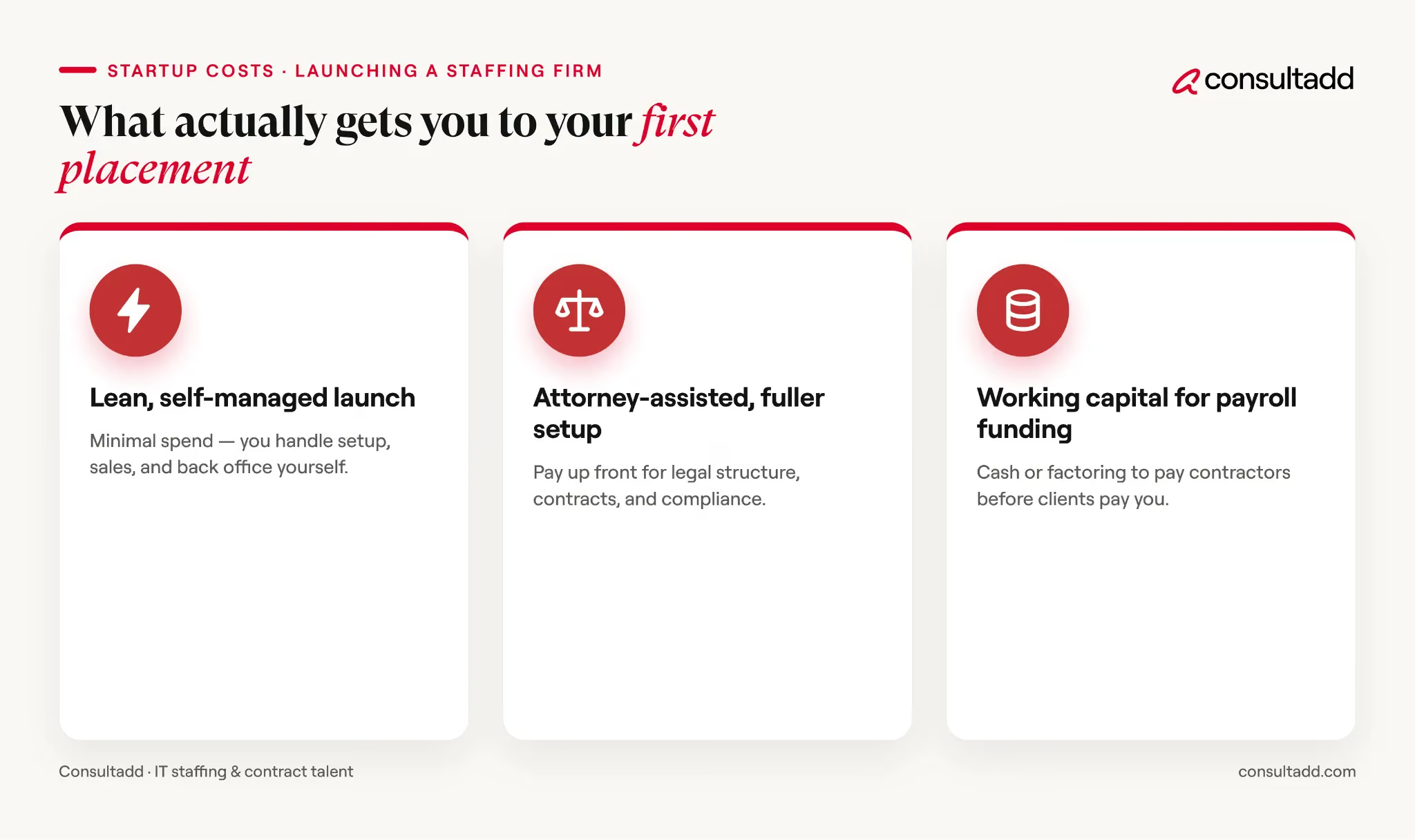
Payroll funding capacity is what actually determines how many candidates you can place at once, and it's the input most first-time business plans get wrong by omission rather than by underestimating the figure.
A plan that accounts for niche focus, full compliance requirements, and a realistic funding mechanism for the payroll gap is the difference between a document that impresses a lender and one that just impresses you.
Start Strong With Consultadd
With 15 years in business and 5,000+ successful staffing engagements, we don't just fill roles, we build reliability into your process. We've supported 65 staffing companies in the past year alone and maintain MSAs with industry leaders like Robert Half and TEKsystems.
Here's what working with Consultadd looks like:
- Talent sourced in under 24 hours
- Ready-to-deploy candidates, vetted for experience and compliance
- Lower turnover risk: we match long-term goals, not just short-term needs
- Seamless compliance: visa, documentation, onboarding? Handled.
- Dedicated 1:1 account managers for responsive, personalized support
- Top 100 candidate matches delivered in the past year
- Strong partnerships with universities to tap into fresh, committed talent
- Post-placement support so your investment grows beyond day one
For candidates, your next opportunity is more than just a job title, it's a chance to build skills, gain experience, and move your career forward. At Consultadd, we connect technology professionals with projects and employers that align with their goals, whether they're looking for contract, contract-to-hire, or long-term opportunities.
The tech job market moves fast, but the right guidance can make all the difference. Ready to take the next step in your career journey? Explore Opportunities >>
Key takeaways
- A staffing company becomes the employer of record for placed talent, so payroll, tax, and often workers' comp obligations begin the moment a candidate starts, often well before the client's invoice is paid.
- The business plan needs a defined IT niche, a compliance plan listing specific registrations and insurance, and financial projections that explicitly model the payroll funding gap, not just revenue and markup.
- Core legal requirements are entity formation, an EIN, state and sometimes county registration (state reach can extend beyond your headquarters), and industry licenses if placements touch regulated sectors.
- The minimum insurance stack is general liability, professional liability, and workers' compensation; enterprise clients often specify coverage minimums directly in the MSA.
- Payroll funding, through working capital, invoice factoring, or a back-office partner, is usually the real constraint on growth, since workers are paid weekly or biweekly while client invoices often run 30-90 days.
FAQs
What are the legal requirements to start an IT staffing company?
At minimum: form a business entity (typically an LLC or corporation), obtain an EIN, register with your state and any required local authorities, secure general liability, professional liability, and workers' compensation insurance, and set up payroll tax withholding accounts. Additional licenses may apply if your placements touch regulated industries like finance or healthcare IT.
How much does it cost to start an IT staffing company?
A lean, self-managed launch typically costs $3,000 to $10,000 for entity formation, basic insurance, and minimal software. That figure grows substantially with attorney-assisted contracts and a fuller tooling stack, and the largest cost by far is usually working capital to fund payroll while waiting on client invoices, which can run 30 to 90 days.
What should an IT staffing business plan include?
A credible plan covers your specific IT niche and target client segment, your service model (contract, contract-to-hire, or direct hire), a compliance section listing exact registrations and insurance needed, an operations plan for your ATS/CRM/payroll systems, and financial projections that explicitly account for the gap between paying placed workers and collecting client payments.
Do I need special insurance to run a staffing agency?
Yes. At minimum, staffing agencies need general liability, professional liability (errors and omissions), and workers' compensation coverage once you employ placed workers. Enterprise clients frequently specify minimum coverage limits directly in their Master Service Agreement before they'll sign, so secure quotes early in your planning process.
How do staffing agencies afford to pay workers before clients pay invoices?
Most rely on one of three approaches: sufficient working capital reserves, invoice factoring (a third party advances a percentage of invoice value immediately for a fee), or a back-office/PEO partnership that funds payroll and handles compliance for a fee. Invoice factoring is the most common growth-stage solution because it scales with placement volume.
Should my IT staffing company place W2 employees or C2C contractors?
It depends on the arrangement's actual substance, not just the label. Regulators evaluate the real working relationship, control, exclusivity, economic dependence, when determining classification, so agencies need documented, compliant structures for whichever model they use. Many IT staffing firms run both models depending on the client and candidate situation.