
Hiring & Recruitment
.avif)
Candidate sourcing: the channels and metrics that work
Introduction
Most teams do not have a hiring problem. They have a candidate sourcing problem that only looks like a hiring problem once the req has been open for six weeks.
The symptoms are recognizable. Applications come in, the pile is large, and almost none of it is submittable.
Meanwhile SHRM's 2026 benchmarking data puts median time to fill at 39 calendar days for nonexecutive roles and 45 days for executive roles, and median requisitions per recruiter climbed to 25 in 2026 from 20 the year before.
More reqs, same hours, and a pipeline built out of whoever happened to apply.
This guide covers the sourcing stage specifically: finding and engaging people before they become applicants. Screening, interviewing, and offer strategy sit downstream and are covered elsewhere.
TL;DR
- Candidate sourcing is the proactive search for talent that has not applied. It ends the moment someone enters your screening process.
- Job boards generate roughly 90% of applications but only about 50% of hires, which is why application volume is a misleading health signal.
- Outbound sourced candidates convert to hires at around five times the rate of inbound applicants, according to Gem's 2026 analysis of 165 million applications.
- Your existing ATS is the highest-yield channel most teams ignore. Rediscovered candidates accounted for 46% of sourced hires in 2026, up from 26% in 2021.
- Track source-to-submittal and response rate by channel. Volume metrics tell you almost nothing useful.
What candidate sourcing actually is, and where it ends
Candidate sourcing is the work of identifying and contacting qualified people who have not applied to your role. It produces conversations, not hires.
That boundary matters more than it sounds. When sourcing and recruiting get treated as one blurred activity, the sourcing work quietly gets deprioritized every time an interview needs scheduling. Reqs then run on inbound applications by default.
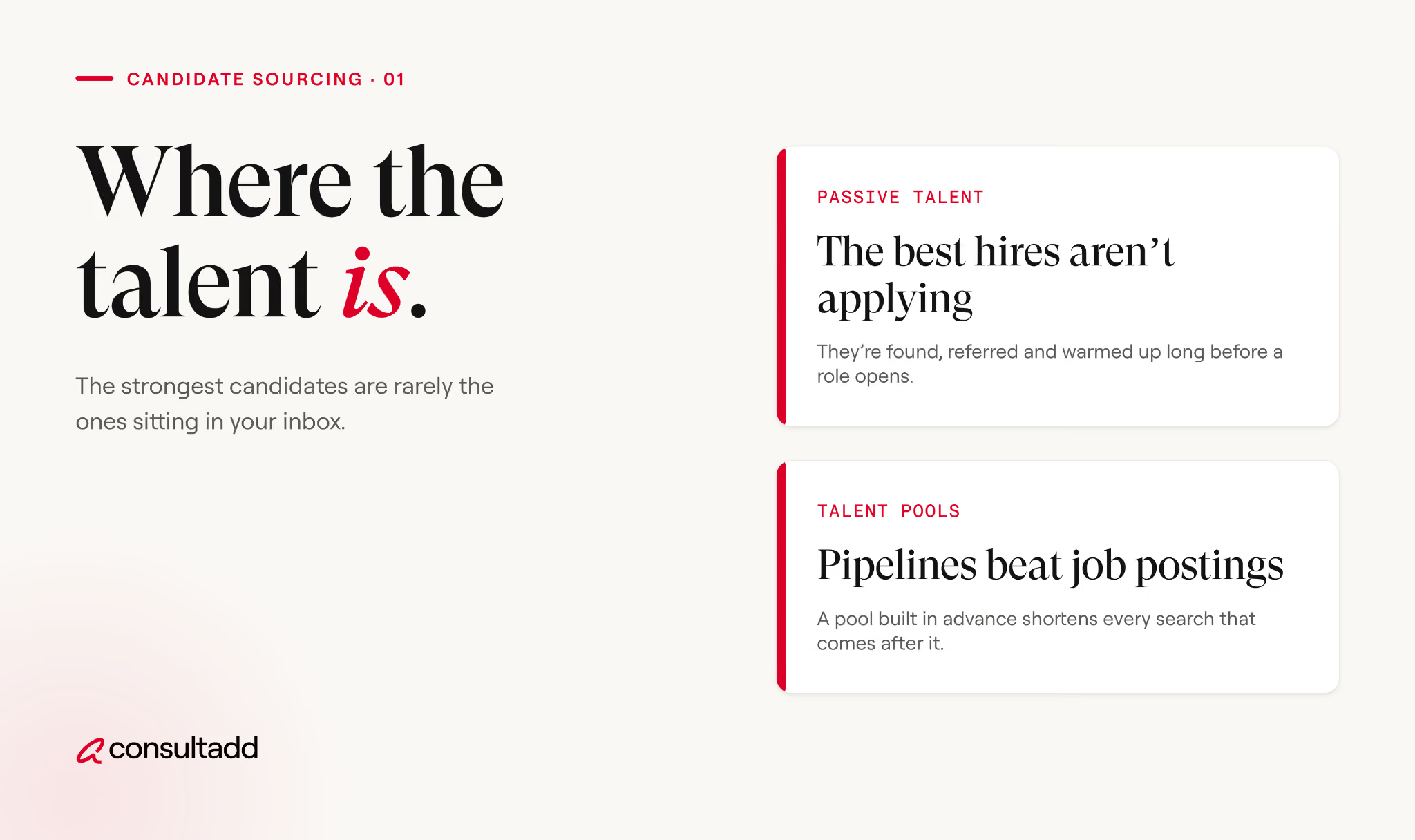
Sourcing vs recruiting
One practical test: if you stopped posting jobs entirely tomorrow, could you still fill a req? If the answer is no, you do not have a sourcing function. You have a job board subscription.
Why the math favors outbound sourcing
The case for sourcing is not philosophical. It comes down to pool size and conversion.
LinkedIn's research across 18,000 professionals in 26 countries found that about 70% of the global workforce qualifies as passive talent, and roughly 45% of those people are open to a recruiter's message if the approach is right. Only about 15% are fully disengaged from recruiter outreach.
So if your pipeline depends entirely on applicants, you are competing with everyone else for the same 30% slice.
The conversion data points in the same direction.
Gem's 2026 analysis found that outbound sourced candidates convert to hires at five times the rate of inbound applicants, and that job boards produce roughly 90% of applications but only about 50% of hires.
That gap is the whole argument. Job boards are a volume channel masquerading as a quality channel, and volume is what burns recruiter hours.
Demand context helps here too. The U.S. Bureau of Labor Statistics reported 7.4 million job openings and 5.3 million hires in June 2026. There is no shortage of open seats. The constraint is reaching the right people before someone else does.
The candidate sourcing channels that carry real weight
Channel choice should follow role type, not habit. Here is how the main options compare in practice.
1. Your own ATS is the most underused channel
Almost every team has thousands of previously screened candidates sitting in a database, and almost nobody searches it first.
Rediscovered talent, meaning candidates already in the ATS who get re-engaged for a new role, accounted for 46% of sourced hires in 2026, up from 26% in 2021.
These people already passed a screen once. They already know your company name. The outreach is warmer, the response rate is better, and the cost is effectively zero.
The barrier is usually data hygiene, not strategy. If your ATS records have no skill tags, no reason-for-rejection field, and no last-contacted date, rediscovery is guesswork. Fixing that is a two-week project that pays for years.
2. Referrals still outperform, and it is not close
SHRM research indicates referred candidates are hired roughly 55% faster than candidates from other channels, with better retention.
A referred passive candidate has already had the awkward questions answered by someone they trust. Is the manager decent? Is the technical work real? That conversation happened before you ever entered the picture.
Referral programs go quiet for boring reasons. The bonus is too small, the process is a form nobody can find, or employees never hear what happened to the person they referred. Fix those three things before buying another sourcing tool.
3. Where technical candidates actually live
For engineering roles, resumes are a weak signal and public work is a strong one. GitHub contribution history, Stack Overflow answers, conference talks, and open source maintainership show what someone can do rather than what they claim.
This is slow sourcing. It does not scale to twenty reqs. For a hard cloud or DevOps search where the shortlist is ten people nationally, it is the only method that works.
Our technical recruitment guide covers how to evaluate what you find there.
How to write outreach people answer
Sourcing generates a list. Outreach turns the list into a pipeline, and this is where most sourcing effort dies.
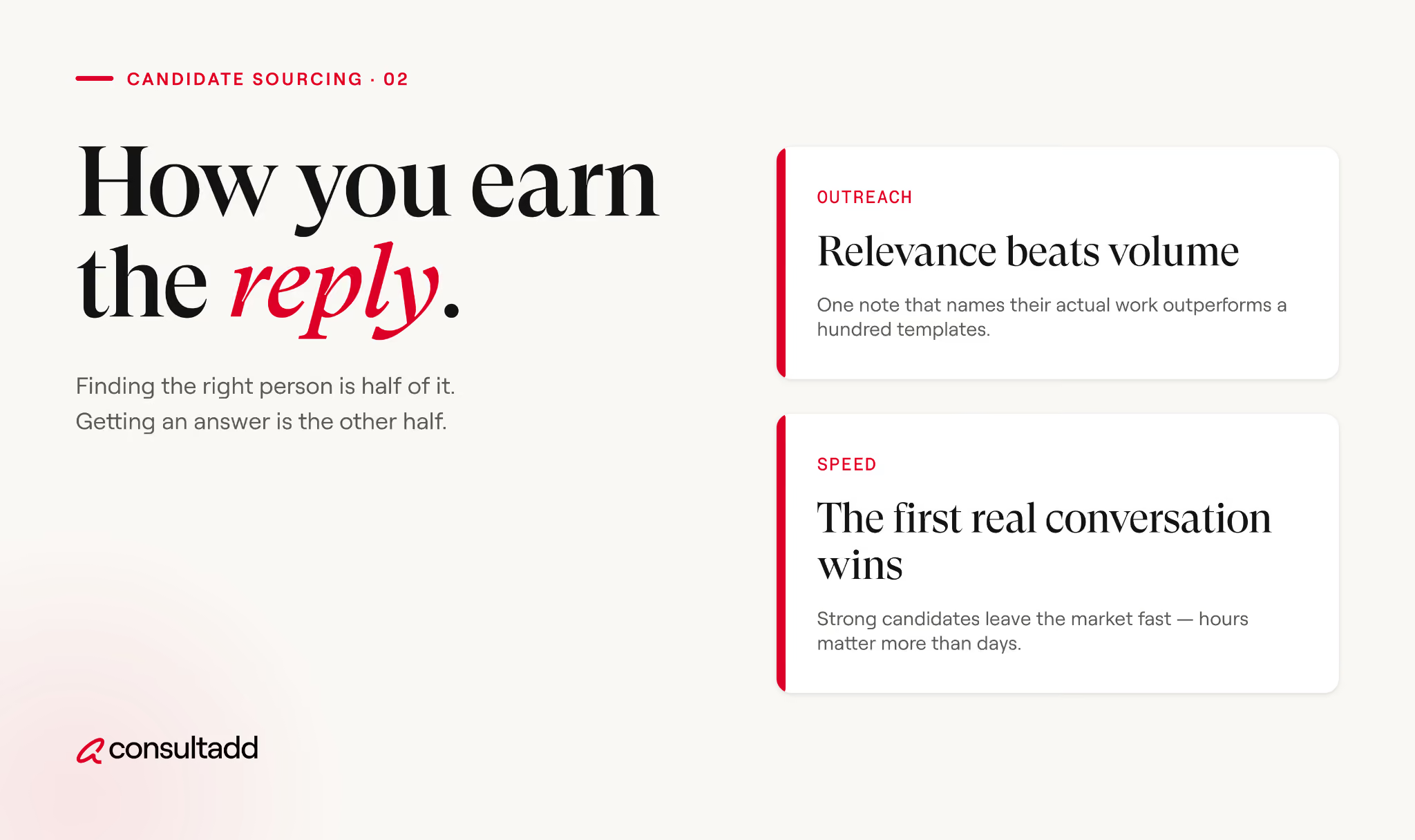
Response rate benchmarks make the personalization argument for you. Personalized recruiter InMails see roughly 18% to 25% response rates, against 5% to 8% for template messages.
Length matters too. LinkedIn's own data shows messages under 400 characters get response rates about 22% above the global average, with the best performance from messages in the 50 to 70 word range.
So the highest-performing recruiter message is short, specific, and obviously written by a person who read the profile. Three things to cut immediately:
- The pasted job description. Nobody reads it in the first message.
- "I came across your profile and was impressed." Everyone writes this. It signals a template.
- Four paragraphs about your company's mission before you say what the role is.
What to include instead: one concrete detail from their actual background, what the role is in one line, why you thought of them specifically, and a low-commitment question.
Follow up two or three times, spaced several days apart. A single message is a coin flip on whether they saw it at all.
The candidate sourcing metrics worth tracking
Most sourcing dashboards measure activity. Activity is not yield.
Two diagnostic patterns are worth memorizing. A healthy time to hire paired with a bloated time to fill usually means sourcing is the bottleneck. Both numbers high usually means the evaluation process is.
Our breakdown of time to hire benchmarks and the fixes that move them goes deeper on separating those two.
One more number worth noting: only about 20% of organizations measure quality of hire at all. If nobody checks which sourcing channel produced people who were still performing at month six, channel budgets get set on gut feel indefinitely.
Building a sourcing function versus buying pipeline
There is a real decision here, and the right answer changes by role type.
Building in-house makes sense when you hire the same profiles repeatedly, when the employer brand is a genuine asset, and when your reqs are permanent roles you want to own long term. The investment compounds. A well-maintained talent pool gets cheaper every quarter.
Buying pipeline makes sense when the need is urgent, when the skill is outside your team's search competence, or when the work is project-bound.
SHRM's 2026 data shows median cost per hire at $1,300 for nonexecutive roles and $15,000 for executive roles, with executive cost per hire up 42% in a single year. For the hard searches, the build-versus-buy math is closer than people assume.
Most teams end up running both, and that is usually correct. Own sourcing for your core recurring roles. Use a partner bench for urgent contract starts and specialist skills you touch twice a year.
If you are evaluating that second path, our guide to IT staffing models lays out where each one fits.
A 30-day plan to fix weak candidate sourcing
If sourcing is currently the weak link, this sequence works and does not require a new budget.
Compare response rate and source-to-submittal by channel. Move hours away from the worst performer.
Do not try to add channels in month one. Most teams already run more channels than they measure, and adding a sixth underperforming source makes the picture harder to read, not better.
Start Strong With Consultadd
With 15 years in business and 5,000+ successful staffing engagements, we don't just fill roles, we build reliability into your process. We've supported 65 staffing companies in the past year alone and maintain MSAs with industry leaders like Robert Half and TEKsystems.
Here's what working with Consultadd looks like:
- Talent sourced in under 24 hours
- Ready-to-deploy candidates, vetted for experience and compliance
- Lower turnover risk: we match long-term goals, not just short-term needs
- Seamless compliance: visa, documentation, onboarding? Handled.
- Dedicated 1:1 account managers for responsive, personalized support
- Top 100 candidate matches delivered in the past year
- Strong partnerships with universities to tap into fresh, committed talent
- Post-placement support so your investment grows beyond day one
For candidates, your next opportunity is more than just a job title, it's a chance to build skills, gain experience, and move your career forward. At Consultadd, we connect technology professionals with projects and employers that align with their goals, whether they're looking for contract, contract-to-hire, or long-term opportunities.
The tech job market moves fast, but the right guidance can make all the difference. Ready to take the next step in your career journey? Explore Opportunities >>
Key takeaways
- Candidate sourcing is proactive outreach to people who have not applied, and it ends where screening begins. Treating it as a distinct function is what keeps it from getting deprioritized.
- Application volume is a vanity metric. Job boards produce most applications and only about half of hires.
- Start channel improvement inside your own ATS, since rediscovered candidates now drive nearly half of sourced hires.
- Short, specific outreach under 70 words outperforms templates by a wide margin. Send follow-ups.
- Measure response rate and source-to-submittal by channel, not messages sent. Reallocate hours based on what those two numbers say.
FAQs
What is the difference between candidate sourcing and recruiting?
Sourcing is the proactive search for people who have not applied, and it produces engaged candidates. Recruiting takes over once someone is interested and covers screening, interviewing, and closing. Sourcing is measured by response and submittal rates, recruiting by offer acceptance and hires.
How do you source candidates with no budget?
Start with your ATS and your referral program, since both are already paid for and both produce strong conversion. Add free technical communities like GitHub or Stack Overflow for engineering roles. Budget buys reach, but it does not fix weak targeting or generic outreach.
What is a good response rate for candidate outreach?
Personalized recruiter messages generally land in the 18% to 25% range, while template messages run closer to 5% to 8%. Rates vary widely by industry, and saturated tech markets sit lower. Track your own baseline by channel rather than chasing a national average.
How many candidates should be in a pipeline per open role?
It depends on your submittal-to-hire ratio, so work backward from your own data. If roughly one in four submittals converts, you need enough engaged candidates to produce four solid submittals. Pipeline coverage is more useful as a trend line than as a fixed target.
Are passive candidates really better than active applicants?
They are not inherently better, but they are less contested and convert at a higher rate once engaged. Active candidates can be excellent and move faster. The practical argument for passive sourcing is pool size, since around 70% of the workforce is not actively looking at any given time.
Should we build a sourcing team or use a staffing partner?
Build in-house for roles you hire repeatedly, where the investment in a talent pool compounds over time. Use a partner for urgent contract starts, niche skills, or capacity spikes your team cannot absorb. Most organizations run both and assign each channel to the role types it fits.
.avif)
Recruitment and Selection Process: Getting It Right
Introduction
Ask ten hiring managers to describe their recruitment and selection process and most will give you a list of stages. Post the role, screen resumes, phone screen, interviews, offer.
That's a workflow. It isn't a process, and the distinction shows up the moment someone asks why a candidate was rejected and nobody can answer with anything more specific than "not a fit."
Recruitment and selection are two separate disciplines that got merged into one phrase.
Recruitment is about attracting a pool. Selection is about choosing from it, defensibly, using methods that actually predict whether someone will do the job well. Most teams are competent at the first and improvising at the second.
This covers the second half, since that's where the money and the legal exposure both sit.
This is general information about hiring practice, not legal advice. Employment law varies by jurisdiction, so check specific obligations with counsel.
TL;DR
- Recruitment attracts candidates; selection chooses among them. Running both as one undifferentiated funnel is why hiring decisions become hard to explain.
- Under federal guidance, a selection procedure is almost anything you use to make a hiring decision, including a casual interview or an experience requirement.
- If a selection method disproportionately excludes a protected group, the employer has to show it's job-related and consistent with business necessity.
- The four-fifths rule is the standard federal starting point for spotting adverse impact, and it's simple enough to check yourself.
- Structured methods beat unstructured ones on both prediction and defensibility, which is unusual. Most tradeoffs don't point the same direction.
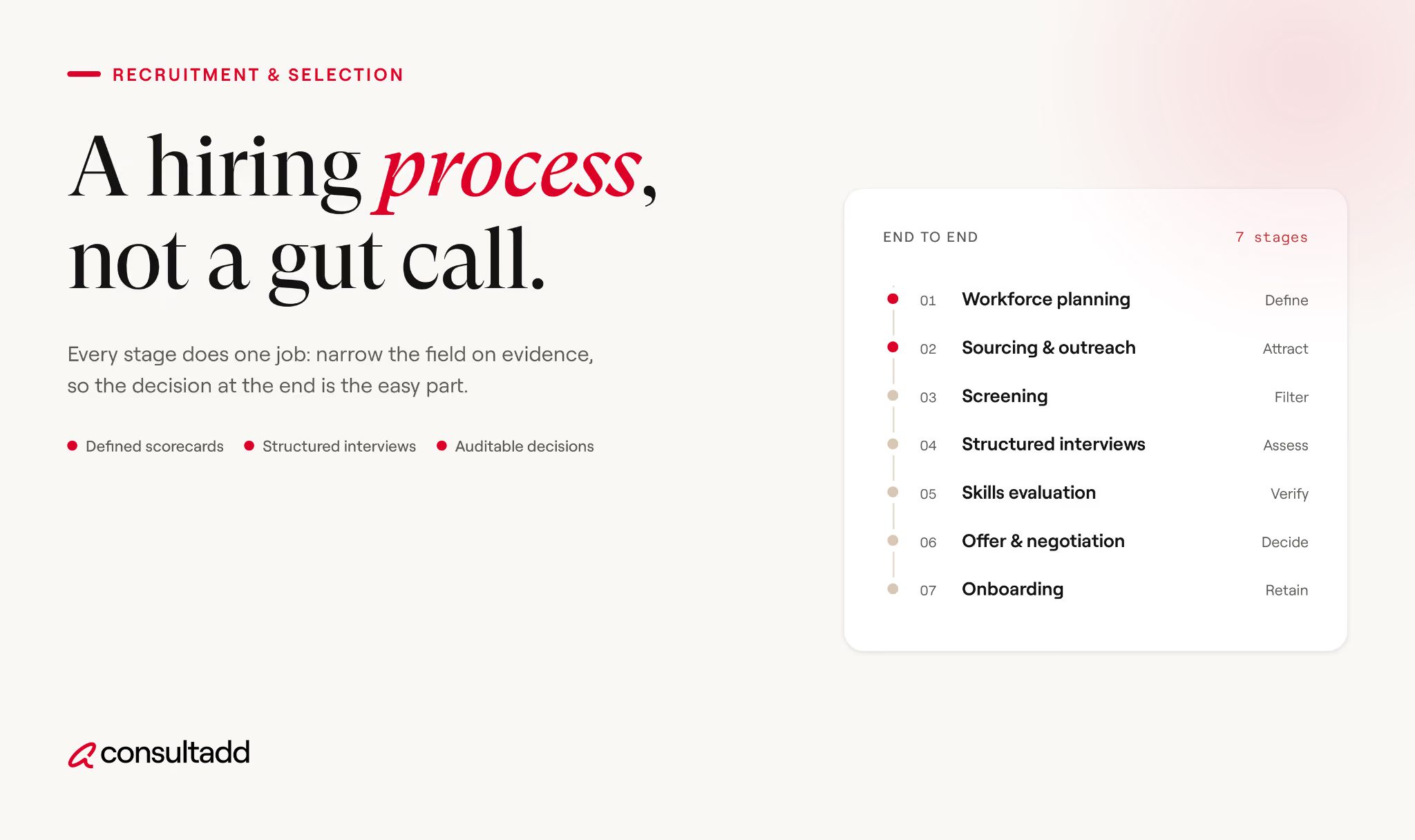
Recruitment and selection are two different jobs
They have different goals, different failure modes, and different people are usually good at them.
The practical consequence: expanding your pool won't fix a broken selection process, and it often makes it worse. More candidates through a process with no consistent criteria just means more inconsistent decisions.
If your problem is genuinely on the recruitment side, Consultadd's hiring and recruiting strategies playbook covers sourcing and pipeline building in depth.
This piece assumes you have candidates and the question is how you pick.
Why the split matters
Because the two halves are held to different standards.
Nobody audits your sourcing channels. Plenty of people can audit your selection decisions, including candidates, regulators, and your own leadership when a senior hire fails at month four.
Selection is also where most of the value is created. A recruiter who doubles your applicant pool has helped. An assessment process that reliably distinguishes the top quartile has changed your team's output for years.
And selection is the half that's usually undocumented. Teams keep detailed records of where candidates came from and almost none of why they were rejected.
What actually counts as a selection procedure
This is the part that surprises people, and it's worth reading carefully.
The Uniform Guidelines on Employee Selection Procedures, adopted in 1978 by the EEOC, the Department of Labor, the Department of Justice, and the Civil Service Commission, define a selection procedure broadly. It isn't just formal tests.
The guidelines cover job requirements like physical, educational, and experience criteria, plus evaluation through application forms, interviews, performance tests, written tests, and performance in training or probationary periods.
Read that again. An informal interview is a selection procedure. So is "must have a bachelor's degree." So is "five years minimum experience."
The EEOC's guidance on employment tests and selection procedures makes the consequence clear: employers can face liability not only for intentional discrimination, but for using apparently neutral procedures that disproportionately exclude a protected group, unless they can justify them.
So the requirement to be job-related doesn't apply only to a personality assessment you bought. It applies to the degree requirement someone copied from an old job description in 2019 and nobody has questioned since.
Choosing methods that predict performance
Different selection methods answer different questions, and using the wrong one is how teams end up with candidates who interview beautifully and can't do the work.
Two things hold consistently in the research literature.
- Structured approaches outperform unstructured ones at predicting job performance.
- Methods that sample actual work outperform methods that ask people to describe their work.
The unusual part is that structure improves defensibility at the same time. Most hiring tradeoffs force a choice between rigour and speed. This one doesn't, which is why it's the single highest-return change most teams can make.
For how these methods sequence within a technical hiring cycle specifically, Consultadd's guide to how technical recruitment works stage by stage walks through the assessment stages in order.
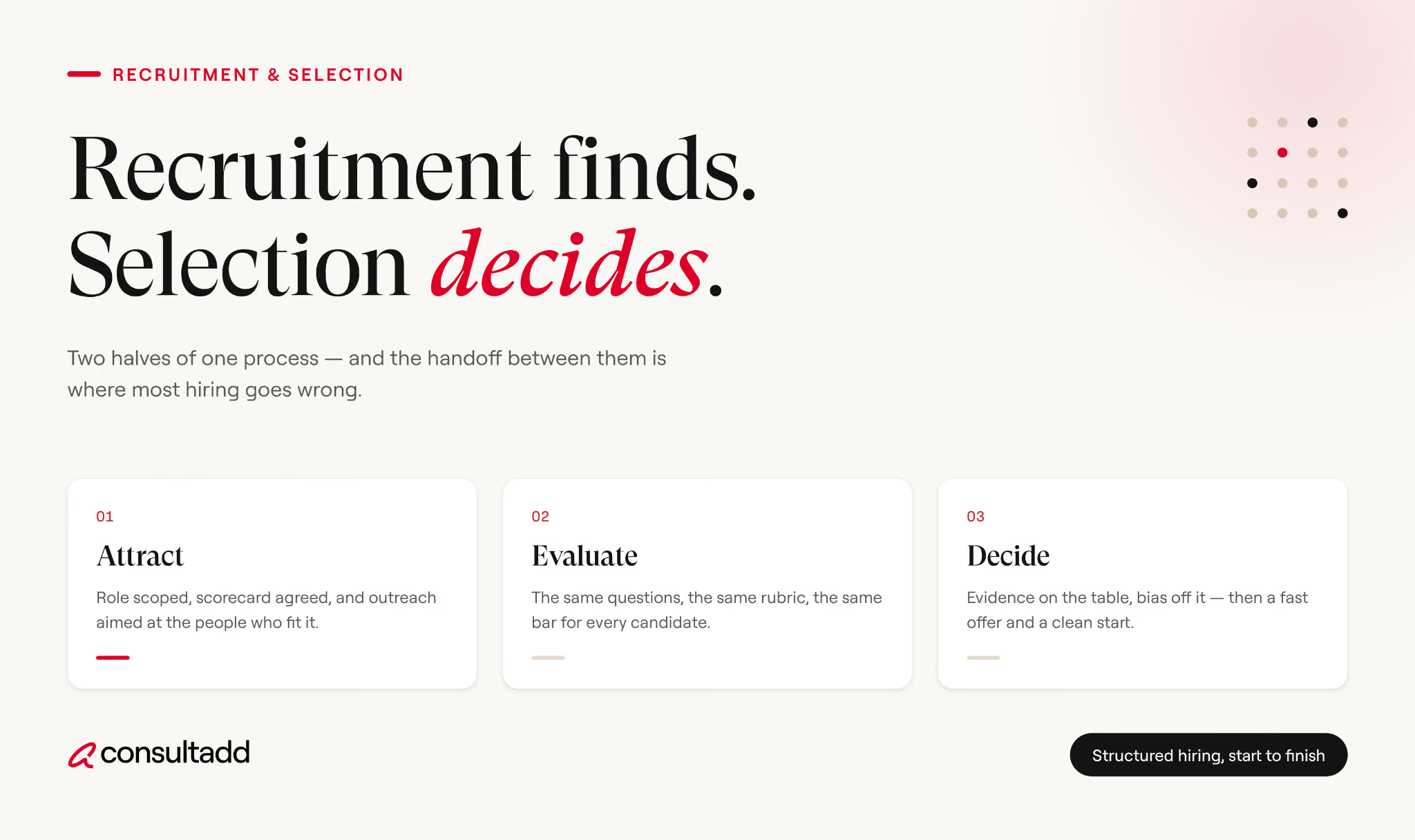
Keeping the process defensible
Defensibility isn't a separate compliance exercise bolted onto the end. It's mostly a byproduct of running a consistent process.
Three things do the work:
1. Start from job analysis.
- Every criterion should trace to something the job actually requires.
- If you can't explain why a requirement predicts performance in this role, it shouldn't be filtering anyone out.
- This is also the cheapest fix available, since it costs a conversation with the hiring manager.
2. Check for adverse impact.
- The Uniform Guidelines describe the four-fifths rule: a selection rate for any race, sex, or ethnic group that falls below four-fifths, or 80%, of the rate for the highest-scoring group will generally be regarded by federal enforcement agencies as evidence of adverse impact.
- Rates above that generally won't be.
- Running that check is arithmetic. Divide selected by applied for each group, find the highest rate, and compare the others against 80% of it.
- The guidelines note that smaller differences can still constitute adverse impact where they're significant in statistical and practical terms, and that larger gaps may not where the numbers are small and not statistically significant.
- So treat it as a flag to investigate, not a verdict.
- The guidelines also suggest adverse impact determinations be made at least annually for each group making up at least 2% of the relevant labor force or applicable workforce.
3. Know what happens if you find impact.
- If a procedure disproportionately excludes a protected group, the employer needs to show it's job-related and consistent with business necessity.
- Even then, a challenger can argue a less discriminatory alternative exists that would predict performance equally well.
Worth noting: the guidelines don't require validity studies where no adverse impact results. The obligation is triggered by impact, not by using a test.
The documentation most teams skip
Where the total selection process shows adverse impact, the guidelines indicate employers should keep records showing which components are producing it.
That's impossible to do retroactively if you never recorded stage-level outcomes.
None of this is heavy. It's a scorecard and a spreadsheet. The reason teams skip it isn't cost, it's that documentation feels like overhead until the first time someone asks a question you can't answer.
Where processes break
A few patterns recur, drawn from watching hiring cycles go sideways:
1. Criteria written after meeting candidates.
- The requirements quietly reshape themselves around whoever the hiring manager liked.
- This is the most common failure and the hardest to see from inside.
2. Interviewers scoring different things.
- Five interviewers, no rubric, five private definitions of a good answer.
- The debrief becomes a negotiation between confident opinions rather than a comparison of evidence.
3. Requirements nobody can justify.
- Degree minimums, arbitrary years of experience, and tool-specific demands that were copied forward.
- Each one narrows the pool and each one has to be defensible.
4. Speed collapsing rigour.
- Under pressure, teams skip the structured parts first because they feel slow.
Consultadd's breakdown of where IT recruitment strategies break down covers the speed pressure side of this in more detail.
5. Treating selection as HR's problem.
- The hiring manager owns the decision and usually owns the inconsistency too.
- Process fixes that don't involve them don't hold.
For teams hiring technical contract talent where the selection burden partly shifts to a staffing partner, the eight stages of the IT staffing process shows where vetting responsibility sits at each handoff.
Start Strong With Consultadd
With 15 years in business and 5,000+ successful staffing engagements, we don't just fill roles, we build reliability into your process. We've supported 65 staffing companies in the past year alone and maintain MSAs with industry leaders like Robert Half and TEKsystems.
Here's what working with Consultadd looks like:
- Talent sourced in under 24 hours
- Ready-to-deploy candidates, vetted for experience and compliance
- Lower turnover risk: we match long-term goals, not just short-term needs
- Seamless compliance: visa, documentation, onboarding? Handled.
- Dedicated 1:1 account managers for responsive, personalized support
- Top 100 candidate matches delivered in the past year
- Strong partnerships with universities to tap into fresh, committed talent
- Post-placement support so your investment grows beyond day one
For candidates, your next opportunity is more than just a job title, it's a chance to build skills, gain experience, and move your career forward. At Consultadd, we connect technology professionals with projects and employers that align with their goals, whether they're looking for contract, contract-to-hire, or long-term opportunities.
The tech job market moves fast, but the right guidance can make all the difference. Ready to take the next step in your career journey? Explore Opportunities >>
Key takeaways
- Treat recruitment and selection as two disciplines. Fixing your pipeline won't fix inconsistent decisions.
- Federal guidance treats interviews, experience requirements, and education minimums as selection procedures, so each one needs a job-related justification.
- Structure improves both prediction and defensibility at once, which makes rubrics and consistent questions the highest-return change available.
- The four-fifths rule is a simple arithmetic check you can run on your own data as an early warning, not a final verdict.
- Record criteria, scores, and rejection reasons as you go. Stage-level data can't be reconstructed later.
FAQs
What is the difference between recruitment and selection?
Recruitment is the work of attracting and building a pool of qualified applicants. Selection is the work of assessing that pool and choosing who to hire. Recruitment is measured by pipeline quality and volume; selection is measured by whether the people you choose succeed in the role.
What are the main stages of the recruitment and selection process?
Recruitment typically covers workforce planning, job analysis, job description, sourcing, and application. Selection covers screening, assessment, interviewing, reference and background checks, and the offer decision. The stages matter less than whether each one applies consistent, job-related criteria.
What is a selection procedure under EEOC guidance?
The Uniform Guidelines define it broadly as measures used as a basis for an employment decision. That includes formal tests but also interviews, application form reviews, work samples, and physical, educational, or experience requirements. Informal interviews are covered too.
What is the four-fifths rule?
It's the federal starting point for identifying adverse impact. If a group's selection rate is less than 80% of the rate for the highest group, federal enforcement agencies will generally regard that as evidence of adverse impact. The guidelines note smaller gaps can still matter and larger gaps may not where numbers are small.
Are structured interviews better than unstructured ones?
Yes, on both counts that matter. Structured interviews, where every candidate gets the same questions scored against a defined rubric, predict job performance more reliably and produce decisions that are far easier to explain and defend. Unstructured conversations are better used to sell the role than to score candidates.
How do we make our recruitment and selection process more defensible?
Start from a job analysis so every criterion traces to a real requirement, use the same questions and scoring across candidates, record the reason for each rejection against a specific criterion, and run periodic adverse impact checks on your stage-level data. Most of the defensibility comes free with consistency.
.avif)
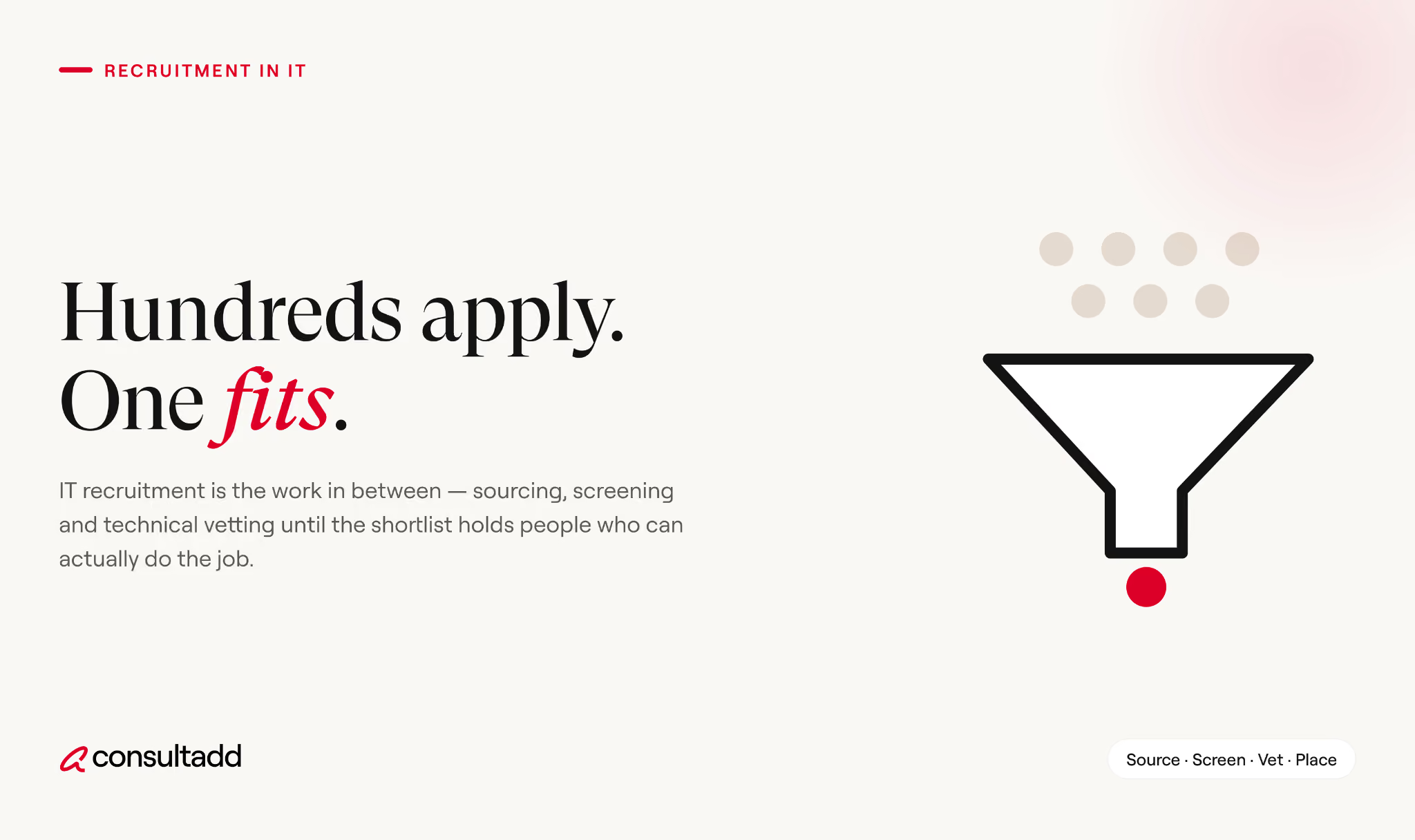
Recruitment in IT: A Stage-by-Stage Hiring Playbook
Introduction
Most advice about recruitment in IT stops at the strategy level. Hire for skills, build a pipeline, move faster. All true, and none of it tells you what to do on Monday morning when a req lands in your queue.
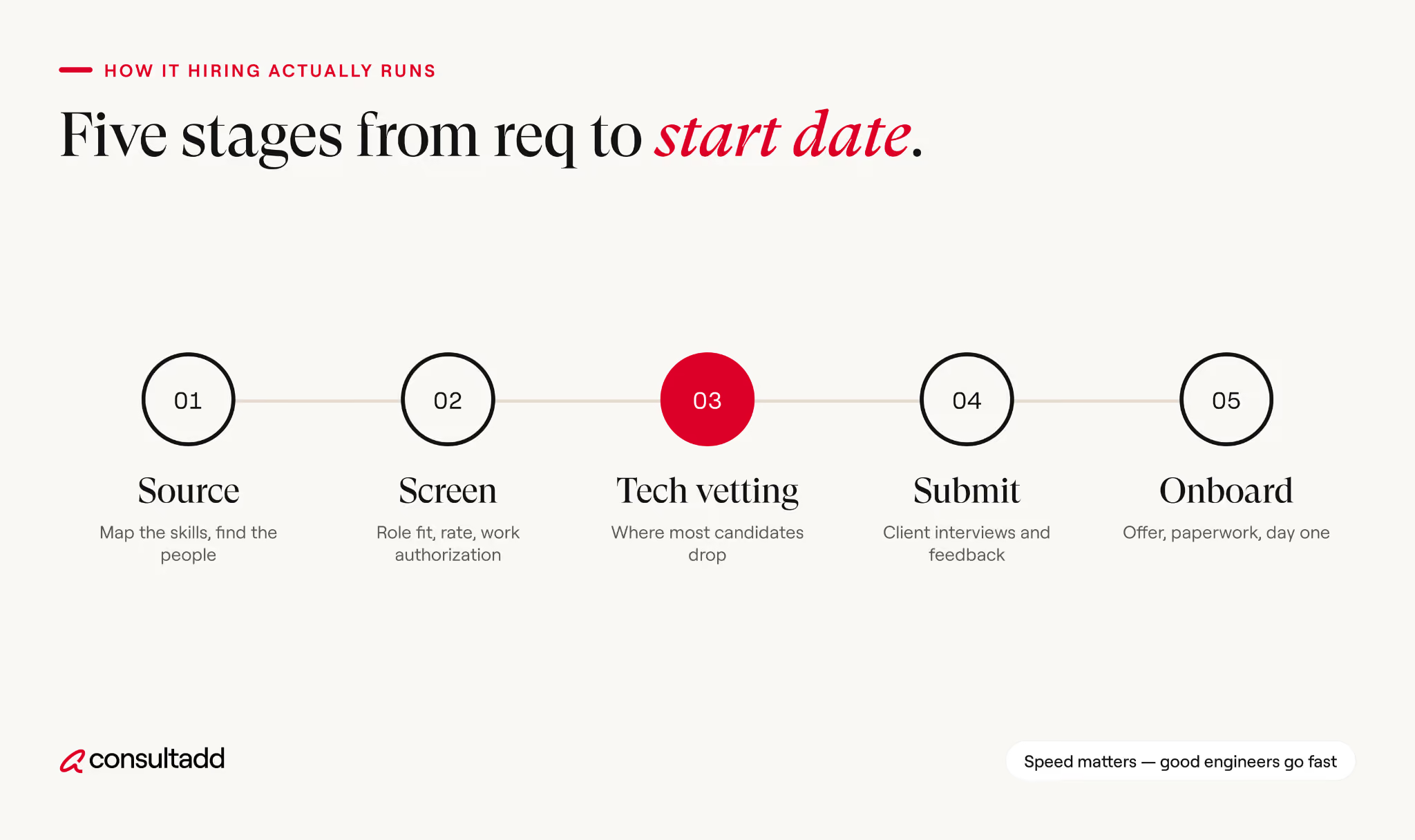
This is the operational version. Six stages, what each one should produce, how long it should take, and what to measure when it doesn't work.
One number frames the whole thing. In July 2026, US employers held 7.3 million open jobs but made only 5.1 million hires, and the hires rate sat at 3.2 percent, according to BLS Job Openings and Labor Turnover data.
Openings are plentiful. Actual hiring is slow. That gap is a process problem more than a demand problem, and process problems are fixable.
If you want the strategic context first, our breakdown of what's broken and what's working in IT recruitment covers the market conditions behind these numbers.
TL;DR
- A weak intake meeting is the single most expensive failure in the process, because every later stage inherits its ambiguity.
- Interview counts per hire have climbed sharply, which means added rounds now cost you candidates rather than better decisions.
- AI screening tools became a compliance question in 2026, with Illinois HB 3773 effective January 1 and NYC enforcement tightening.
- Measure elapsed days per stage alongside conversion per stage, or you'll optimize the wrong thing.
- Offers that sit open for days lose candidates. Speed at the close matters more than most teams account for.
The six stages and what each should produce
Durations are targets, not promises. Senior and specialized roles run longer. But if a stage consistently doubles its target, that's where your process is leaking.
Intake: the stage everyone rushes
Skipping a proper intake meeting is the most common and most expensive mistake in technical hiring. Everything downstream inherits whatever ambiguity survives this conversation.
A useful intake produces three artifacts:
1. A separated requirements list.
Must-haves and nice-to-haves in two columns, not one paragraph. Padding a job description with every desirable attribute discourages qualified people from applying and gives the recruiter no way to prioritize. If the list of must-haves runs past five items, the role is probably two roles.
2. An agreed compensation range.
Not "competitive." An actual number, confirmed with whoever approves it. Discovering a budget ceiling at offer stage wastes six weeks of everyone's time.
3. A scorecard.
What does a strong answer look like for each must-have, and who on the panel assesses which one. Without this, interviewers default to gut feel, and gut feel is where both bias and inconsistency enter.
One question worth asking the hiring manager directly: name someone currently on the team who'd be a strong fit for this role. Then look at that person's actual background. It's usually different from the job description, and the difference tells you what the role really needs.
Sourcing and outreach
Two channels do most of the work in technical hiring: direct outreach and referrals. Job boards contribute volume, and volume has become a liability rather than an asset.
On outreach response rates, LinkedIn Talent Solutions data puts personalized messages in the 18 to 25 percent range against 5 to 8 percent for templates. That gap is the entire argument for spending three minutes per message instead of thirty seconds.
What personalization actually means: reference something specific and recent from their work. A repository, a talk, a system they built. Not their job title and years of experience, which is what templates do and what candidates recognize instantly.
A practical benchmark for the first week: a first shortlist submitted within seven days of intake. If that slips, the usual cause is an unclear must-have list, which sends you back to stage one.
For roles that are genuinely hard to fill in the open market, a specialized partner with an existing bench often beats building a pipeline from zero.
Our guide to evaluating IT staffing firms covers what to ask before signing one, and IT contract staffing as a strategy explains when contract structures make a hard req easier to fill.
Screening, and the 2026 AI hiring rules
This stage changed legally in 2026, and a lot of teams haven't caught up.
If your ATS ranks or scores candidates, if a tool filters resumes automatically, or if a video interview platform analyzes responses, you may be running what the law calls an automated employment decision tool. That triggers obligations in a growing number of jurisdictions.
Two things make this more urgent than it looks:
First, a human making the final call doesn't necessarily take you outside scope. A resume-ranking score a recruiter relies on is generally treated as covered.
Second, enforcement is tightening.
A December 2025 New York State Comptroller audit of DCWP's enforcement of Local Law 144 found weaknesses in complaint handling and recommended a shift toward proactive investigation, which the agency accepted.
The practical first step is boring and useful: inventory every tool in your hiring stack and write down what each one actually scores. Most teams can't answer that question about their own ATS.
NYC's DCWP page on automated employment decision tools sets out the audit and notice mechanics if you hire there.
This is general information, not legal advice. If AI sits anywhere in your screening path, run the inventory past counsel.
The interview loop
Here's the uncomfortable finding from 2026 benchmark data. Ashby's analysis found technical interviews per hire rose 52 percent since 2021, reaching roughly 17.6, while business interviews rose 36 percent to 11.7. Gem's data puts the overall figure near 13 interviews per hire, up 42 percent in three years.
Teams added rounds to handle rising applicant volume. The result is more recruiter and interviewer hours per hire, not better hires.
Meanwhile Talent Board found 57 percent of candidates have abandoned a process for being too slow. So the added rounds are costing you the people they were meant to evaluate.
Three fixes that work:
1. Cap the loop before you start.
Decide the number of rounds at intake and treat adding one as a decision requiring a reason, not a default.
2. Make the technical assessment resemble the job.
A take-home that mirrors a real task, time-boxed to two hours, tells you more than an algorithmic puzzle and annoys candidates less. If you use a live exercise, make it collaborative rather than adversarial.
3. Schedule the loop as a block.
Pre-booked panel slots on one or two days beat scheduling each round after the previous one clears. Scheduling latency, not evaluation time, is where most of the elapsed days go.
Watch the reschedule rate too. Candidate.fyi's 2025 data found 14 percent of interviews were rescheduled and 18 percent of scheduling signals needed human intervention. Neither shows up in standard funnel reporting, and both consume days.
Offer, close, and what to measure
Offer acceptance across roles and industries sat around 82 percent in Gem's 2026 benchmarks, the highest since 2021. Technical roles run lower.
The strongest predictor of a close is how long the offer sits open. Two days versus six is a meaningful gap, and it's an early warning signal most teams don't track. If an offer is still unsigned after 72 hours, that's information, not patience.
Call the candidate before the written offer arrives. Verbal first, with the number said out loud, gives you the chance to hear hesitation and address it before it hardens into a counteroffer conversation elsewhere.
The metrics worth tracking
Treat these as reference points, not targets. Published benchmarks define stages differently, so your own trend line over two quarters is more useful than any single industry figure.
The one instruction that matters most: measure elapsed days per stage alongside conversion per stage.
A candidate who would have passed your loop but dropped out in week three shows up in your dashboard as a screening loss. The actual cause was delay. Fix the wrong thing and the number won't move.
For where demand is concentrated right now and which skills are hardest to source, our review of IT staffing trends and what's changing in tech hiring has the current picture.
Start Strong With Consultadd
With 15 years in business and 5,000+ successful staffing engagements, we don't just fill roles, we build reliability into your process. We've supported 65 staffing companies in the past year alone and maintain MSAs with industry leaders like Robert Half and TEKsystems.
Here's what working with Consultadd looks like:
- Talent sourced in under 24 hours
- Ready-to-deploy candidates, vetted for experience and compliance
- Lower turnover risk: we match long-term goals, not just short-term needs
- Seamless compliance: visa, documentation, onboarding? Handled.
- Dedicated 1:1 account managers for responsive, personalized support
- Top 100 candidate matches delivered in the past year
- Strong partnerships with universities to tap into fresh, committed talent
- Post-placement support so your investment grows beyond day one
For candidates, your next opportunity is more than just a job title, it's a chance to build skills, gain experience, and move your career forward. At Consultadd, we connect technology professionals with projects and employers that align with their goals, whether they're looking for contract, contract-to-hire, or long-term opportunities.
The tech job market moves fast, but the right guidance can make all the difference. Ready to take the next step in your career journey? Explore Opportunities >>
Key takeaways
- Recruitment in IT breaks down into six stages, and a weak intake meeting contaminates all five that follow.
- Personalized outreach converts at roughly three to four times the rate of templated messages.
- AI screening tools carry real compliance obligations as of 2026, and a human making the final call does not automatically exempt you.
- Interview counts per hire have risen sharply without improving outcomes, so cap the loop deliberately.
- Track days per stage alongside conversion per stage, since latency often masquerades as a screening problem.
FAQs
What is the IT recruitment process?
It runs from intake through onboarding: defining the role with the hiring manager, sourcing and outreach, screening, a technical interview loop, offer and close, then handoff to onboarding. Each stage should produce a specific output, and the intake stage determines the quality of everything after it.
How long should it take to fill a technical role?
SHRM's benchmarking data puts the US median time to fill at roughly 44 days across roles, with engineering positions running closer to 62 days. Specialized and senior technical roles take longer. What matters more than the absolute number is where in your own process the days accumulate.
How many interview rounds should a technical role have?
Fewer than most teams currently run. Benchmark data shows technical interviews per hire climbed more than 50 percent since 2021 without a corresponding improvement in hiring outcomes, while more than half of candidates have abandoned a process for being too slow. Decide the number at intake and treat adding a round as an exception.
Do AI screening tools create legal risk in 2026?
Yes, in a growing number of jurisdictions. NYC Local Law 144 requires an annual independent bias audit, a public summary, and advance candidate notice. Illinois HB 3773 took effect January 1, 2026 and makes discriminatory effect from AI in employment decisions a Human Rights Act violation. Colorado's requirements for employment AI began June 30, 2026.
What recruiting metrics matter most for IT hiring?
Start with three: outreach response rate, time to fill, and offer acceptance rate. Those cover sourcing quality, process speed, and close quality. Add application-to-interview and interview-to-offer conversion once the first three are stable, and always track elapsed days per stage alongside them.
Should we build an internal recruiting function or use a staffing partner?
Internal teams work well for steady, repeatable hiring where institutional knowledge compounds. Staffing partners add the most value on hard-to-fill niche roles and when speed matters more than cost per hire. Most organizations doing this well run both, with a clear rule about which reqs go where.
.avif)
Pre-Vetted Candidates: What They Are and Why They Work
Introduction
Every recruiter has had the same week. You post a contract role, get 180 applications in four days, and spend the next two weeks discovering that most of them can't do the job, aren't actually available, or never intended to take a contract position in the first place.
Pre-vetted candidates exist to remove that two weeks.
The term gets used loosely, which is part of the problem. Some firms call a candidate pre-vetted after a ten-minute phone call. Others put them through a technical assessment, a background check, a work authorization review, and a conversation about salary and start date before the profile ever leaves their system. Same label, very different product.
This article covers what the label should mean, how a real vetting process is built, and how to tell whether the "pre-vetted" candidates you're being sent have actually been vetted.
TL;DR
- Pre-vetted candidates have already passed skills verification, background screening, work authorization checks, and an availability confirmation before a client ever sees them.
- The value is time. The SHRM 2025 Benchmarking Report puts median time-to-fill at roughly a month and a half, and most of that is screening work that vetting moves upstream.
- Not all vetting is equal. A resume review and a recorded technical assessment are both marketed as "vetting," and only one of them tells you whether someone can do the job.
- Compliance is where shortcuts get expensive. Work authorization and I-9 documentation have to be verified before placement, not after.
- Ask staffing partners for their specific vetting steps and rejection rate. A firm that can't describe either isn't vetting.
What "pre-vetted" actually means
A pre-vetted candidate is someone a staffing firm has already screened, tested, and cleared before presenting them to a client. The work happens on the agency's side. By the time the profile reaches your inbox, the basic questions are settled.
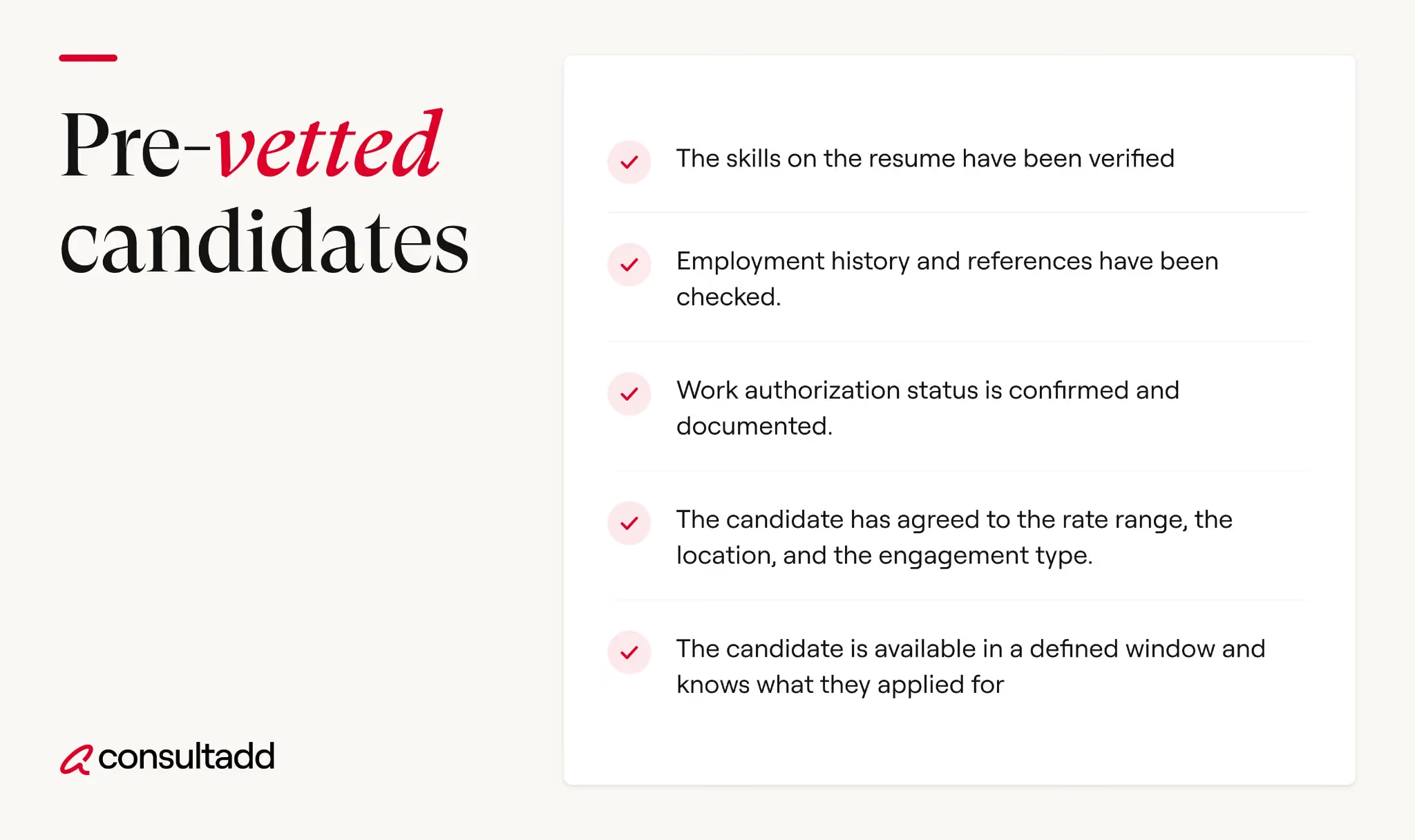
Here's what "settled" should cover:
- The skills on the resume have been verified, not just read.
- Employment history and references have been checked.
- Work authorization status is confirmed and documented.
- The candidate has agreed to the rate range, the location, and the engagement type.
- The candidate is available in a defined window and knows what they applied for.
That last point gets overlooked constantly. A technically brilliant engineer who wants a permanent role isn't a fit for a six-month contract, no matter how well they test. Vetting for intent is as useful as vetting for skill.
What pre-vetting is not
It's not a keyword match. Running a resume through an ATS filter and forwarding the top twenty results isn't vetting, it's sorting.
It's also not a guarantee. A pre-vetted candidate can still fail your interview, and they should be able to. Vetting removes the candidates who were never viable. It doesn't remove your judgment from the process.
Why the screening step costs so much when you own it
The numbers here are worth sitting with. The SHRM 2025 Benchmarking Report puts the average cost per hire at $5,475 for non-executive roles and $35,879 for executive roles, with median time-to-fill sitting around a month and a half for both.
Most of that time isn't spent interviewing. It's spent getting to the point where interviewing is worth doing.
And the market isn't making it easier. Bureau of Labor Statistics JOLTS data recorded 7.3 million job openings in July 2026, with 5.1 million hires and 3.1 million quits in the same month. That's a lot of churn to screen through, and technology roles carry an extra layer: you can't assess a data engineer's Spark experience from a resume bullet.
The client interview stage doesn't shrink, and it shouldn't. Everything above it does.
There's a second cost that rarely shows up in a spreadsheet: recruiter attention. A recruiter spending nine days screening one role isn't working on the other four. If you're running a staffing desk, that opportunity cost compounds quietly across a quarter.
How a real candidate vetting process works
Good vetting is sequential. Each stage is cheaper than the one after it, so the cheap checks go first and the expensive ones only run on people who've already cleared everything else.
Stage one: profile and history verification
Employment dates, job titles, and project scope get confirmed. This catches the gap between "worked on a migration to AWS" and "was on the team that ran a migration to AWS." Both are true statements. Only one of them means the candidate has done the work.
Stage two: technical evaluation
This is where firms differ most. The weak version is a conversational screen by a recruiter reading from a question sheet. The strong version is an assessment reviewed by someone who does the work, covering the specific stack the role requires.
For technology roles, the assessment should map to the job. A Kubernetes role needs a Kubernetes evaluation, not a general DevOps quiz.
Stage three: work authorization and compliance
Every US employer has to complete Form I-9 for every person they hire.
Per USCIS guidance, the employee completes Section 1 no later than their first day of work, the employer completes Section 2 within three business days of the hire date, and the form has to be retained for three years after the hire date or one year after employment ends, whichever is later.
For contract tech staffing, visa status adds real complexity. H-1B transfers, OPT and STEM OPT timelines, and green card processing all have their own constraints. A candidate who looks available in March may not be able to start until June.
This has to be verified before a client interview, not after an offer. Finding out at the offer stage that a candidate can't legally start in your timeline wastes everyone's time.
Stage four: intent and availability
A short, honest conversation. What rate will you accept? When can you start? Do you understand this is a contract-to-hire role? Are you interviewing elsewhere?
Candidates drop out of processes constantly, and a good portion of those drops were predictable at this stage.
Notice that the two cheapest stages catch the two most common failure modes. That's not a coincidence. It's why sequencing matters.
If you want more context on how these stages fit into different engagement types, our breakdown of IT staffing services and delivery models walks through direct hire, contract, contract-to-hire, and managed services.
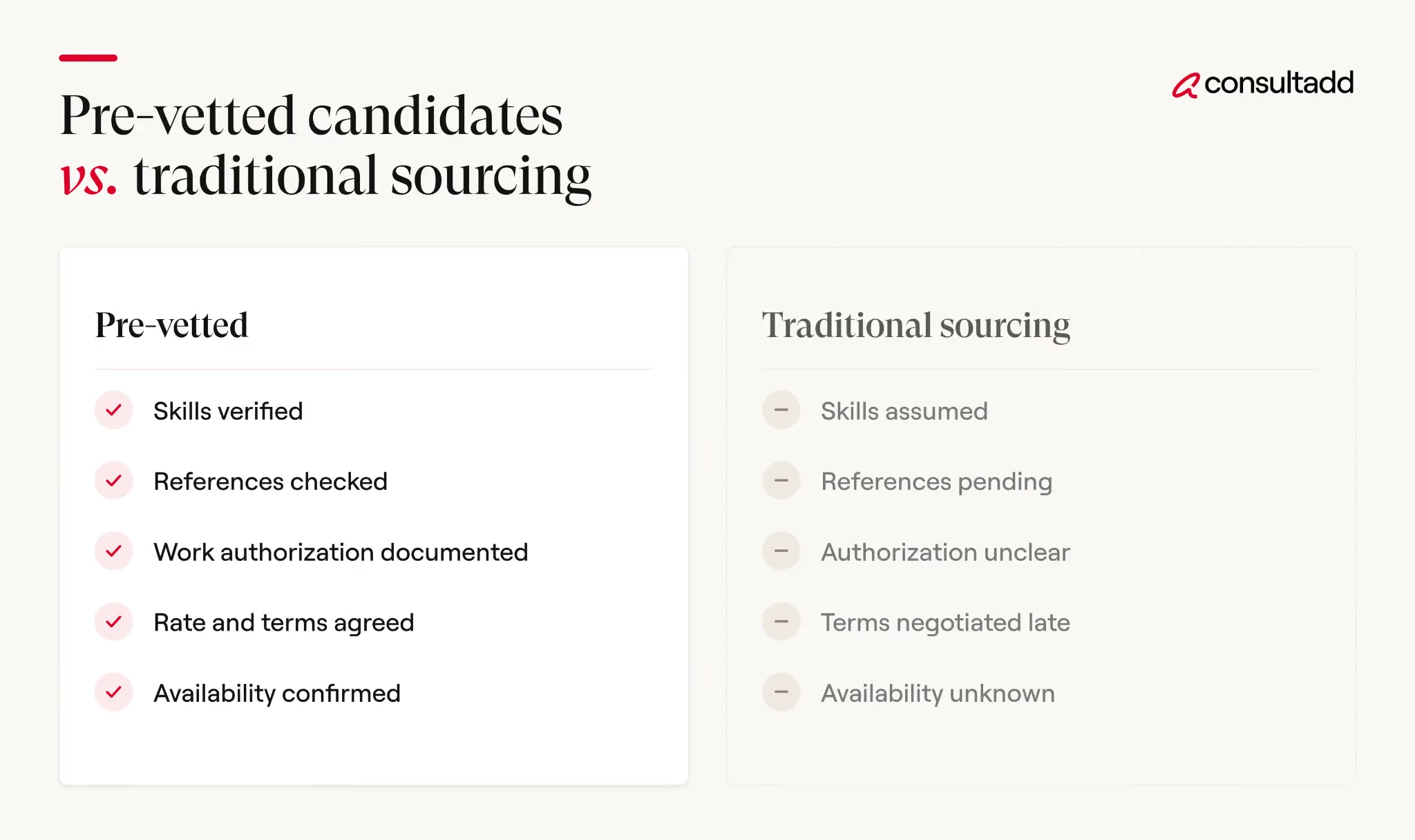
Pre-vetted candidates vs. traditional sourcing
Neither model wins outright. If you're hiring twenty support technicians with a well-staffed internal recruiting team, traditional sourcing is probably cheaper.
If you need a senior ML engineer with production LLM experience inside three weeks, pre-vetted candidates are the faster path and usually the cheaper one once you count recruiter hours.
Our comparison of staffing agency pros and cons covers the trade-offs in more detail, including where agency partnerships tend to underdeliver.
How to tell if "pre-vetted" is real
Ask direct questions. A firm with a genuine process will answer them without hesitating, and a firm without one will get vague fast.
The rejection rate question is the most useful one. If a firm accepts most applicants into its pre-vetted talent pool, the filter isn't doing anything. Selective pools are smaller and more useful.
The second most useful question is about recency. Talent pools decay. A candidate vetted eight months ago may have taken a permanent role, changed rates, or moved cities. Pool freshness is a real operational discipline, not a marketing claim.
Where pre-vetted talent helps most
Not every role justifies the premium. These situations usually do:
1. Specialized technical roles. Data engineering, ML and AI engineering, cloud architecture, and security roles have thin candidate markets. General sourcing returns volume, not fit.
2. Contract and contract-to-hire engagements. Contract hiring lives or dies on speed. A role that takes six weeks to fill has already lost most of its flexibility advantage.
Our piece on contract staffing as a planning decision gets into why timing matters so much here.
3. Staffing firms serving their own clients. This is a specific and underserved case. A recruiter who promises a client three qualified profiles by Thursday needs a source of vetted talent, not a LinkedIn search. Pre-vetted supply is the product.
4. Project ramp-ups with fixed deadlines. When a project has a start date, every day of screening is a day of delivery lost.
5. Roles with compliance sensitivity. Government contracts, regulated industries, and anything involving visa-dependent talent. Getting this wrong is expensive in a way that vacancy cost isn't.
Where it helps less: high-volume entry-level hiring, roles where you genuinely want to see a wide field of candidates, and situations where your internal team already has deep domain expertise and an active pipeline.
Start Strong With Consultadd
With 15 years in business and 5,000+ successful staffing engagements, we don't just fill roles, we build reliability into your process. We've supported 65 staffing companies in the past year alone and maintain MSAs with industry leaders like Robert Half and TEKsystems.
Here's what working with Consultadd looks like:
- Talent sourced in under 24 hours
- Ready-to-deploy candidates, vetted for experience and compliance
- Lower turnover risk: we match long-term goals, not just short-term needs
- Seamless compliance: visa, documentation, onboarding? Handled.
- Dedicated 1:1 account managers for responsive, personalized support
- Top 100 candidate matches delivered in the past year
- Strong partnerships with universities to tap into fresh, committed talent
- Post-placement support so your investment grows beyond day one
For candidates, your next opportunity is more than just a job title, it's a chance to build skills, gain experience, and move your career forward. At Consultadd, we connect technology professionals with projects and employers that align with their goals, whether they're looking for contract, contract-to-hire, or long-term opportunities.
The tech job market moves fast, but the right guidance can make all the difference. Ready to take the next step in your career journey? Explore Opportunities >>
Key takeaways
- Pre-vetted candidates have cleared skills verification, background checks, work authorization review, and an availability conversation before you see them.
- The time saved sits in the screening stages, not the interview stage. Your interview process stays the same length and should.
- A firm's rejection rate and pool recency tell you more about its vetting quality than any description of its process.
- Work authorization and I-9 compliance belong at the front of the process. Discovering a start-date blocker at the offer stage costs weeks.
- Pre-vetted sourcing pays off most on specialized, time-sensitive, or compliance-heavy roles, and least on high-volume entry-level hiring.
FAQs
What does "pre-vetted candidate" mean?
It means a staffing firm has already screened the candidate before presenting them to a client. That screening typically covers employment history, technical skills, references, work authorization, and availability. The client still interviews and makes the hiring decision.
How long does candidate vetting take?
A full vetting cycle on a new candidate usually runs three to seven business days, depending on how quickly references respond and whether visa documentation needs review. Firms that maintain an existing talent pool can present already-vetted candidates within 24 to 72 hours because the work was done in advance.
Are pre-vetted candidates more expensive?
The markup or placement fee is higher than a job board posting, yes. But the comparison isn't fee versus free. It's fee versus your recruiter's hours, your hiring manager's interview time, and the cost of the role sitting open. On specialized roles, pre-vetted sourcing often comes out cheaper once those are counted.
Do pre-vetted candidates still need interviews?
Yes, always. Vetting confirms that a candidate can do the job and is available to do it. It doesn't confirm that they fit your team, your codebase, or your working style. Skipping the interview defeats the purpose of having one.
How do staffing agencies verify work authorization?
They review documentation against the categories on Form I-9 and track visa status and expiration dates for candidates on H-1B, OPT, or other work-authorized statuses. Employers complete Section 2 of the I-9 within three business days of the hire date. Some employers also use E-Verify, which checks I-9 information against SSA and DHS records.
What's the difference between pre-screened and pre-vetted candidates?
The terms are often used interchangeably, but pre-screened usually means a lighter filter: a resume review and a short recruiter call. Pre-vetted implies deeper verification, including technical assessment and compliance checks. Ask any firm to define which one they mean, because the labels aren't standardized.
.avif)
How to Interview Candidates Well: Evidence-Based Guide
Introduction
For twenty-five years, the standard answer to what predicts job performance was cognitive ability, with structured interviews tied alongside it. Then a reanalysis pulled the numbers apart.
It was found that decades of meta-analyses had over-corrected for range restriction, inflating most validity estimates.
When the math was redone, structured interviews came out as the single top-ranked selection procedure, ahead of cognitive ability tests. Most estimates dropped by .10 to .20 points, but structured interviews dropped least.
So the answer to how to interview candidates well is less about charisma or gut reading and more about doing the same thing to every candidate and writing down what you saw.
That sounds bureaucratic. It is also the highest-leverage change most hiring teams can make.
TL;DR
- Structured interviews now rank as the strongest single predictor of job performance in the revised research, at roughly .42 operational validity.
- Unstructured interviews sit near the bottom of the list, alongside years of experience and educational credentials.
- Structure means four things: the same questions, in the same order, scored against a written anchored scale, by interviewers who rate independently.
- Write two questions per competency, cap the scorecard at five to eight competencies, and mix behavioral with situational.
- Score before the debrief. Once someone says "I loved them" out loud, the room's independent judgment is gone.
Why structure beats instinct
The revised numbers are worth seeing side by side, because a lot of hiring advice still quotes the 1998 figures.
Two things to take from this:
First, the ordering shifted: job-specific predictors like structured interviews, job knowledge tests, and work samples now sit above general psychological measures. The Society for Industrial and Organizational Psychology has a readable summary of why this reordering happened.
Second, the gap between structured and unstructured is the actionable part. McDaniel's earlier meta-analysis put structured interviews at .44 against .33 for unstructured. Same room, same hour, same interviewer, materially different signal, purely because of how the conversation was organized.
The authors themselves cautioned against reading their results as a mandate to prefer one tool over another in all circumstances.
Cost, volume, candidate reactions, and subgroup differences all factor in. But if you're already interviewing, adding structure costs nothing except preparation time.
How to interview candidates well: the process
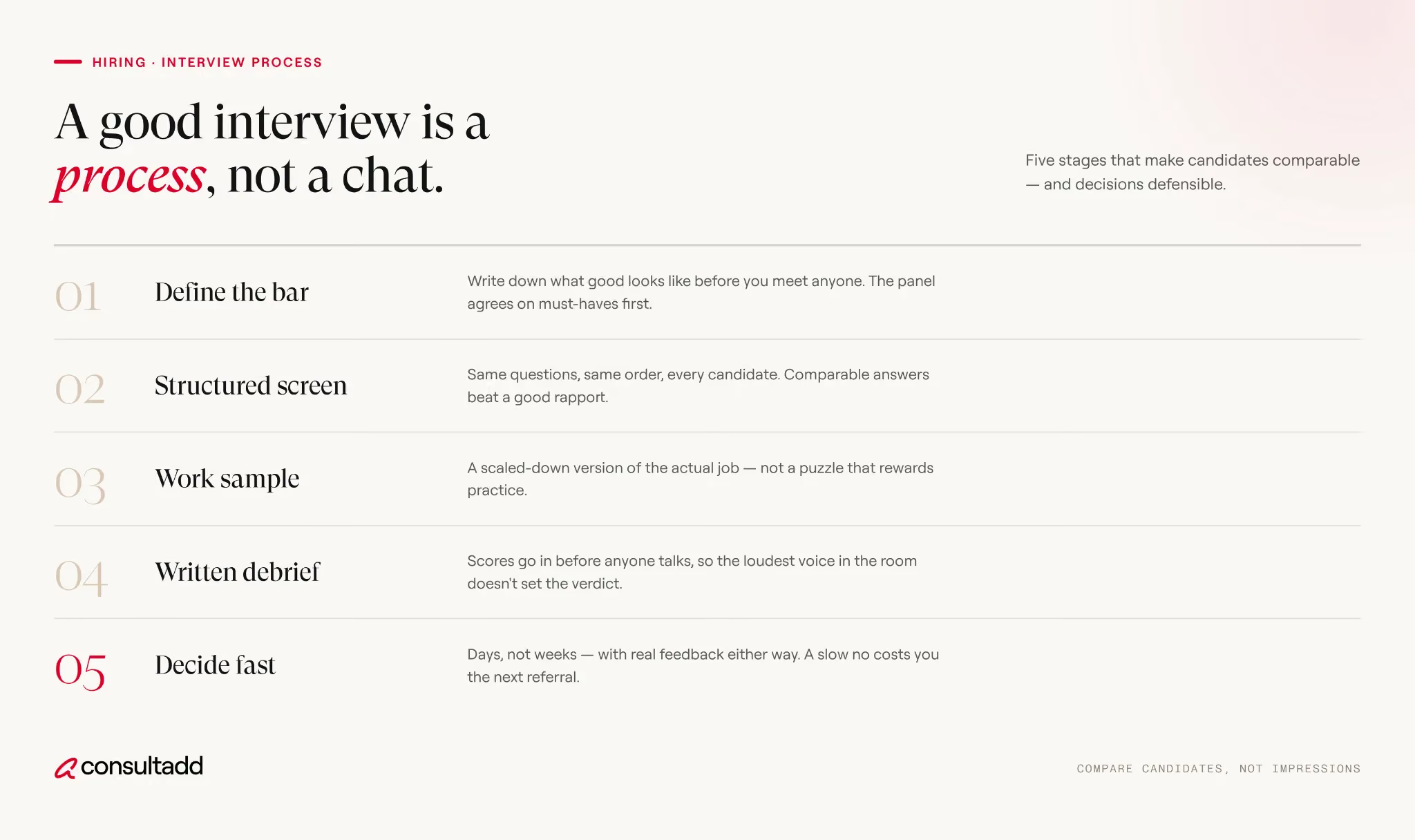
Seven steps. The first three happen before anyone talks to a candidate, and that's where most of the value is.
1. Define the competencies
Three to five for most roles, five to eight at the outside. Not "communication" in the abstract, but what communication means in this job: explains technical tradeoffs to non-engineers, writes design docs a new joiner can follow, escalates blockers early.
If you can't describe what good looks like, you can't score it.
2. Write the questions
Roughly two per competency, which puts a six-competency role at about twelve questions. That's a practitioner rule of thumb rather than a research finding, but it maps to what fits in a real interview loop.
Build them from actual incidents in the job. What went wrong on this team last quarter? What did the person who succeeded in this role do differently? Those become your questions.
Skip brain teasers. Google abandoned them years ago after finding they predicted nothing.
3. Build the anchored rating scale
This is the step teams skip, and skipping it is what turns a structured interview back into a chat with a form attached.
The US Office of Personnel Management's structured interview guide recommends at least three proficiency levels, ideally five to seven, with labels on at least three of them.
Something like this:
Write these once per competency and reuse them. Then run a short calibration session with the panel using sample answers, so everyone agrees what a 3 looks like before the first candidate arrives.
4. Brief the panel
Assign competencies so two interviewers aren't both probing the same thing. Tell each person what they own. Send them the questions and the scale in advance.
5. Run the interview
Same questions, same order, for every candidate. Probing is allowed and necessary. Improvising new questions because you're curious is not, because it destroys comparability.
Aim for roughly 80% candidate talking time. If you're explaining the role for twenty minutes, you're collecting no evidence. Take notes on what they said, not on your impression of it.
"Rewrote the deploy script, cut release time from 3 hours to 20 minutes" is evidence. "Seems sharp" is not.
6. Score independently, before the debrief
Every interviewer submits ratings with written evidence before anyone compares notes. This single rule does more for decision quality than any question you could add.
7. Decide from the scores
Compare the ratings, then discuss where they diverge. Divergence is useful information; it usually means one interviewer saw something the other didn't ask about.
The conversation should sound like "she scored 2 on ambiguity and here's why" rather than "I just wasn't feeling it."
Question design that produces evidence
Two families do the work. Use both:
For behavioral answers, listen for all four parts of the STAR structure: situation, task, action, result.
Candidates who describe a team accomplishment without ever saying what they personally did are the most common miss. Probe with "what was your specific piece of that?" and see what comes back.
For situational questions, use scenarios from your actual backlog. "A customer reports your fix broke something else and your lead is on holiday. What are your first ten minutes?" tells you more than any hypothetical about a burning building.
Mistakes that quietly wreck good processes
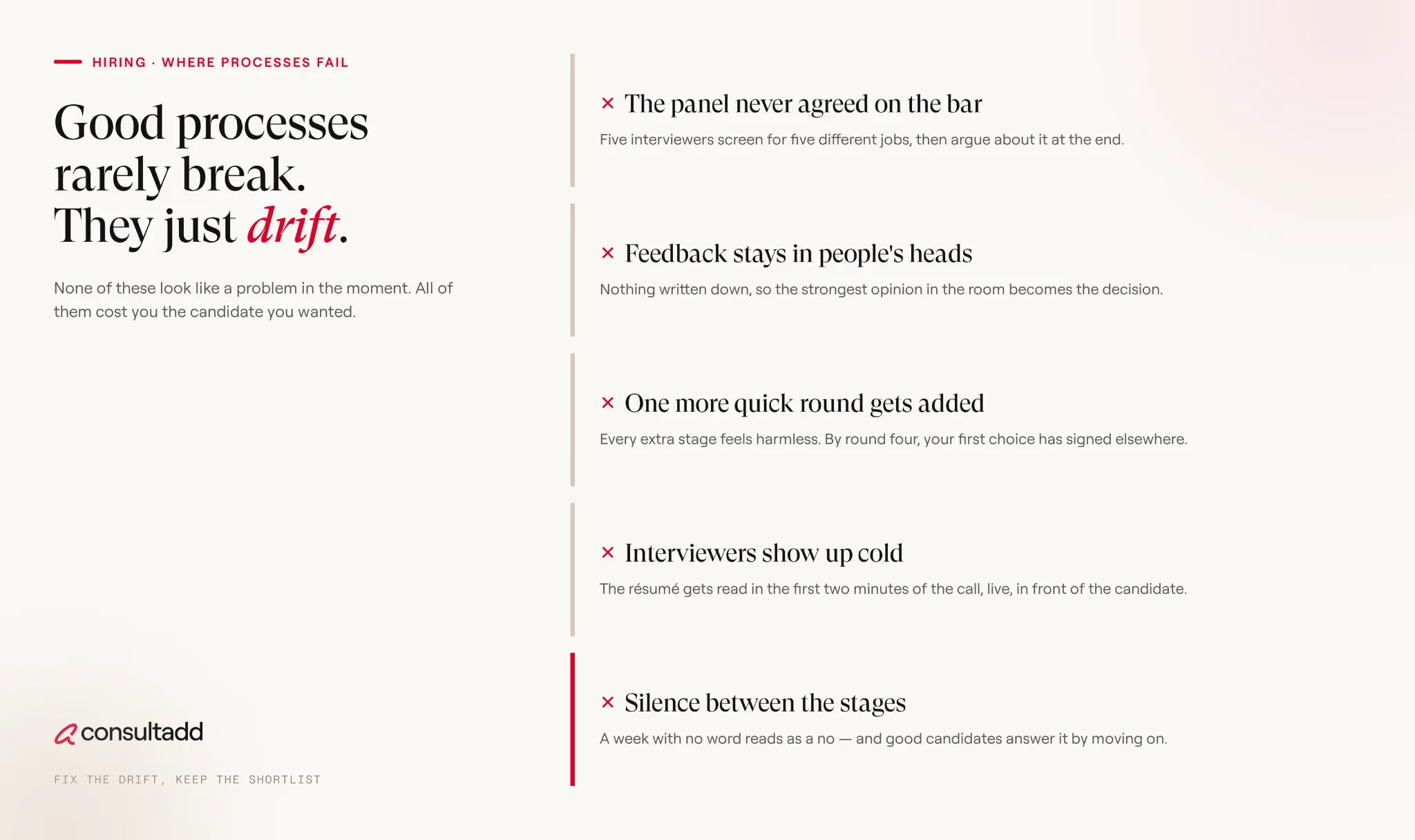
- Deciding in the first four minutes and spending the rest confirming it. Structure is the antidote, which is another reason to score against the scale rather than against your first impression.
- Talking too much. Selling the role is a separate conversation from assessing the candidate. Do it at the end.
- Hiring for likability and calling it culture fit. Decompose values into observable behaviors and score those. Otherwise you're screening for similarity to yourself.
- Letting the loudest voice anchor the debrief. Independent scoring first, every time.
- Overweighting years of experience and credentials. Both sit near the bottom of the validity list. They're filters, not predictors.
- Reusing a scorecard across different roles. Competencies are job-specific. That's precisely why structured interviews outperform general measures.
- No probing. A structured interview isn't a script read aloud. Follow-up questions are where thin answers come apart.
Candidate experience is part of doing this well
A well-run interview is also a better experience, which matters because your best candidates have other options.
What actually helps: tell them the format and who they'll meet in advance, give them the competencies you're assessing, keep to time, and commit to a decision date and hit it.
Sharing your questions beforehand doesn't hurt validity much and it reduces the advantage held by candidates who've simply interviewed more recently.
What doesn't help: unpaid multi-day take-homes, panels the candidate wasn't told about, and silence after a final round.
For contract and contract-to-hire roles the calculus shifts, because the engagement itself functions as the evaluation.
The contract-to-hire model trades a longer interview loop for a shorter one plus a real working trial, which is one reason it's become the default for a lot of senior technical hiring.
Legal and AI considerations
Two things to keep straight.
Consistency is a legal asset, not just a quality one.
- Asking every candidate the same job-related questions and documenting scores against a written rubric is exactly the record you'd want if a hiring decision were ever challenged.
- Ad hoc questions are where problems start, both for accuracy and for exposure.
AI interview tools carry their own obligations.
- New York City's Local Law 144 requires an independent bias audit within the prior twelve months, a public summary of the results, and advance notice to candidates before an automated employment decision tool is used for a role performed in NYC.
- Illinois has required consent and disclosure for AI-analyzed video interviews since 2020 and broadened its AI employment rules from January 2026.
- Several other states are moving, and the specifics have shifted more than once, including in Colorado.
- Title VII and the ADA apply to algorithmic tools regardless of what any state statute does.
Practical version: don't deploy a tool you can't demonstrate is fair, and check the current rules with counsel for every jurisdiction where candidates sit. None of this is legal advice.
Where to start tomorrow
If you take one thing from all of this: knowing how to interview candidates well is mostly knowing how to prepare before the interview and how to record what happened after it.
The hour in the room is the least variable part:
- Pick your next open role.
- Write down four competencies, eight questions, and a five-point scale for each competency. Send them to the panel.
- Require scores before the debrief.
- That's an afternoon of work, and it moves your process from the bottom of the validity list to the top of it.
If your hiring volume is the constraint rather than your process, the IT staffing trends breakdown covers where competition for technical talent is concentrating.
Start Strong With Consultadd
With 15 years in business and 5,000+ successful staffing engagements, we don't just fill roles, we build reliability into your process. We've supported 65 staffing companies in the past year alone and maintain MSAs with industry leaders like Robert Half and TEKsystems.
Here's what working with Consultadd looks like:
- Talent sourced in under 24 hours
- Ready-to-deploy candidates, vetted for experience and compliance
- Lower turnover risk: we match long-term goals, not just short-term needs
- Seamless compliance: visa, documentation, onboarding? Handled.
- Dedicated 1:1 account managers for responsive, personalized support
- Top 100 candidate matches delivered in the past year
- Strong partnerships with universities to tap into fresh, committed talent
- Post-placement support so your investment grows beyond day one
For candidates, your next opportunity is more than just a job title, it's a chance to build skills, gain experience, and move your career forward. At Consultadd, we connect technology professionals with projects and employers that align with their goals, whether they're looking for contract, contract-to-hire, or long-term opportunities.
The tech job market moves fast, but the right guidance can make all the difference. Ready to take the next step in your career journey? Explore Opportunities >>
Key takeaways
- Structured interviews rank as the top single predictor of job performance in the revised 2022 estimates, at about .42, with cognitive ability tests revised down to .31.
- Unstructured interviews, years of experience, and educational credentials all sit near the bottom of the validity hierarchy.
- Structure requires four elements: identical questions, a written anchored rating scale, independent scoring, and a panel.
- Three to five competencies, about two questions each, mixing behavioral and situational, is a workable default.
- Independent scores submitted before the debrief is the highest-return single rule in the whole process.
FAQs
What makes an interview "structured"?
Four things together: every candidate gets the same job-related questions in the same order, answers are rated against a written anchored scale, interviewers score independently before discussing, and the ratings are combined systematically rather than by consensus. Dropping any one of them reduces the benefit.
How many questions should an interview have?
A common rule of thumb is two per competency, so a role with five or six competencies lands around ten to twelve questions. Fewer competencies scored properly beats more competencies scored loosely, so cap the scorecard at five to eight.
Are behavioral or situational questions better?
Neither dominates. Behavioral questions work better for experienced candidates because there's a track record to probe. Situational questions work better for early-career candidates and for scenarios nobody has faced yet. Most good interviews use both for each competency.
Should I share interview questions with candidates in advance?
It's defensible and often improves the process. It reduces the edge held by candidates who simply interview more often, and it gets you considered answers rather than performances under time pressure. What it won't do is compensate for a missing rating scale.
How do I stop interviewers from just going with their gut?
Give them a scale with written anchors and require evidence alongside every score. Then collect the scores before the debrief starts. Gut feel is hardest to dislodge once it's been said out loud in a room.
Do I need to worry about legal issues in interviews?
Consistency is your best protection. Asking every candidate the same job-related questions and keeping scored records is exactly what you'd want on file if a decision were challenged. If you use AI screening or AI-analyzed video interviews, additional bias audit, notice, and consent rules may apply depending on where candidates are located. Check with employment counsel.
.avif)
What Causes a Red Flag on a Background Check in 2026
Introduction
Most people asking this question are waiting on a report right now. So here's the direct answer: what causes a red flag on a background check is usually a mismatch, not a crime.
Dates that don't line up. A job title that reads differently in the employer's HR system than on your resume. A degree the registrar can't confirm. A name or Social Security number that doesn't tie cleanly to your records.
Actual criminal findings do come up, and they matter. But according to iprospectcheck's 2026 State of Screening report, more than half of employers, 54.1%, say background checks turn up discrepancies "very often" or "somewhat often," and criminal history omissions are both the most common serious issue at 17.0% and the finding most likely to end a candidacy at 30.2%.
Read that second stat carefully. The omission was the problem, not just the record.
This covers what actually triggers a flag, what employers are legally allowed to do with it, and what happens next.
TL;DR
- The most common red flags are inconsistencies in employment dates, job titles, education, and identity, not criminal records.
- Failing to disclose something that later surfaces damages your candidacy more than the underlying fact usually does.
- Federal law caps how long most negative non-conviction information can be reported at seven years, and bankruptcies at ten.
- A flag is not a rejection. Employers must send a pre-adverse action notice with a copy of the report and give you a real chance to dispute it.
- Errors in background reports are common enough that the dispute process exists specifically for them, and the reporting agency generally has 30 days to reinvestigate.
What a red flag actually is
A red flag is something in a report that doesn't match what the employer expected, or that raises a question the employer now has to answer. It's a prompt for a follow-up conversation, not a verdict.
That distinction gets lost because candidates hear "the background check came back with an issue" and assume the offer is gone. Often it isn't.
Screening companies flag anything inconsistent, including their own data errors and cases of mistaken identity.
There's also no such thing as a universal pass or fail. A ten-year-old misdemeanor might be irrelevant for a software role and disqualifying for a job handling cash or working with children. Relevance to the specific position is the whole game.
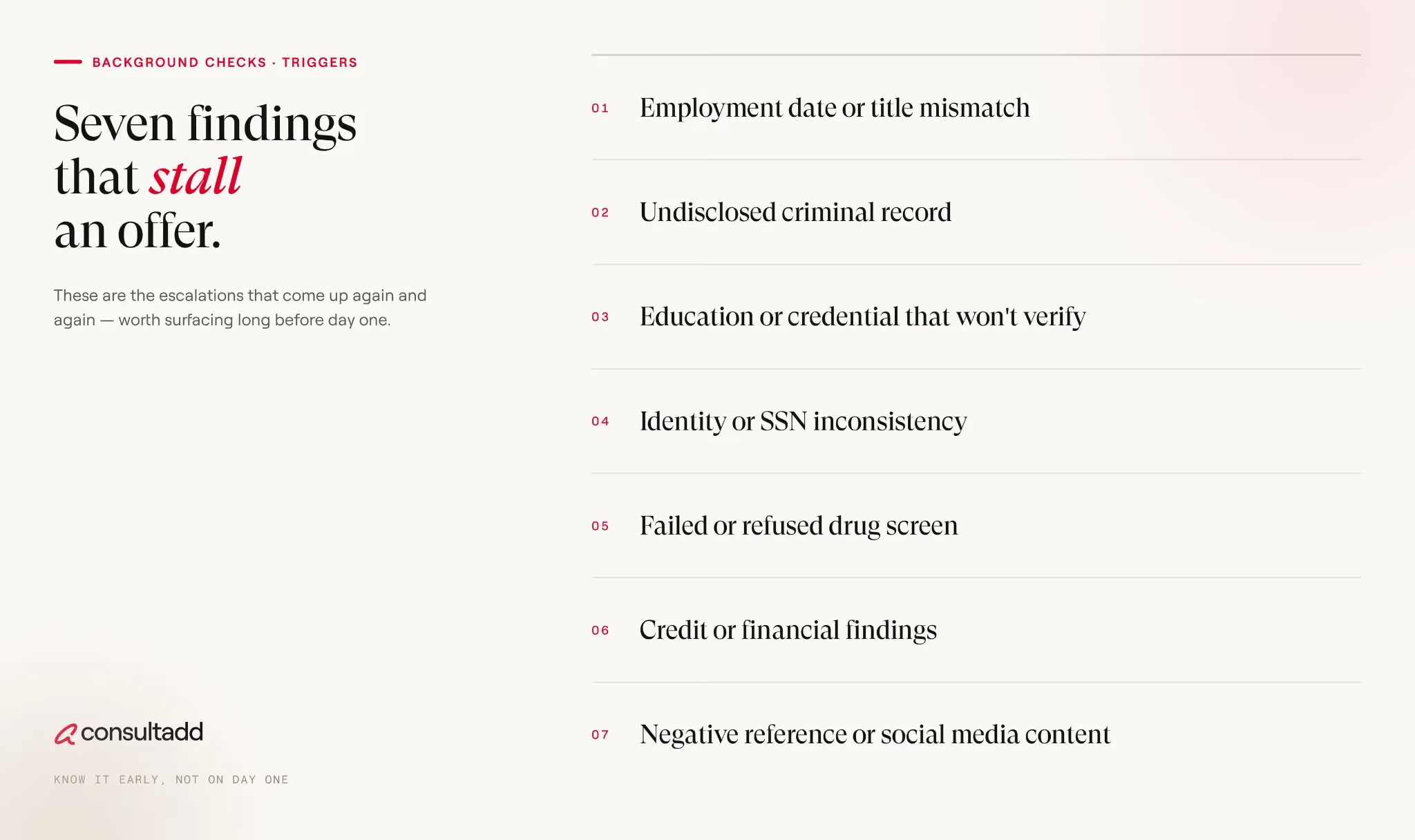
What most often causes a red flag on a background check
Roughly in order of how frequently they show up:
1. Employment history that doesn't line up
This is the biggest single category and most of it is honest error.
You remember starting in March, HR has you down for April. You were promoted to Senior Analyst but the payroll record still says Analyst. The company was acquired and the entity name changed.
None of that is disqualifying. It becomes a problem when there are several mismatches at once, or when a role you listed doesn't verify at all.
Gaps are a related but separate issue. A gap is not a red flag by itself. An unexplained gap next to a discrepancy sometimes is, because the two together suggest something was smoothed over.
2. An undisclosed criminal record
The data is clear that omission is what does the damage. An employer who finds a record you already mentioned is evaluating the record. An employer who finds one you didn't mention is now evaluating your honesty, and that's a much worse position to be in.
Worth knowing: the EEOC has taken the position that an arrest record alone isn't proof that conduct occurred, and its enforcement guidance recommends an individualized assessment weighing the nature and gravity of the offense, the time that has passed, and whether it relates to the job.
That guidance is EEOC policy rather than statute, and parts of it have been challenged in court, but many employers build their adjudication process around it anyway. The full document is on the EEOC's site.
3. Education and credentials that won't verify
Degrees, certifications, and professional licenses get verified directly with the issuing institution.
Common causes of a flag here are a degree listed as completed when coursework was finished but the degree never conferred, a name change the registrar has under a different record, and a school that has closed.
Inventing a credential is a different matter. That one usually ends the process, because it's unambiguous.
4. Identity mismatches
If your name, date of birth, or SSN doesn't tie cleanly across records, the screening company may not be able to link the right records to you at all.
Maiden names, transliterated spellings, and suffixes cause a lot of this. It's typically the easiest category to fix and the most annoying, because it delays everything.
5. Drug screening
A failed test, a refusal, or a missed appointment reads as a flag.
In DOT-regulated roles, healthcare, and safety-sensitive positions, it's often disqualifying by regulation rather than employer choice.
6. Credit and financial history
Only relevant for some roles, generally those with fiduciary duties or direct access to funds.
Several states restrict employment credit checks entirely. A single collection account is not what employers are looking at; patterns are.
7. References and social media
Vague or reluctant references raise questions.
On social media, employers who screen are looking at a narrow set of things: screening focuses on specific red flags like threats or violent content (17.8%) and hate speech (14.6%), while political views barely register at 1.9%.
A large share of employers, 37.6%, don't screen social media at all.
What can't be used against you
Federal law limits what a screening company may report. Section 605 of the Fair Credit Reporting Act, at 15 U.S.C. § 1681c, sets the clocks.
Two important qualifications:
- First, those seven and ten year caps generally don't apply when the role is expected to pay $75,000 a year or more.
- Second, state law frequently goes further than federal law. Several states cap conviction reporting at seven years regardless of salary.
California bars reporting non-conviction arrests. Massachusetts limits the misdemeanor lookback to three years. Philadelphia cut its misdemeanor window to four years effective January 2026, and Virginia's clean slate law began sealing records automatically in July 2026.
Practical upshot: which rules apply usually depends on where the job is, not where you live. And expunged or sealed records shouldn't appear on a compliant report at all.
There are also front-end requirements. Before pulling a report, an employer has to give you a clear standalone written disclosure and get your written authorization.
Burying that language inside a job application alongside liability waivers has generated a lot of class action litigation.
How a red flag is supposed to be handled
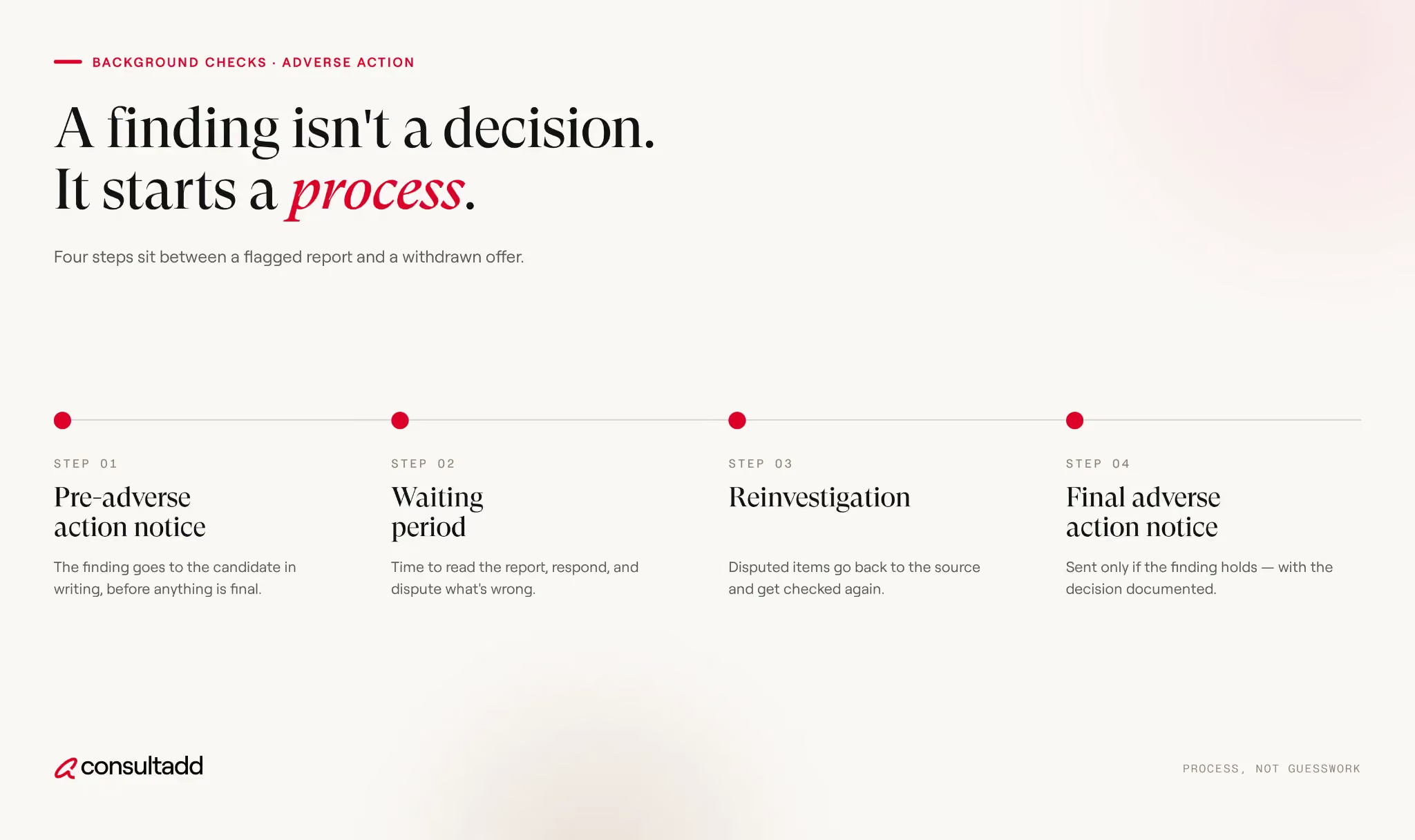
If an employer is leaning toward a no because of something in the report, the FCRA requires a two-notice sequence. This exists precisely because reports contain errors.
If an employer skipped the notices, or pulled your report without authorization, the EEOC's page for job applicants and employees explains where to take that. The joint EEOC and FTC guidance on what employers need to know covers the employer side.
What to do if something flags on yours
The window between the two notices is short. Use it.
- Get the actual report, not a recruiter's summary of it. You're entitled to the document the employer relied on.
- Separate errors from facts. An error goes to the reporting agency as a formal dispute. A fact goes to the employer as context.
- Send documents, not explanations. A W-2 settles an employment date argument faster than any paragraph you write.
- Be specific and brief with context. What happened, when, what changed since. Don't argue about relevance; state the facts and let the employer weigh them.
- Respond in writing and keep copies. If timing becomes an issue later, you'll want the record.
- Don't volunteer new problems. Answer what was asked, accurately and completely.
The single best move happens earlier though: disclose before the check runs. A record you mention in the interview is a fact. The same record discovered in week three is a credibility question.
For employers and recruiters: cutting down false flags
Most flags a hiring team spends time on aren't real risks.
- Ask for exact dates and prior job titles on the application, and tell candidates the answers will be verified. Accuracy improves immediately.
- Give candidates a chance to disclose before screening rather than after.
- Set an adjudication matrix in advance that maps offense type and age to specific roles. Deciding case by case with no framework is where inconsistency, and legal exposure, comes from.
- Apply the same waiting period to every candidate. Inconsistent timing is a pattern plaintiffs' attorneys look for.
- Treat a discrepancy as a question, not a conclusion. The clerical explanation is usually the right one.
If you're placing contract or contract-to-hire talent, screening timelines sit on the critical path to a start date.
The contract-to-hire model shifts much of that verification onto the staffing agency, which is one reason conversions tend to move faster than fresh permanent hires.
For candidates who also need work authorization verified, screening and immigration paperwork run in parallel and both have to be internally consistent.
Consultadd's guide to H1B sponsorship explains why job title and duties need to match across every document.
The short version
What causes a red flag on a background check is most often a gap between what you said and what a record says, and most of those gaps are clerical. The ones that end candidacies tend to involve something the candidate chose not to mention.
If a flag comes up on yours, you have a defined right to see the report and respond before anything becomes final. Reports contain errors often enough that this step is worth taking seriously rather than assuming the worst.
None of this is legal advice, and screening rules vary by state and industry. For a specific situation, talk to an employment attorney in the relevant jurisdiction.
Start Strong With Consultadd
With 15 years in business and 5,000+ successful staffing engagements, we don't just fill roles, we build reliability into your process. We've supported 65 staffing companies in the past year alone and maintain MSAs with industry leaders like Robert Half and TEKsystems.
Here's what working with Consultadd looks like:
- Talent sourced in under 24 hours
- Ready-to-deploy candidates, vetted for experience and compliance
- Lower turnover risk: we match long-term goals, not just short-term needs
- Seamless compliance: visa, documentation, onboarding? Handled.
- Dedicated 1:1 account managers for responsive, personalized support
- Top 100 candidate matches delivered in the past year
- Strong partnerships with universities to tap into fresh, committed talent
- Post-placement support so your investment grows beyond day one
For candidates, your next opportunity is more than just a job title, it's a chance to build skills, gain experience, and move your career forward. At Consultadd, we connect technology professionals with projects and employers that align with their goals, whether they're looking for contract, contract-to-hire, or long-term opportunities.
The tech job market moves fast, but the right guidance can make all the difference. Ready to take the next step in your career journey? Explore Opportunities >>
Key takeaways
- Inconsistencies in employment dates, titles, education, and identity cause more flags than criminal records do.
- Omission is the real risk: criminal history omissions are the finding most likely to end a candidacy, at 30.2%.
- Non-conviction arrests, civil judgments, collections, and paid tax liens generally fall off after seven years, and bankruptcies after ten, though those caps usually lift for roles paying $75,000 or more.
- State and city rules often run tighter than federal law, and the job's location usually determines which apply.
- A pre-adverse action notice is your window to correct errors, and the reporting agency generally has 30 days to reinvestigate a dispute.
FAQs
What is the most common reason people fail a background check?
Discrepancies between what a candidate reported and what records show, most often employment dates and job titles. Over half of employers say they see discrepancies often. Outright disqualifying findings are less frequent than mismatches that simply needed explaining.
Do employment gaps show up as red flags?
A gap on its own is not a red flag, and screening reports don't editorialize about them. Gaps draw attention when they sit next to a discrepancy or when a candidate can't account for the period. Having a short, factual explanation ready is usually enough.
How far back does a background check go?
Under federal law, non-conviction arrests, civil judgments, collections, and paid tax liens are limited to seven years, and bankruptcies to ten. Convictions have no federal time limit, though several states cap them at seven years. The seven and ten year caps generally don't apply to roles expected to pay $75,000 or more.
Can an employer reject me without telling me why?
Not if the decision is based on a report from a third-party screening company. The FCRA requires a pre-adverse action notice with a copy of the report and a summary of your rights, a reasonable period to respond, and then a final adverse action notice.
What if the background check has wrong information about me?
Dispute it with the consumer reporting agency named on the report. They must reinvestigate, generally within 30 days, and remove information they can't verify. Tell the employer in writing at the same time so they know a dispute is pending before they finalize anything.
Should I disclose a criminal record before the check runs?
Generally yes, though timing depends on local law, since some states and cities bar employers from asking until later in the process. When the subject comes up, being upfront is consistently better than being discovered. The data shows omission harms candidacies more than the records themselves.